





5 offseen Exhibitions to See in November
by Giorgia Basili | 04.11.2026
What is a relationship? What is the appropriate distance to maintain so as not to invade someone’s personal space? The concepts of public and private are constantly intertwined, and the urge to pry into other people’s lives is now increasingly satisfied thanks to social media, which breaks down the walls of the home and acts as the perfect peephole for the most incorrigible voyeurs. Here are five exhibitions featured in offseen that explore and bring this theme to life.
Mother of One
Artist: Zofia Pałucha
Curator: Marianna Łomża
HOS Gallery, Warsaw, Poland
On view until November 7, 2026
Is a body truly naked if it is tattooed or painted? One cannot help but wonder when viewing some of Zofia Pałucha’s works, in which certain bodies display traces of body painting.
The exhibition Mother of One is a collection of bodies – naked, uninhibited yet not free, almost as if part of an unhealthy social contract. The female body is presented as available, a feast much like in Marco Ferreri’s La Grande Bouffe. One need only pause to consider the images in which a reclining female figure is covered in nigiri, sushi and rolls, ready to be plucked up by the chopsticks of some voracious man. Yet, at the same time, the woman appears to be a willing participant in an erotic game, and the situation remains ambiguous, poised between passivity and consent.
The artist states that she wishes to capture “the moment when different lives cease to be separate, even if only for an instant”.
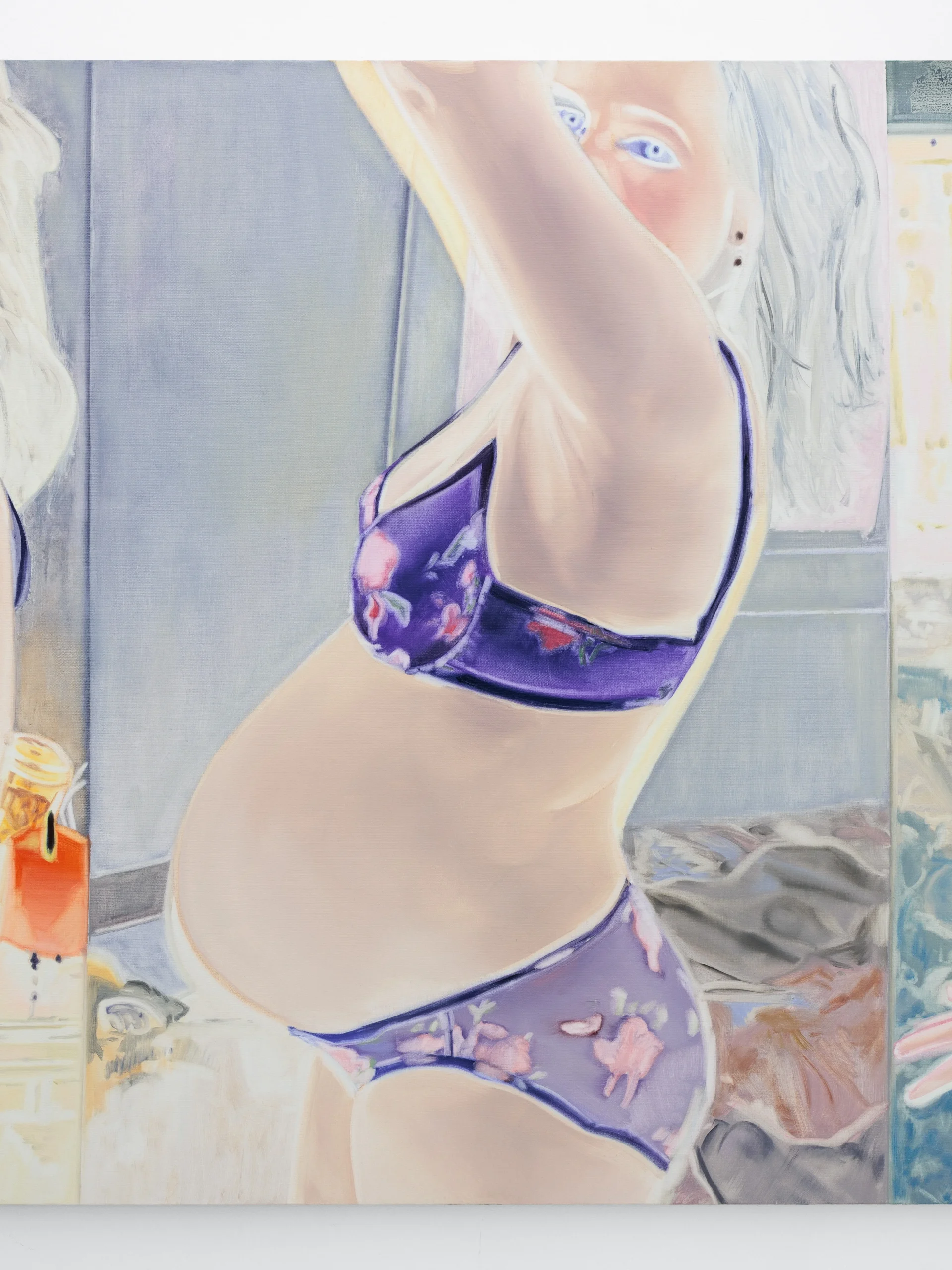
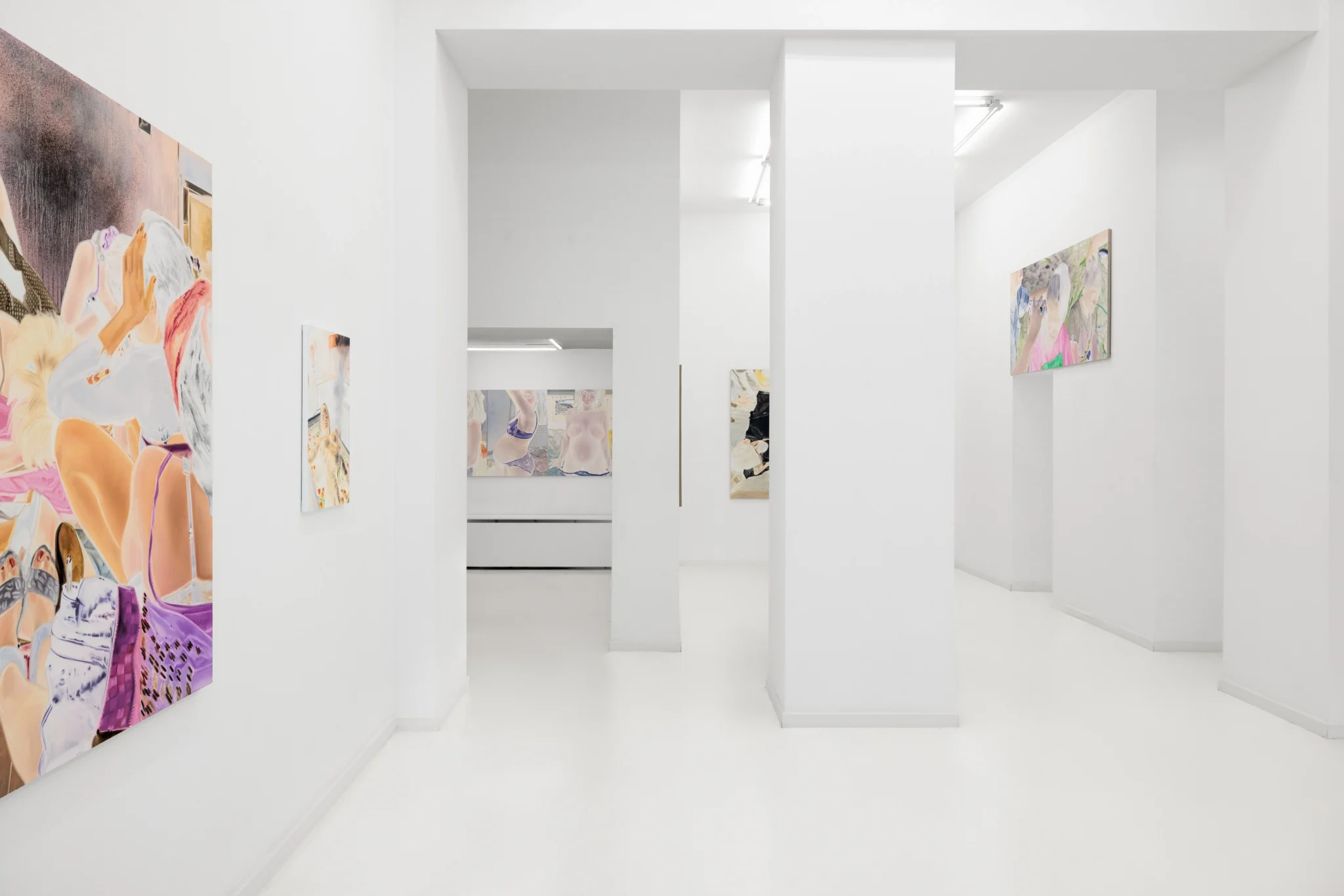
Mother of One exhibition views, ph Szymon Sokołowski, courtesy the artist and the gallery;
Alan Bee: Invisible Relations
Artist: Alan Bee
Curated by: Paolo Campiglio
ABC-ARTE, Genova, Italy
On view until December 6, 2026
Alan Bee’s abstract paintings (Karlsfeld, 1940) do not depict nature, but instead adopt its generative principles. It is no coincidence that the artist chooses the insect – the quintessential worker – as his guiding animal and alter ego: the bee.
The curator writes: “Just as the beehive is founded on cooperation and the continuous transformation of matter, so the work of art arises from a system of relationships in which every element contributes to the construction of meaning.”
The recurring motif is the honeycomb, which becomes his artistic manifesto on the importance of relationships, alongside the use of honey and wax.
The artist conducted his research in secret, far removed from the art world and galleries, and only gave permission after his death (2018) for his work to be made public and sold.
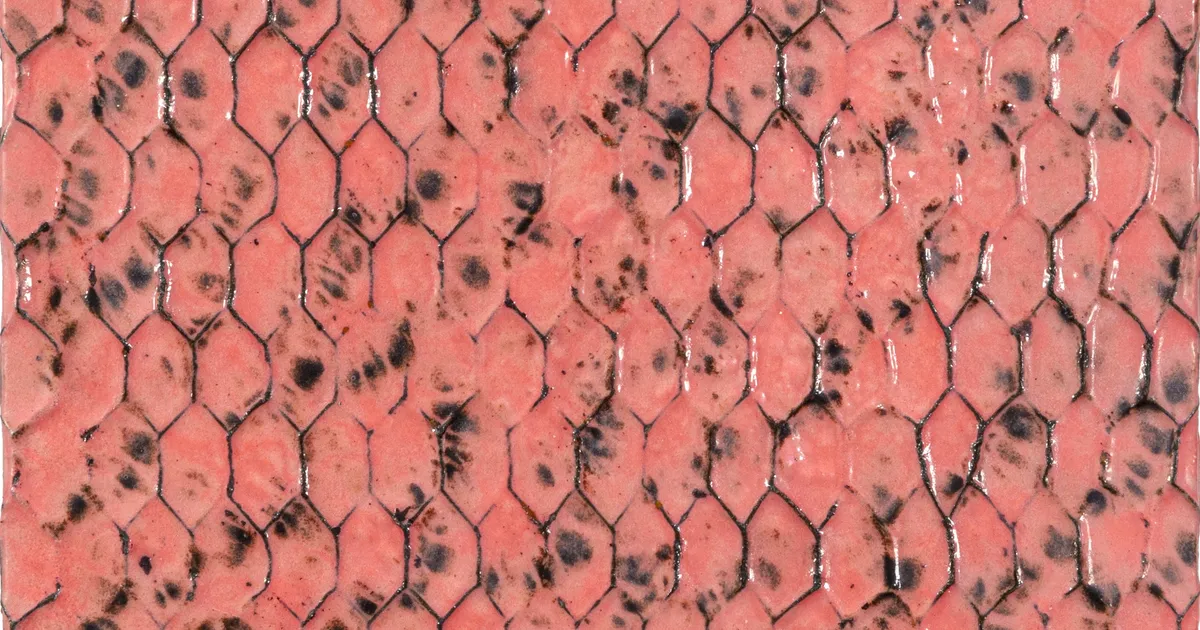
Alan Bee’s work detail, courtesy the artist and the gallery;
Lei è meglio di me (She’s better than me)
Artists: Matteo Attruia, Noemi Durighello
Curated by: Stefano Monti
SMDOT/Contemporary Art, Udine, Italy
On view until December 31, 2026
The exhibition at SMDOT/Contemporary Art in Udine also explores relationships and ambiguity.
The joint solo exhibition by Matteo Attruia and Noemi Durighello is, in fact, entitled She’s better than me, leaving the narrative of a romantic intrigue unresolved and prompting us to wonder who “she” is and better than whom? Is this female rivalry, or a provocation? The subject turns out to be Art in a figurative sense, and this interplay of comparison, combination and shifts in register between word and form, color and light, painterly medium and neon, solid color and trembling handwriting, gesture and thought – but above all, language and abstraction.
This perpetual notion of competition, recognition and reward, together with the barriers created by the categories of ‘emerging’ and ‘established’ artists, age limits and deadlines, as well as the differences in fame between the living and the dead – the eternal struggle to be recognized in the art world erodes the sense of community and the clarity of relationships, rendering everything dull and opaque. For even the global art scene is a matter of networks, or rather a trap in which one risks being crushed. The big fish eat the little ones before they manage to find a way out.
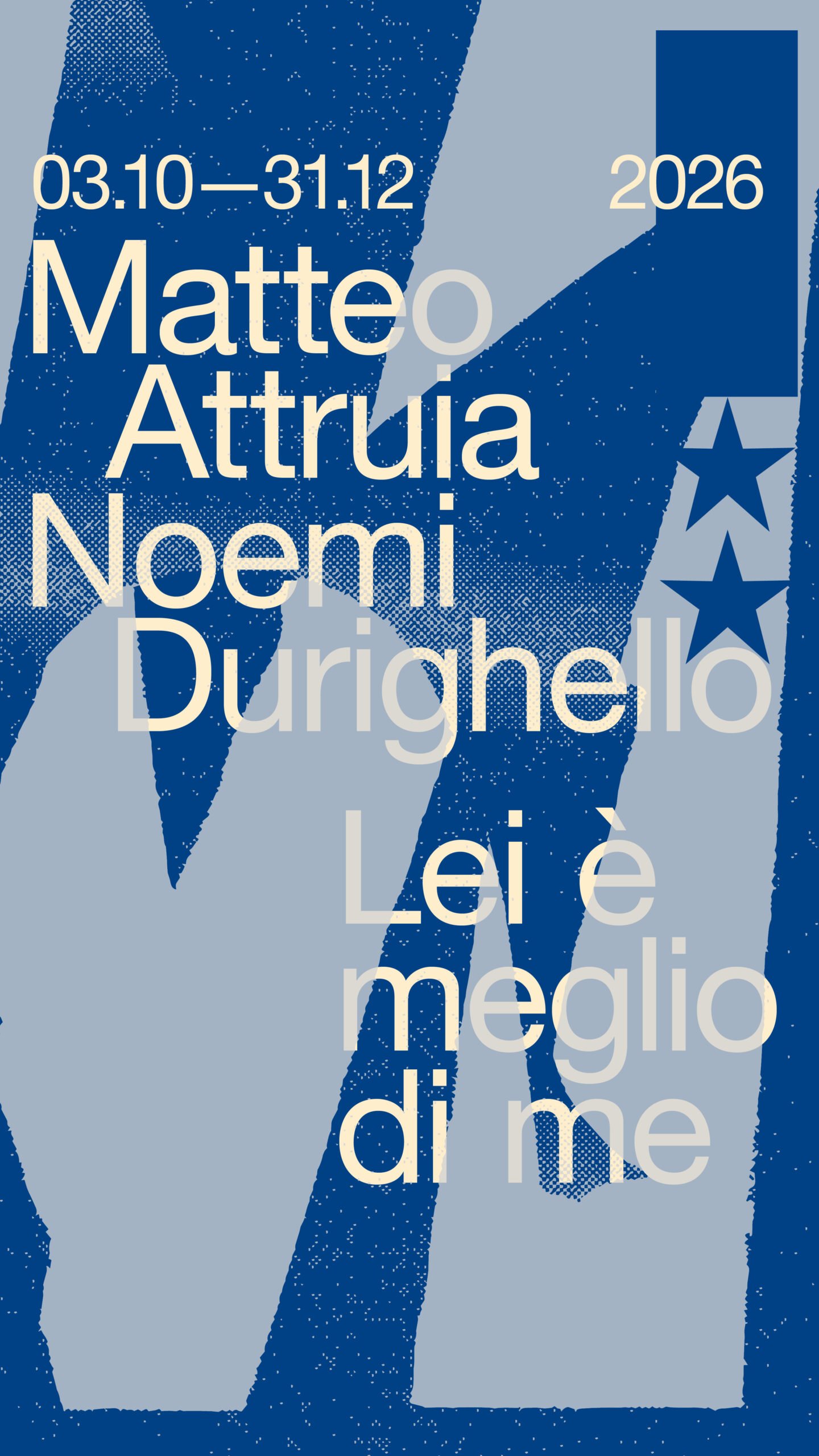
Lei è meglio di me exhibition views, courtesy the artist and the gallery;
Hypokrise
Artist: Tobias Kvendseth
Trondhjems Kunstforening, Trondheim, Norway
On view until November 22, 2026
Tobias Kvendseth’s practice encompasses ceramics, installation and sound.
Punk sculptures, made of ceramic yet as black as leather gloves, as blunt as truncheons but also as sharp as thorns. Yesterday, 31 October, in Naples, the police removed their helmets and marched at the front of the procession, alongside the demonstrators.
What, then, is the purpose of weapons in a public-safety context? To safeguard what? To harm whom?
What, then, is the hypocrisy? What is failing within the delicate balances and the far-from-well-oiled workings of the social contract?
Tobias Kvendseth’s Hypokrise (1995) stands on its own, regardless of any analysis of the current political situation, yet it explores the ambiguity between violence and protection in environments transformed by humankind. In natural contexts, brambles form defensive barriers; the antlers of moose and deer are tools for asserting physical vigor and courting females, but also serve as a means of defense to protect one’s herd or one’s very existence. In the human sphere, however, weapons are often instruments of death and abuse, in the hands of those who already hold power and superior strength.
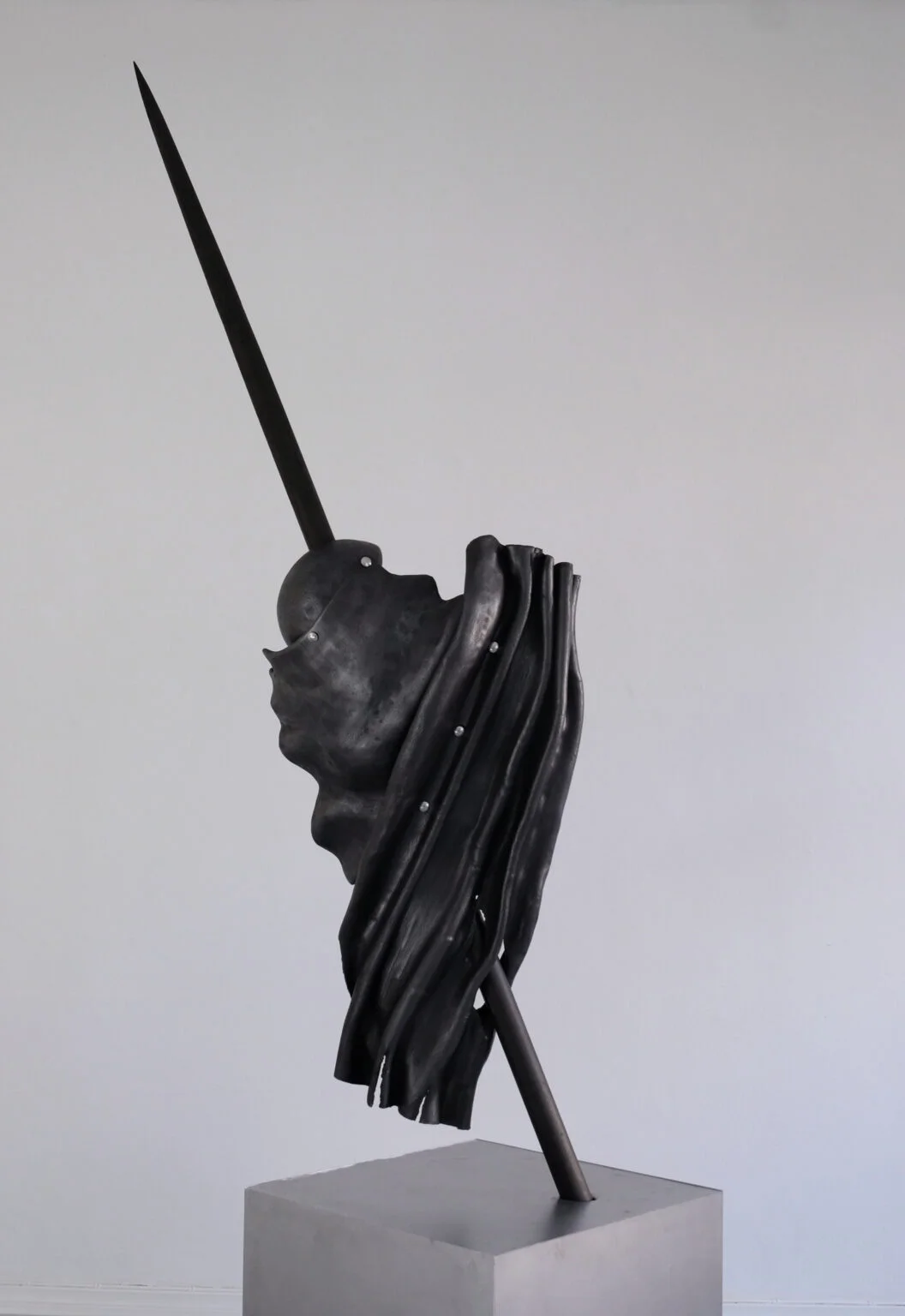
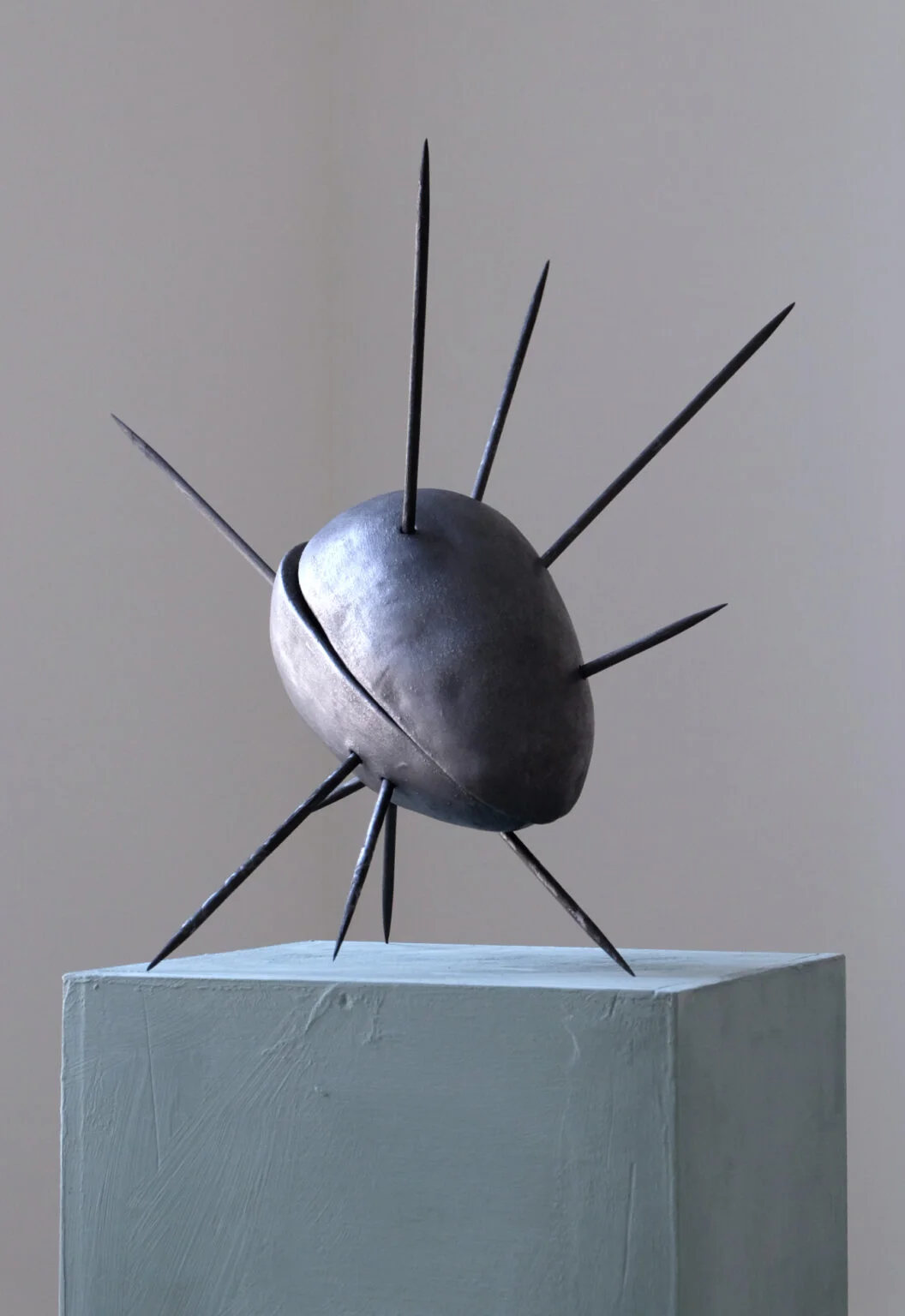
Hypokrise exhibition views, courtesy the artist and the gallery;
Madri Padri Figl*
Artist: Elisa Cella, Tiziana Cera Rosco, Loredana Galante, Massimiliano ed Omar Galliani, Julia Krahn, Azael Langa, Francesco Lauretta, Trento Longaretti, Andrea Meregalli, Anna Nutini, Matteo Suffritti
Curated by: Elisa Cella, Loredana Galante, Andrea Meregalli, Matteo Suffritti
Text by: Simona Bartolena and Fortunato d’Amico
Villa Reale Conference Hall, Monza, Italy
On view until November 8, 2026
Madri Padri Figl* (Mothers, Fathers, Children) is a title that refers to relationships within the family unit. Everyone plays one or more roles within the microcosm of affection and family ties in a society undergoing profound change: from a patriarchal system in which women stayed at home and were expected to bear many strong children, to couples in a ‘liquid’ society that shuns rigid definitions and stereotypes, becoming increasingly fluid and non-binary.
Furthermore, religion once held a moral authority that stifled any free interpretation, steering even the most wayward spirits (spiriti ballerini) back onto the straight and narrow.
The artists in the exhibition, including Tiziana Cera Bosco and Francesco Lauretta, convey their own vision of the family nest – or what has destroyed it – evoking happy or painful memories, aspirations and desires, whilst sharing an intimate sphere that nevertheless strikes a chord with us all.
For example, Matteo Suffritti, with ‘Tu tuu’ and his red corded telephone, evokes contrasting feelings. Yet, when the receiver is lifted, we become privileged witnesses to a message that will never be heard by a father who is no longer with us.
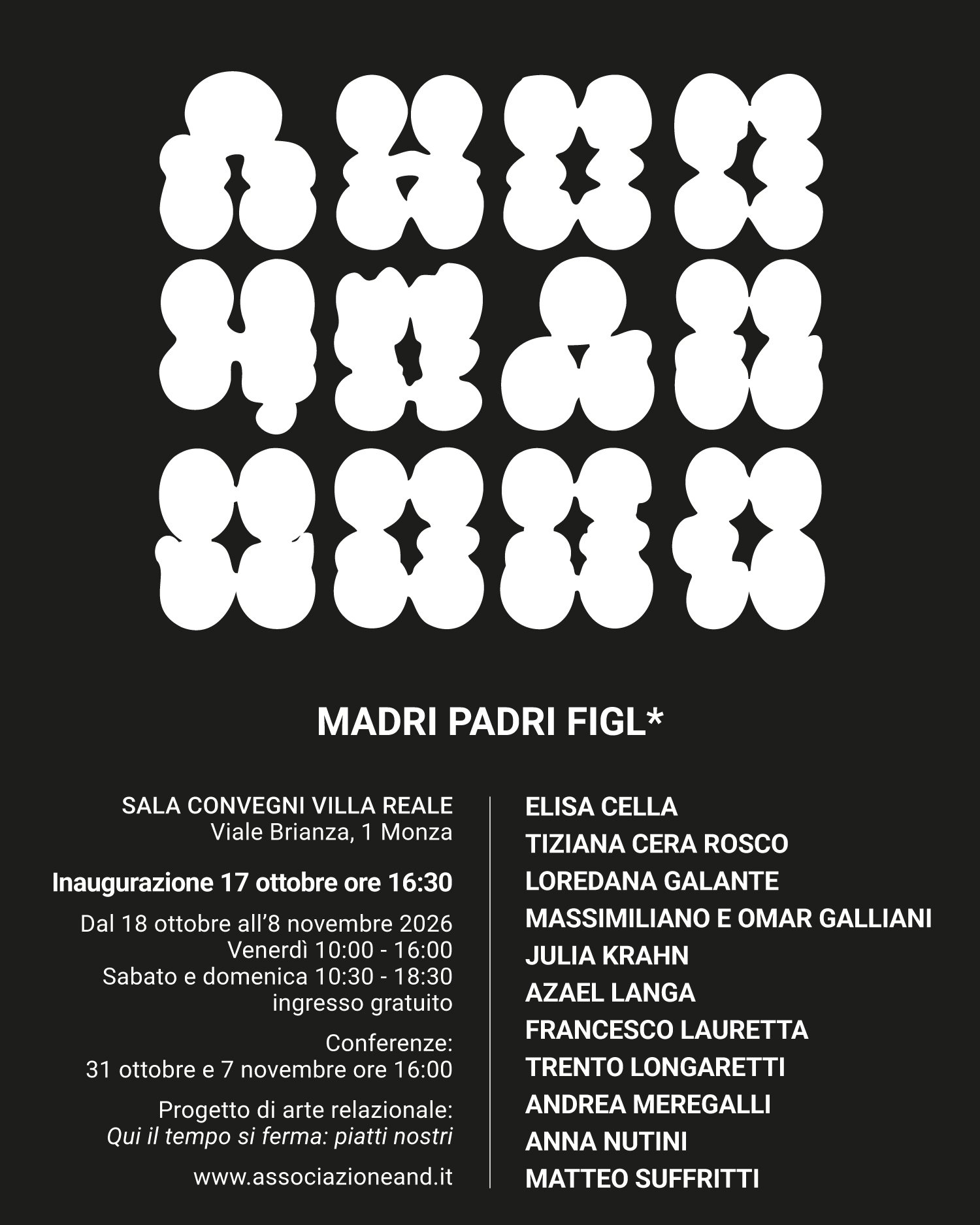
Madri Padri Figl*, courtesy the artists and the gallery;
Edited by Dobroslawa Nowak
Copyrights: the authors, offseen and partnering platforms;