





5 offseen Exhibitions You Need to See in May
by Rachel Cecília de Oliveira
20.05.2026
In this selection, my attention falls on what the installation makes visible or intensifies in each exhibition. I offer a possible entry point into each show, identifying the visual, material, and spatial operation that sustains the experience. More than a list of exhibitions to visit, my selection constructs five ways of looking.
Anatomia di una tensione
Artists: Veronica Sponilli, Martina Taddeucci
Curators: Nicoletta Biglietti, Lorenzo Rubini
THEPÒSITO Art Space, Narni Scalo (TR), Italy
On view until May 24, 2026
The exhibition operates as a site-specific installation. The tension invoked by its title arises from the relation between the place where it unfolds and the works that inhabit it. In the Church of Beata Lucia, the architecture, images, and materials that constitute the church establish a visual order marked by duration, stability, and symbolic permanence. The works by Veronica Sponilli and Martina Taddeucci, by contrast, are made of fragile, malleable, reused, stitched, and tied materials, turning precariousness into a mode of presence. Fragmented, patched, and recomposed bodies in reclaimed matter, as well as fibers and bindings that seem subjected to forces that compress or deform them, confront the church’s visual and symbolic order. Moreover, the works are installed so as to intensify the contrast between these distinct material and visual regimes. The church, with its historical solidity and its delicate, traditional craftsmanship, is provoked by precariousness, instability, and fragmentation. Rather than adapting to the church, the works expose the instability that any appearance of permanence must contain.
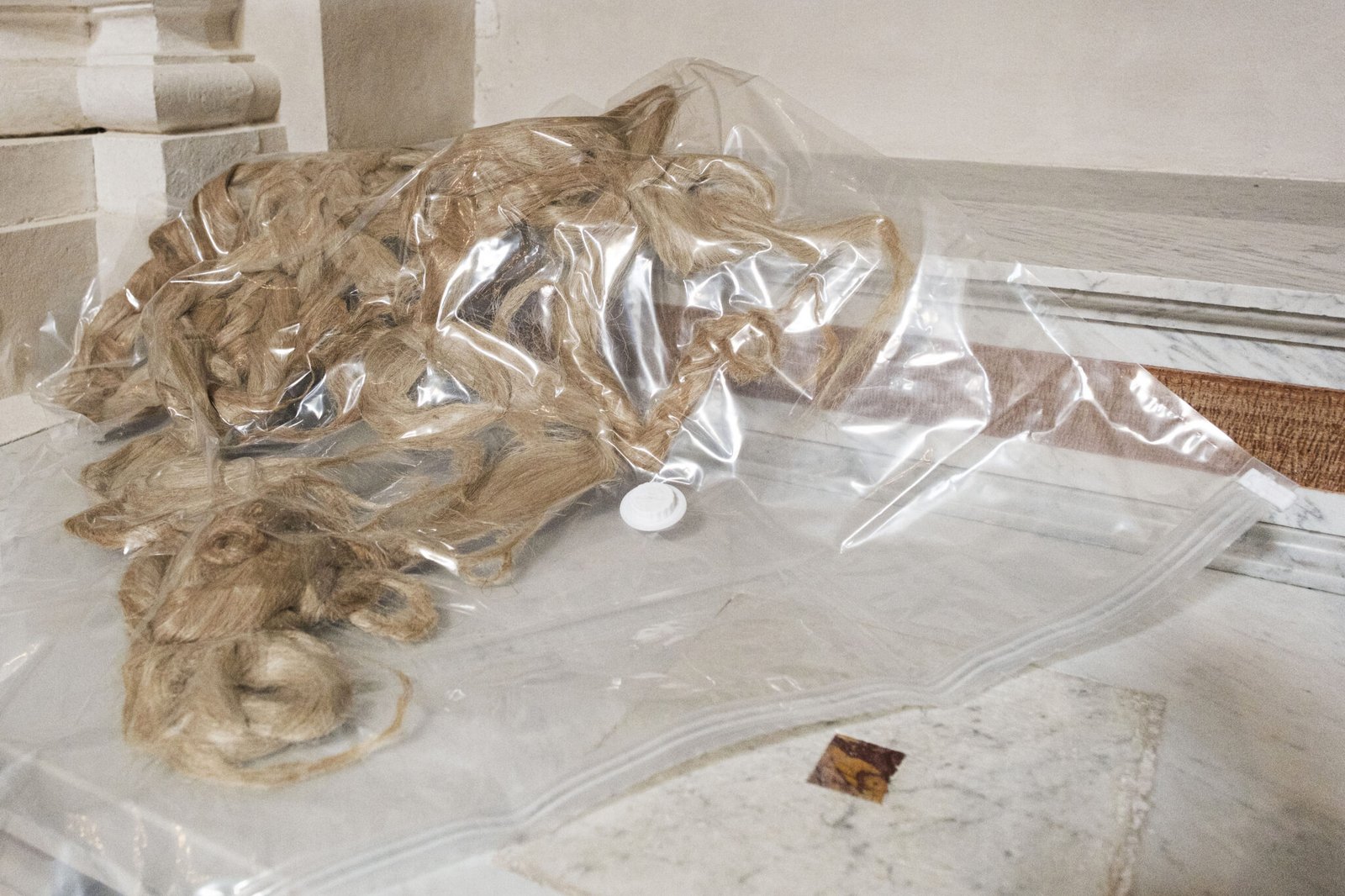
Anatomia di una tensione exhibition views, ph Lorenzo Raffanelli, courtesy the artist and the gallery
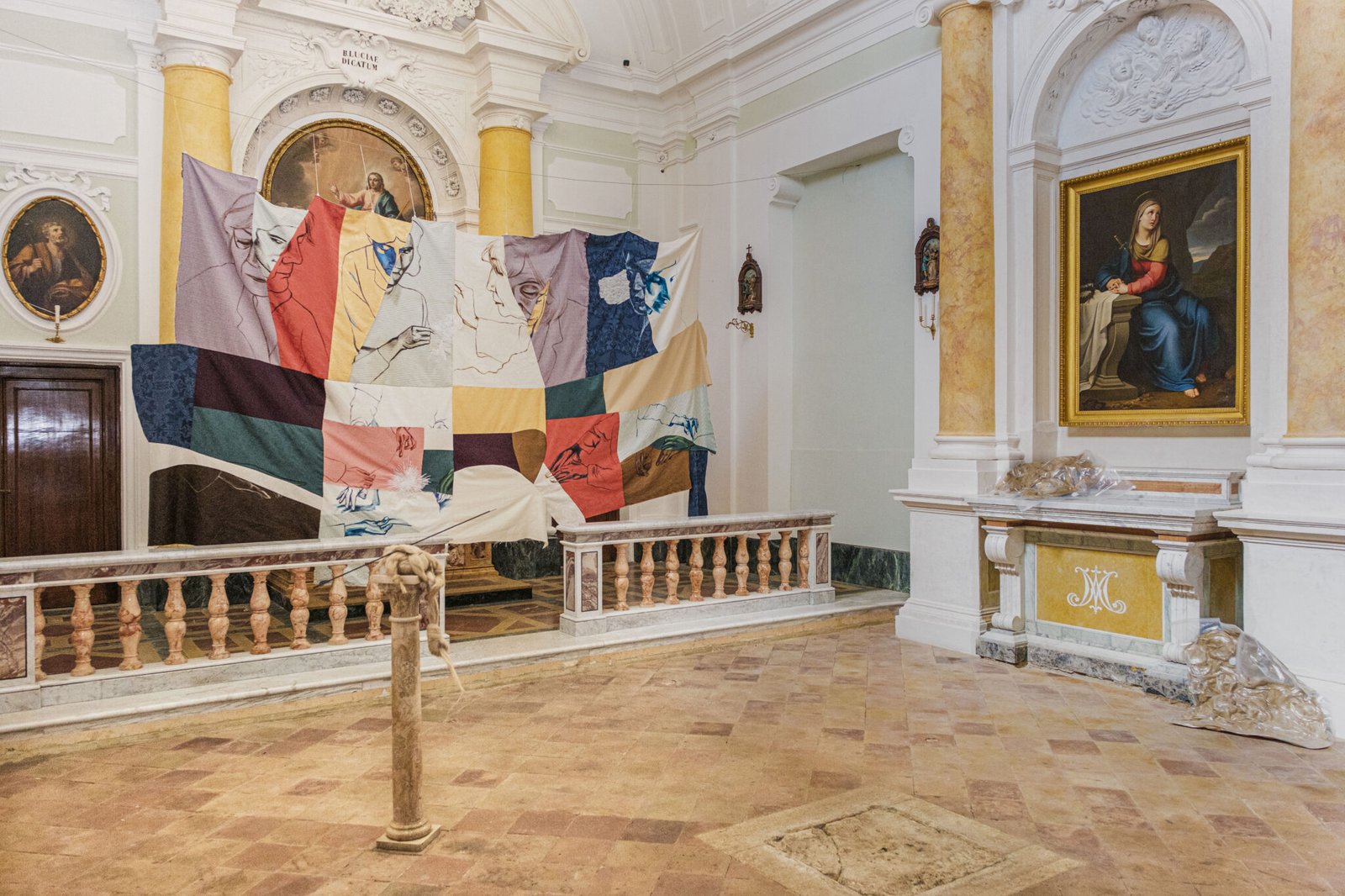
Anatomia di una tensione exhibition views, ph Lorenzo Raffanelli, courtesy the artist and the gallery
The Gift/Das Gift
Artists: Julia Bachur, Kama Kicińska, Zuzanna Mazurek, Julia Szczerbowska, Amelia Woroszył
Curator: Marianna Łomża
HOS Gallery, Warsaw, Poland
On view until June 6, 2026
In English, gift means a present; in German, Gift means poison. The echo between the two words creates the ambiguity that structures the exhibition, since the gift appears as an unstable relation traversed by desire, dependency, care, and risk. Marianna Łomża’s curatorship brings together works that materialize the act of giving oneself as an ambiguous gesture. To give something, or to give oneself, is to produce a zone of contact, and this is why the exhibition works best when the gift ceases to be a metaphor and becomes matter. It gives form to this ambivalence and shows how every act of giving alters both what is offered and whoever receives it. At the same time, Łomża’s curatorial text creates a dense, almost moral atmosphere that at times threatens to reduce the gift’s ambiguity to a narrative of elevation, sacrifice, purification or self-transcendence. As a result, the exhibition becomes less complex whenever it seeks to reconcile what its own title had rendered unstable. The most compelling works are precisely those that resist such pacification.
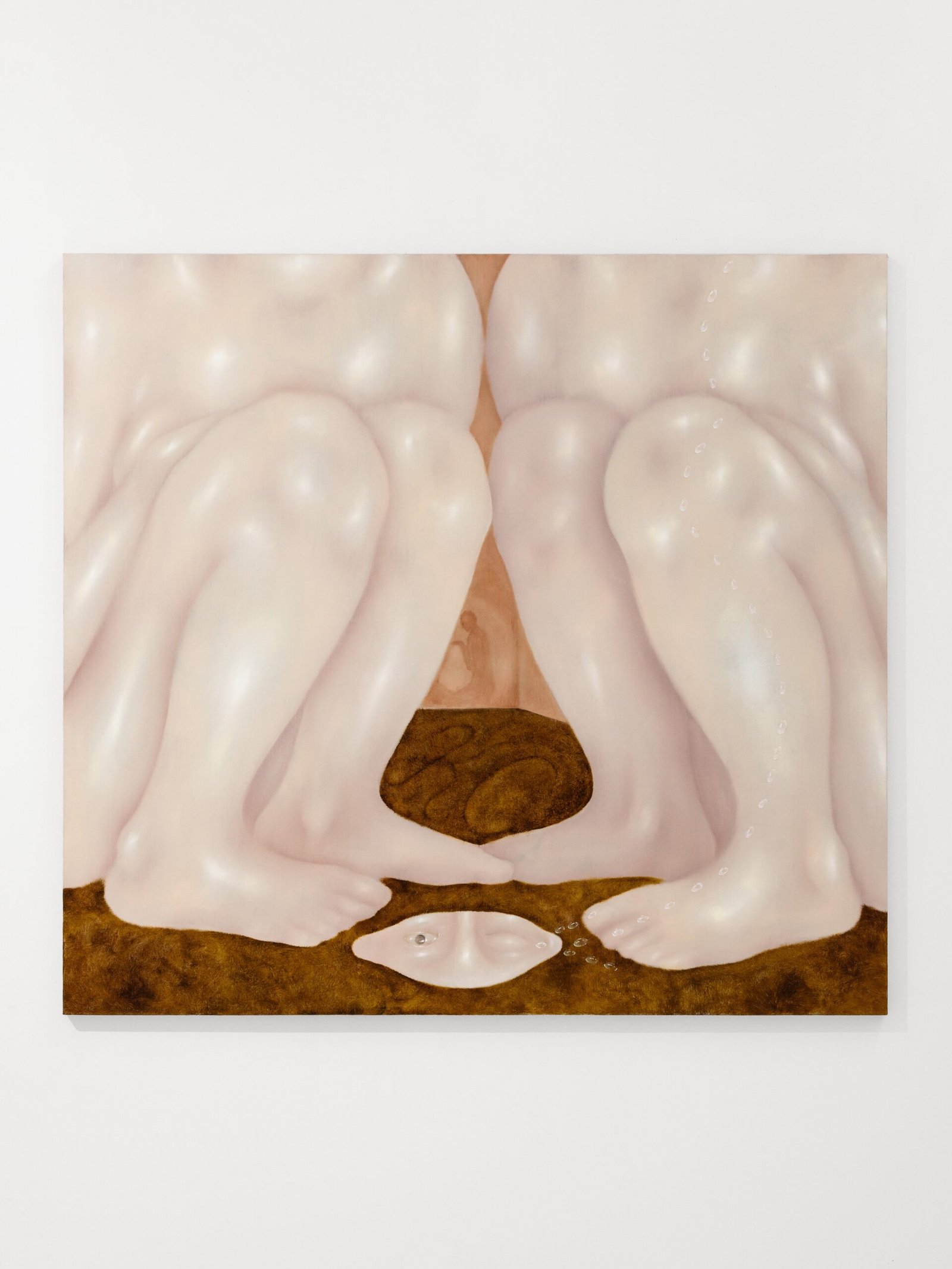
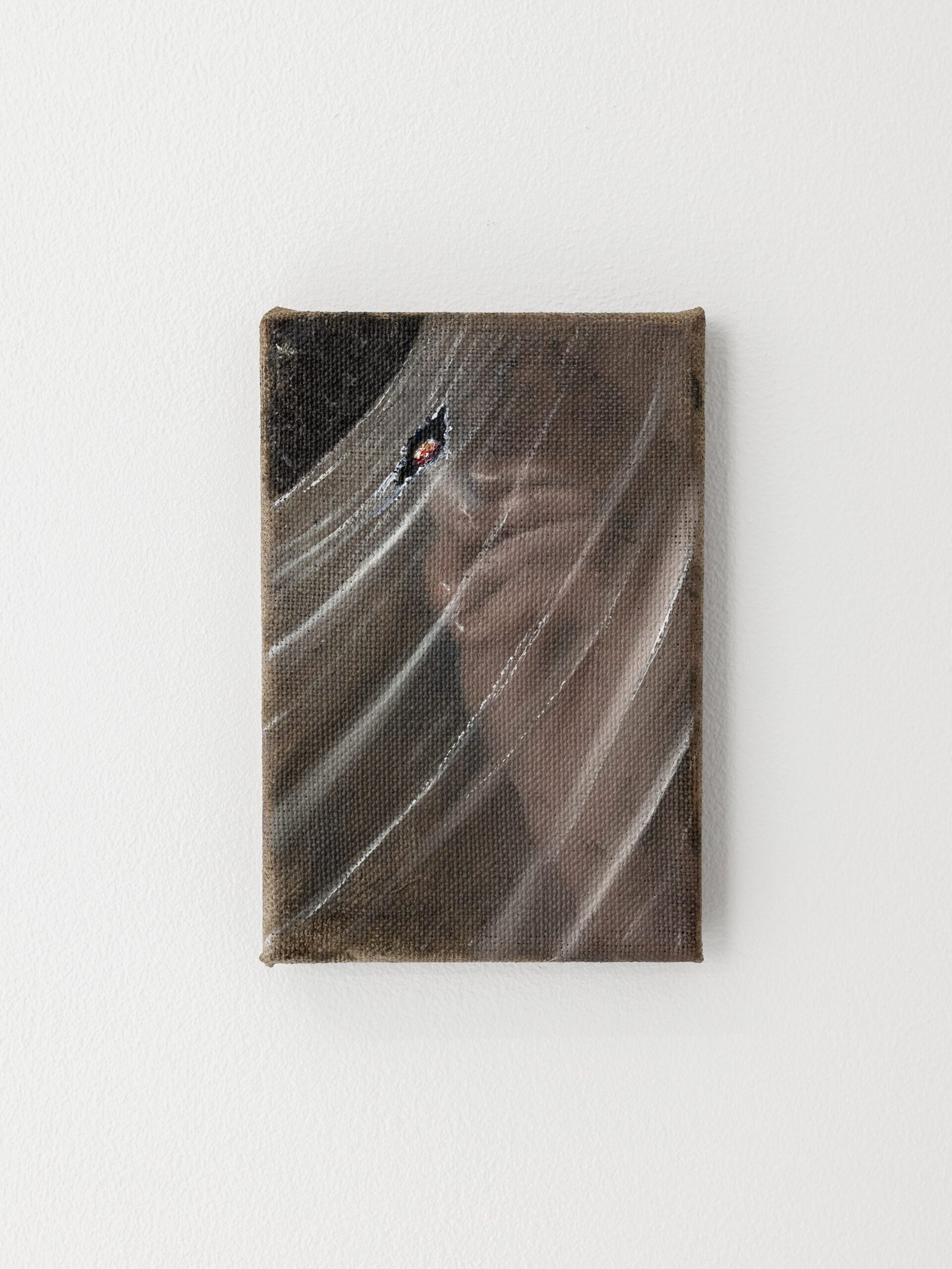
The Gift/Das Gift exhibition views, ph Szymon Sokołowski, courtesy the artist and the gallery
Rites of Affection
Artist: Karim Boumjimar
Spiaggia Libera and PUNTA Lahti Museum of Visual Arts Malva, Finland
On view until September 13, 2026
Karim Boumjimar’s exhibition is a process of passage. The first impression is one of scale. Everything seems oversized, yet this monumentality does not create distance. On the contrary, it produces physical proximity, since magnitude functions here as a mode of bodily capture. His drawings spread across different surfaces, causing bodies to proliferate as they form and deform. The images populate works on paper, murals, and ceramic pieces, continuing from one support to another as though they refused to remain fixed. Drawing thus operates as the exhibition’s mobile skin, covering and contaminating everything. In this way, the exhibition becomes a site of passage, in which a figure may migrate from paper to ceramic, from ceramic to wall, and from the wall into the visitor’s imagination. The viewer, therefore, enters an environment inhabited by beings that accompany and guide the passage through it. The title, Rites of Affection, suggests precisely this ritual practice of approach. What matters in the end is the way the ensemble organizes an experience of involvement, for Boumjimar explores less the autonomy of each work than the sensorial continuity among them.
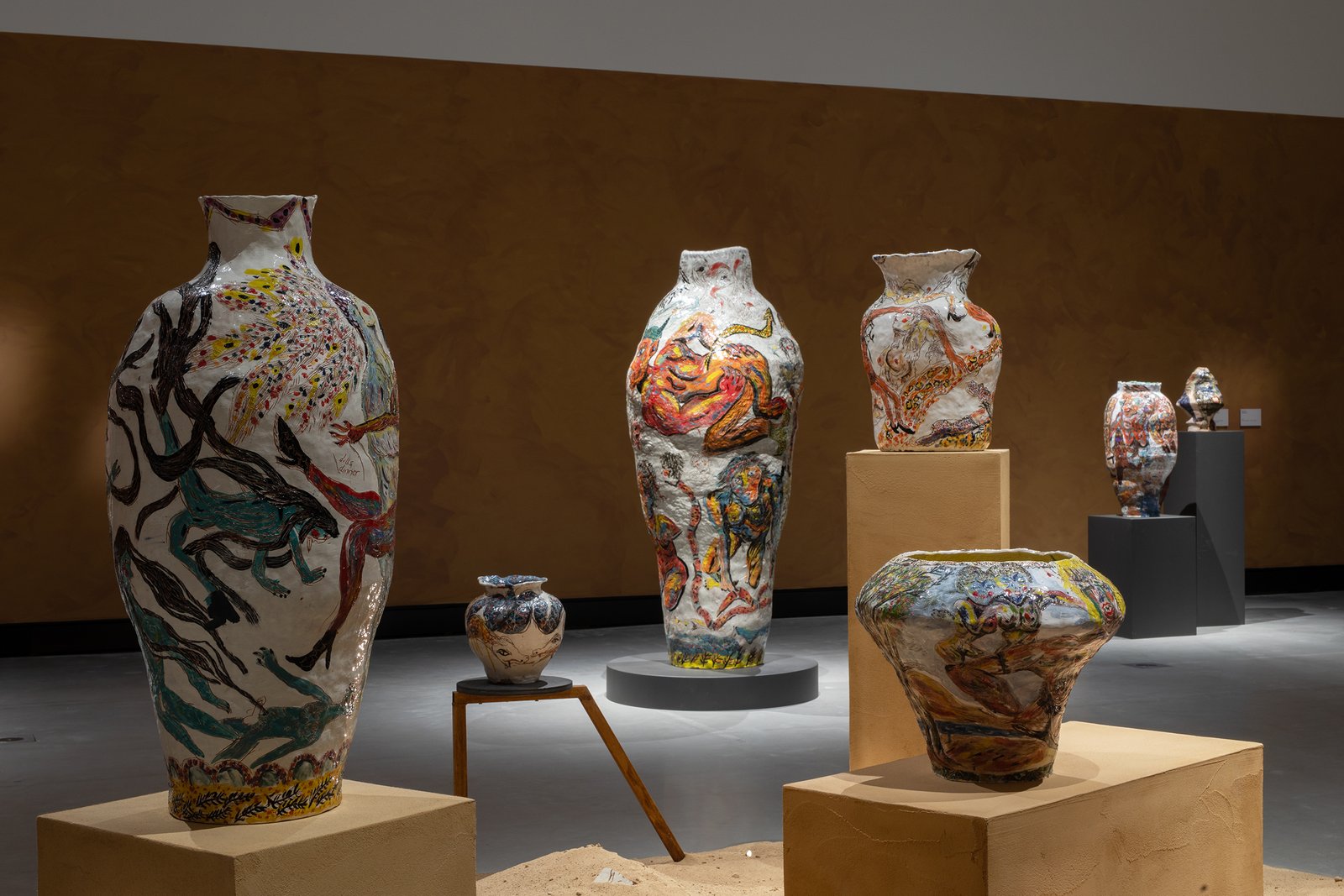
Rites of Affection exhibition views, Juuso Noronkoski, courtesy the artist and the gallery
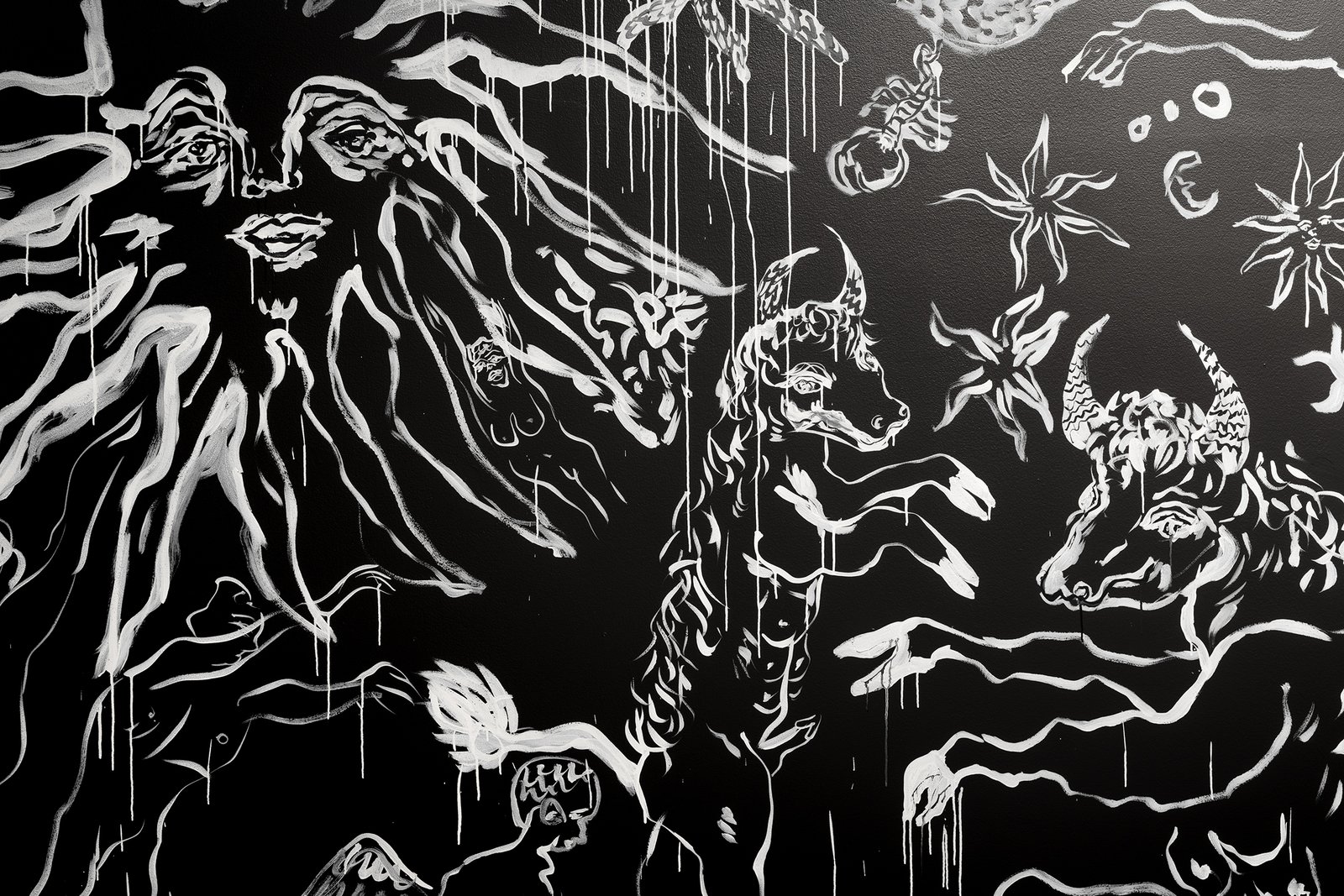
Rites of Affection exhibition views, Juuso Noronkoski, courtesy the artist and the gallery
Remains — The Alchemy of Lost Memory
Artists: Bri Williams, Edoardo Caimi, Nicola Ghirardelli
Curator: Alberto Dapporto
Associazione Barriera, Turin, Italy
On view until May 30, 2026
Ruin, memory, trace, transformation, alchemy, instability. The exhibition uses a vocabulary well known in contemporary art, one that alludes to a generic poetics of loss. Remains, however, escapes that trap. The question running through the exhibition might be this: what comes after ruin? Recomposition, transformation, instability, perhaps all of these at once. The remnant appears as something that continues to act after the disintegration of its previous form. What remains is not the integrity of the past, but rather a becoming that renders any simplistic idea of closure impossible. The works suggest that ruin is a condition that runs through bodies, materials, and systems. The exhibition’s strongest gesture is expographic. Alberto Dapporto, curator and architect, establishes a correlation between the works and the space through a plastic-covered wall occupying the center of the room. By shaping how the exhibition is perceived and experienced, this wall makes the installation function as a kind of meta-work, that is, as a perceptual device. This is what prevents Remains from dissolving into the generic language of ruin. Instability occurs within the exhibition experience itself, as the plastic wall gives material form to the ideas of matter as process and of ruin as an active condition.
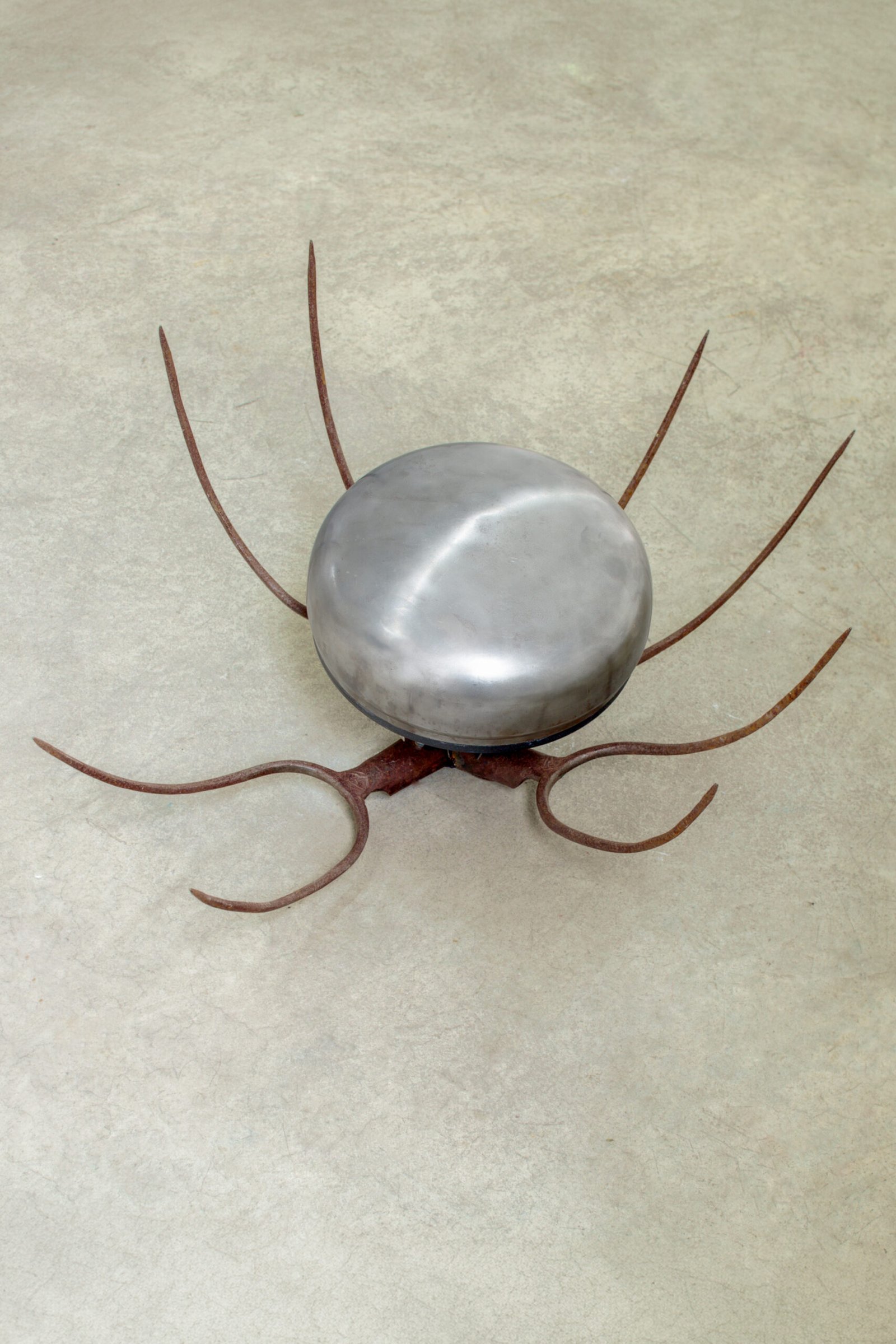
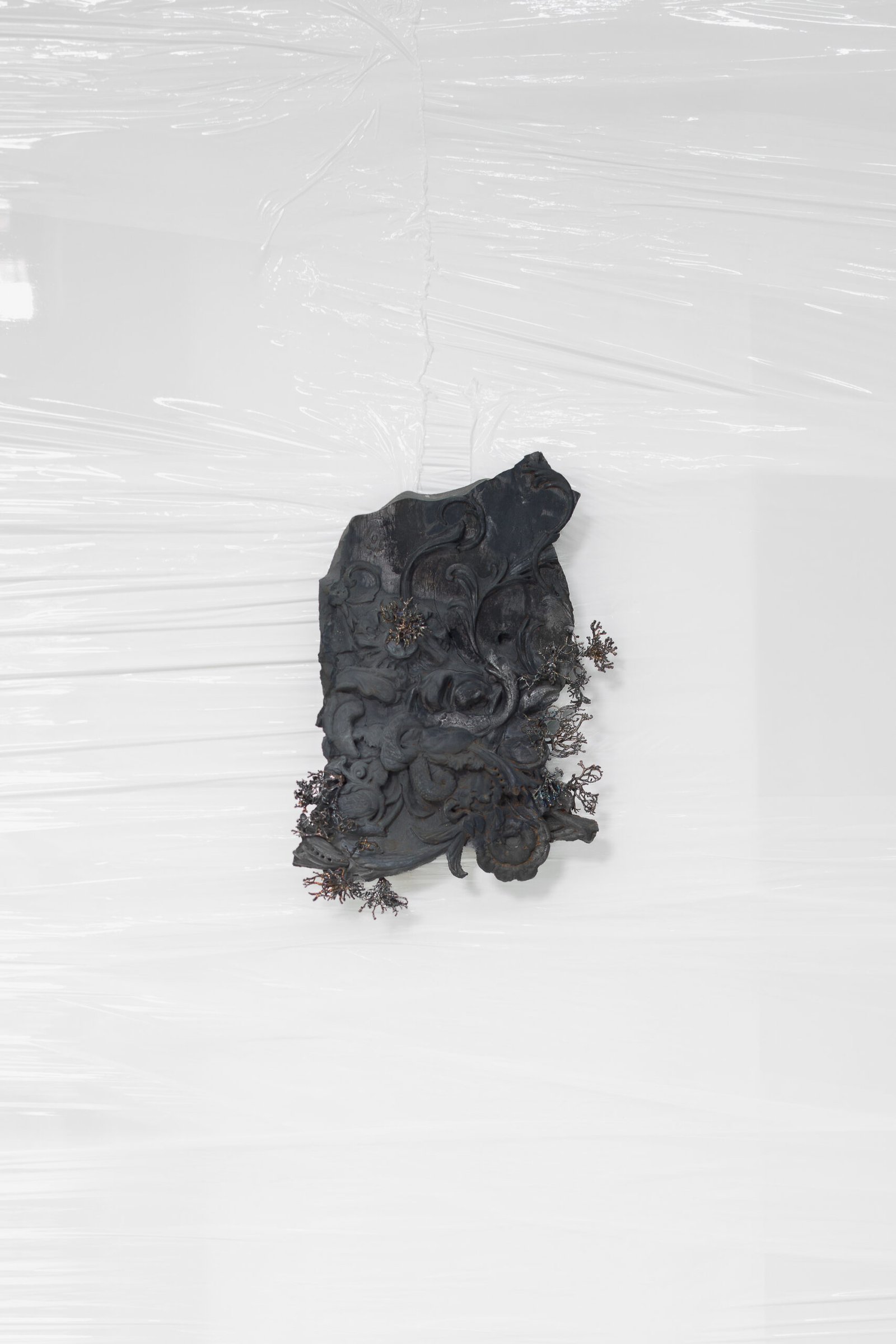
Remains — The Alchemy of Lost Memory exhibiton views, Biagio Palmieri, courtesy the artist and the gallery
CHRISTIAN STEIN | DEPOSITO
Artists: Alighiero Boetti, Pier Paolo Calzolari, Luciano Fabro, Jannis Kounellis, Richard Long, Fausto Melotti, Mario Merz, Marisa Merz, Giulio Paolini, Giuseppe Penone, Michelangelo Pistoletto, Giuseppe Uncini, Gilberto Zorio, Mimmo Paladino, Remo Salvadori, Marco Bagnoli, Domenico Bianchi, Peter Wüthrich, Paolo Canevari, Stefano Arienti, Elisabetta Di Maggio
Galleria Christian Stein, Pero/Milan, Italy
On view until June 6, 2026
Galleria Christian Stein opened its storage space to the public to mark its sixtieth anniversary. The gesture grants access to the material core of its institutional memory, that is, to the space where its choices reveal whether they still continue to produce meaning. Storage space places works in relation to one another because it preserves possible encounters. Within it, history is woven as a field of proximities sustained over time. For this reason, the exhibition is organized as an anthology. Unlike a retrospective, which tends to arrange the past as development, the anthology assumes installation as an act of choice and rereading. In this sense, the exhibition shows how a gallery is constituted by what it preserves, but also by the way it revisits what it has preserved. A gallery’s archive is made up of wagers placed before consensus had formed, of affinities constructed over time, and of a practice of looking capable of keeping certain works in proximity. Within this gesture lies an important critical question: how can one read and reread an archive without turning it into mere confirmation of itself?
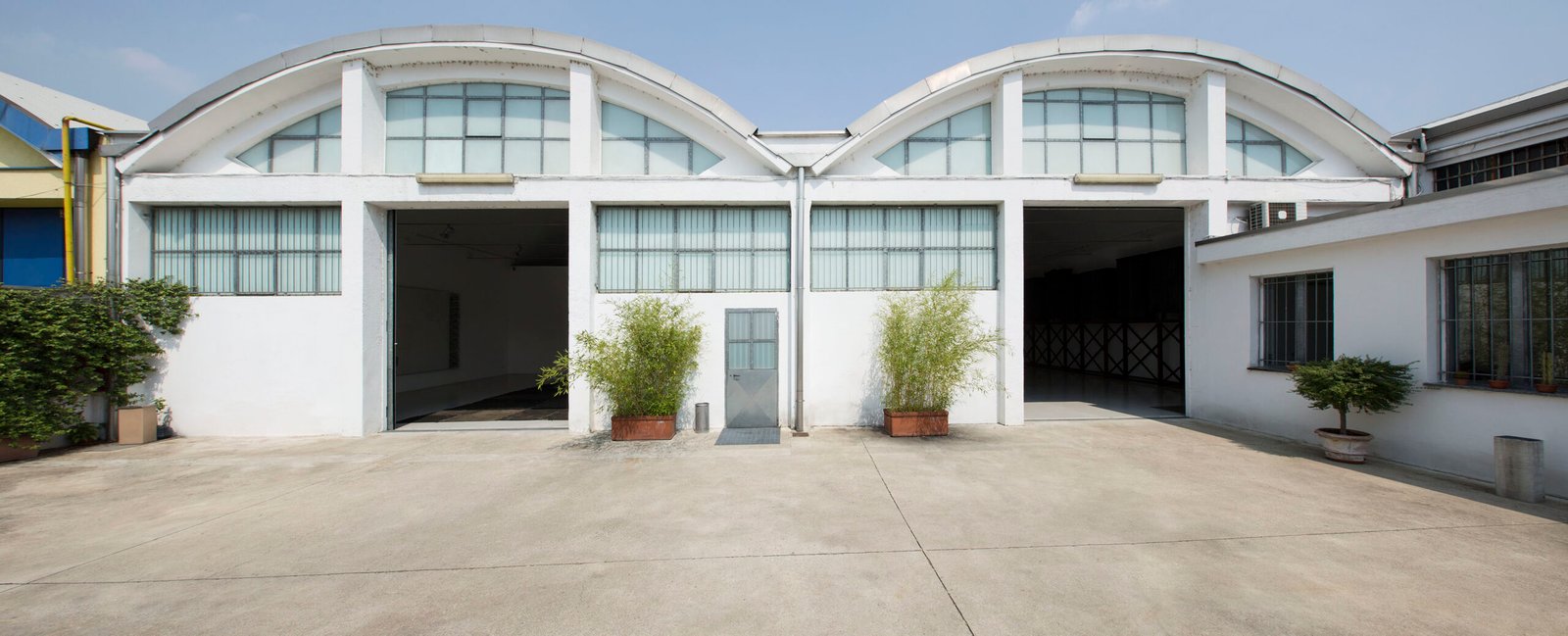
Christian Stein Deposito, Pero Milan, Courtesy Galleria Christian Stein Milan. Photo Agostino Osio
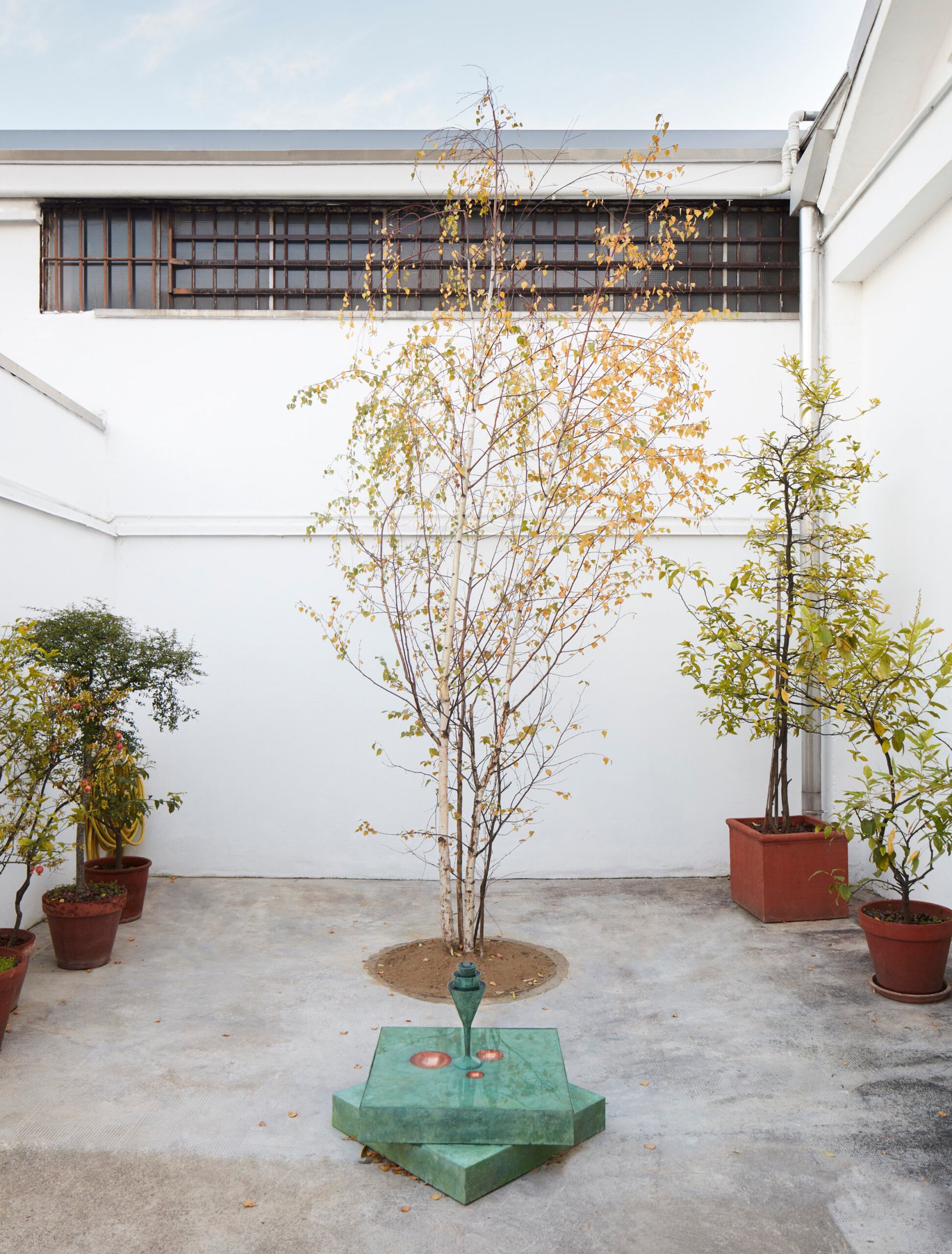
Christian Stein Deposito, Pero Milan, Work by R. Salvadori, Courtesy Galleria Christian Stein Milan. Photo Agostino Osio
Edited by Dobroslawa Nowak
Copyrights: the authors, offseen and partnering platforms;