





5 offseen Exhibitions You Need to See in April
by Lorenzo Ilari
15.04.2026
Taken together, these five exhibitions feel less like separate statements and more like variations on a single question: how much can meaning be held before it starts to unravel? Each project stages a different answer, but all return to the same fragile point where certainty begins to dissolve.
Clamorosa quiete
Artist: Nunzio Di Stefano
Lorenzelli arte, Milan, Italy
On view until May 8, 2026
In front of the works of Nunzio Di Stefano, gathered in this exhibition, one does not truly look: one dwells. Time slows, almost suspends itself, as if space were asking for silence before it can be seen.
It is not the material that strikes, but its limit. That precise point where form ends and, in ending, begins to exist. One is reminded, as Pier Giovanni Castagnoli writes, that form is boundary, threshold. A fragile place where something appears without ever fully giving itself.
Everything else unfolds within this tension: wood passed through fire, black that is intensity, surfaces that hold light rather than reflect it. As though each work had undergone a necessary trial, something that recalls the thought of Gaston Bachelard: what burns does not vanish; it transforms into a more essential presence (from La psychanalyse du feu, 1938).
And yet nothing is dramatic. Everything happens within a severe, restrained measure. No excess gesture, no declaration. Only a form that endures, that remains without imposing itself.
Perhaps this is what Luca Massimo Barbero calls a “clamorous quiet”. A quiet that keeps the gaze open, that insists.
And so one understands that these works do not ask to be understood. Instead, they ask something more difficult: to be inhabited, if only for a moment.
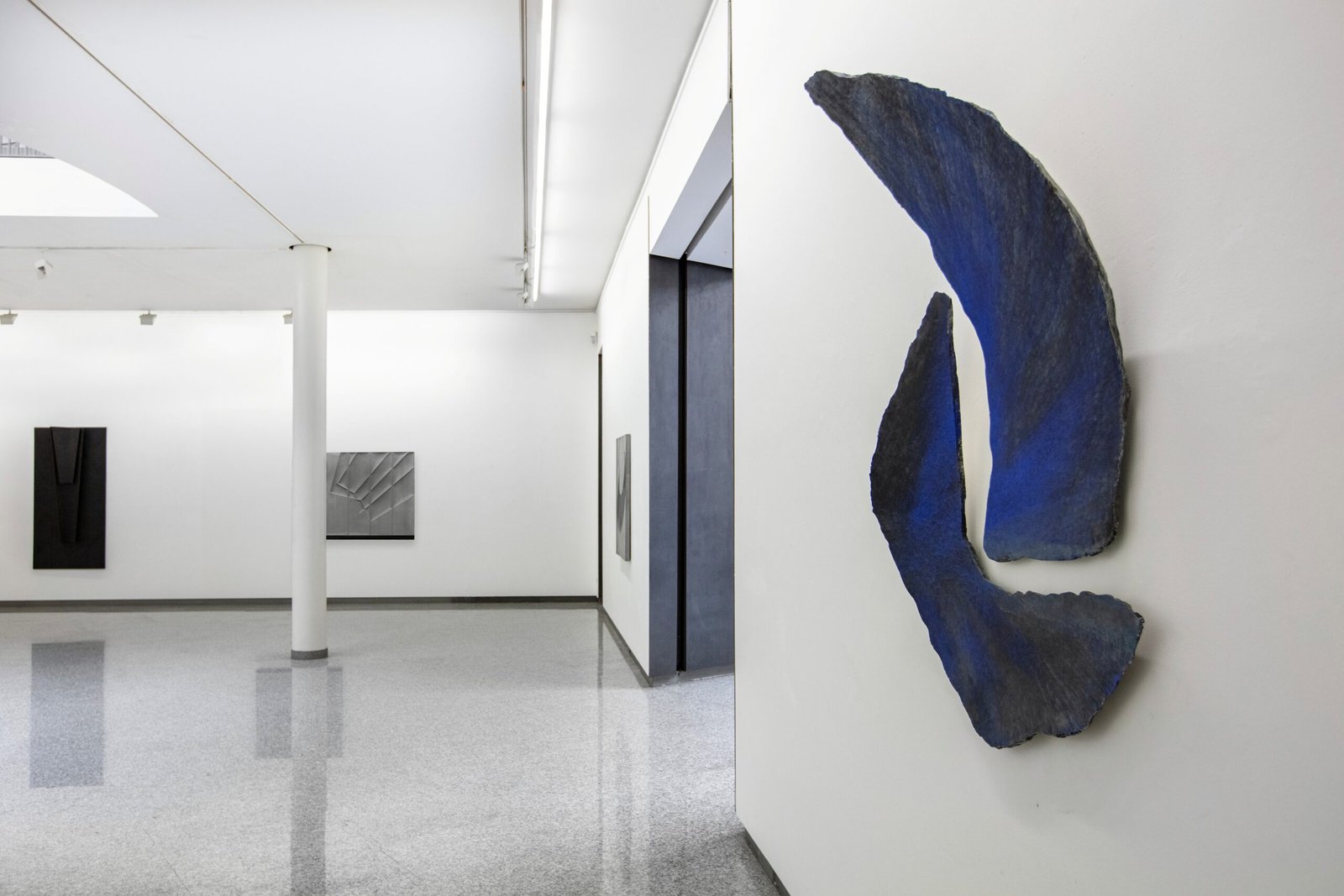
Nunzio. In clamorosa quiete exhibition views, courtesy the artist and the gallery;
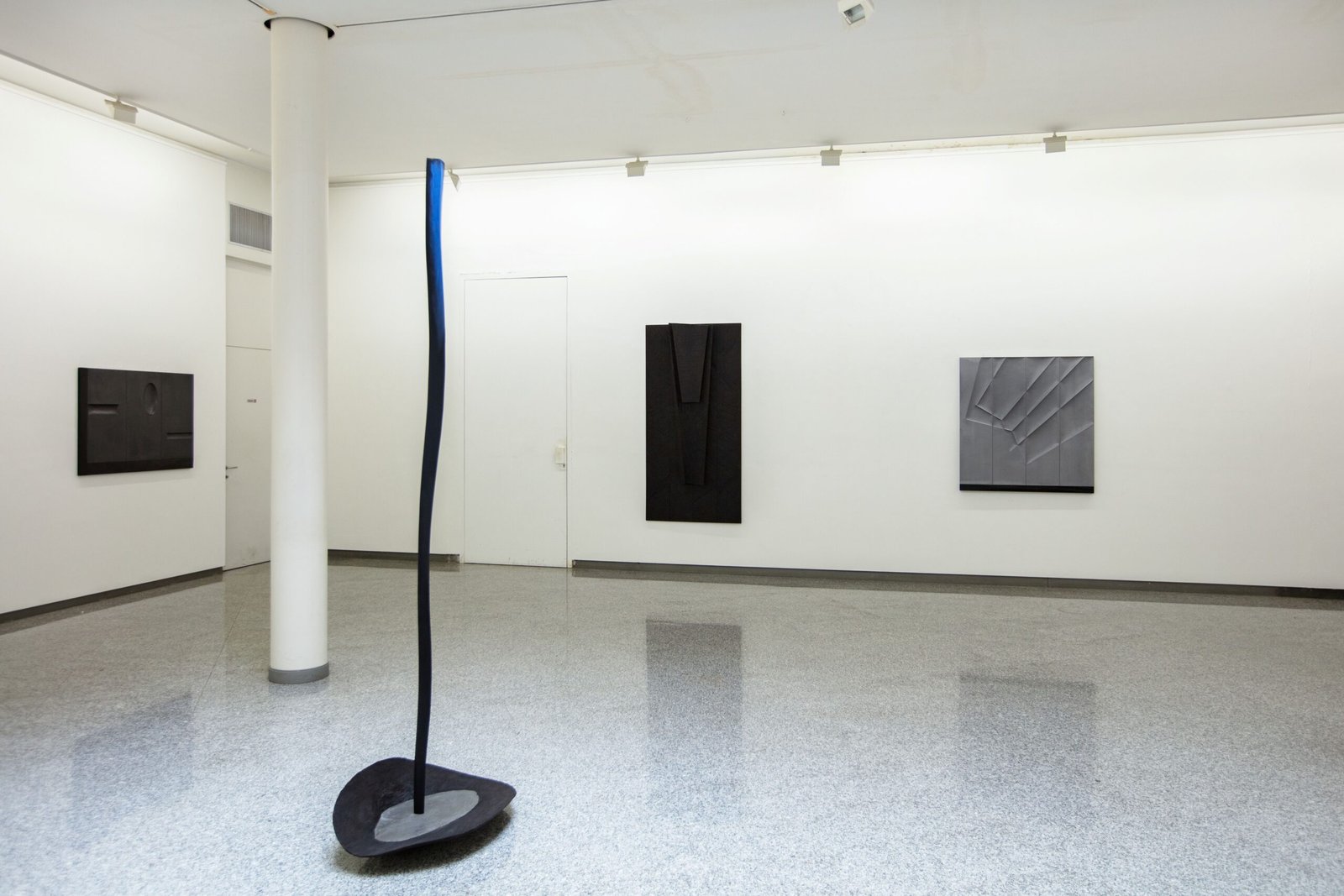
Nunzio. In clamorosa quiete exhibition views, courtesy the artist and the gallery;
Absolute Faith Made
Artist: Arseny Zhilyaev
C+N Gallery CANEPANERI, Genova, Italy
On view until May 20, 2026
One enters the exhibition Absolute Faith Made, by Arseny Zhilyaev, with a fatigue already underway, as though it had never truly begun and simply continued. It is tied to a continuity of news that follows one another without transformation, images that overwrite each other, and facts that never become an experience but remain a surface endlessly repeated.
The works situate themselves precisely within this threshold, where the world no longer strikes and no longer even allows time for reaction. They do not seek to interrupt the flow, nor to give it order. Rather, they slow it down until it becomes almost bearable in its inertia. What emerges is not so much the content of suffering, but its persistence: a duration without development.
In this context, faith loses any character of assent or momentum. It is no longer a choice, nor a conviction. It becomes something closer to a residue: what remains when the capacity to respond has been worn away. An act born not of an excess of meaning, but of its gradual evaporation. To believe, then, is to endure a continuity that does not allow itself to be interrupted.
The works offer no symbolic passage, nor any possibility of redemption. Instead, they abide faithful to this condition, almost holding it on the threshold of thought. There is no explanation that resolves itself, no form that brings peace. Only repetition, which, precisely in its lack of variation, forces one to question what normally remains invisible: the edge beyond which meaning ceases to emerge and only duration persists.
In this sense, the “absolute” appears as an excess of the real over any capacity for response. It stays. And within that persistence arises a question that does not seek resolution: what is left of meaning when there is no longer the strength to attribute it?
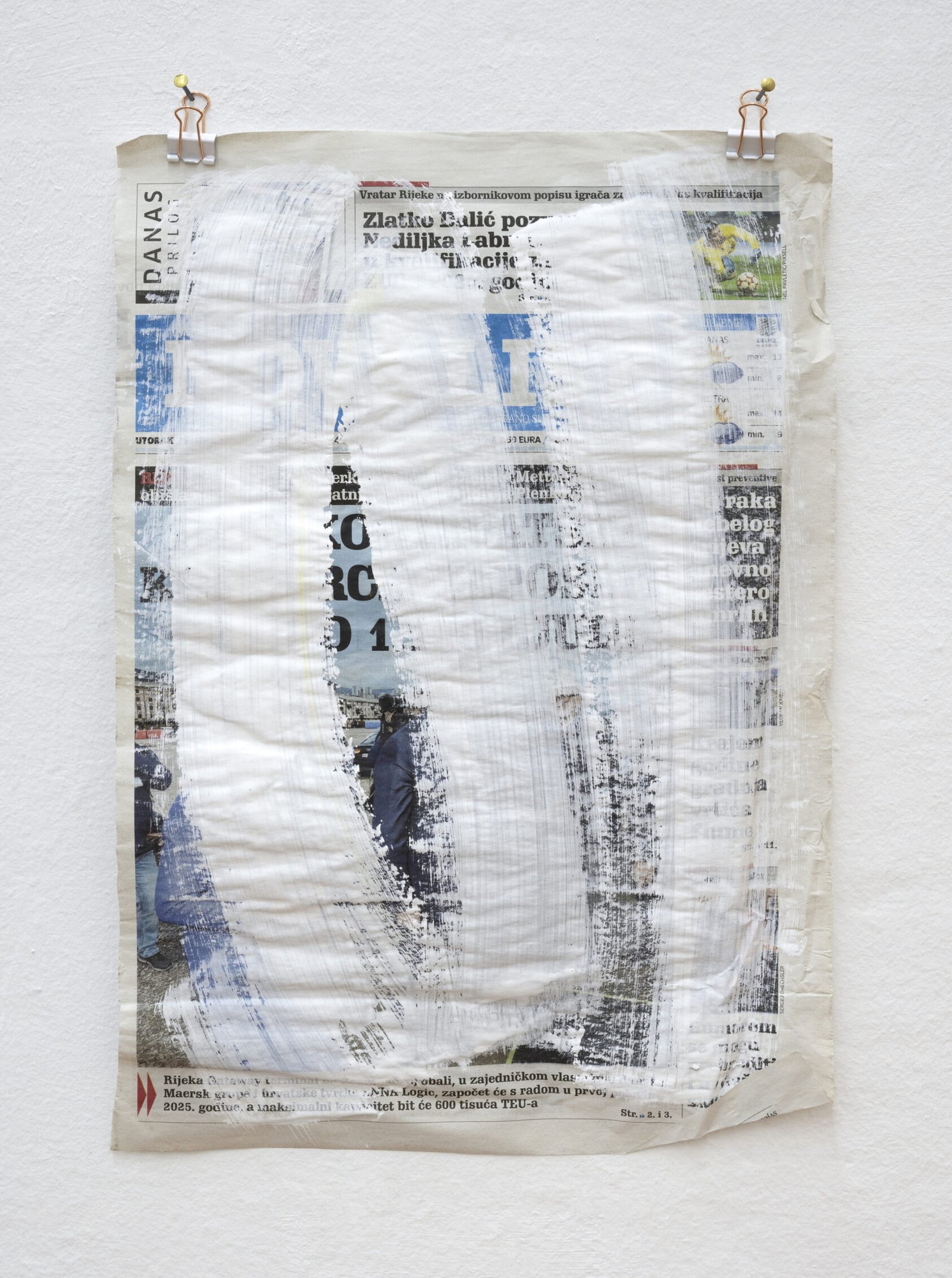
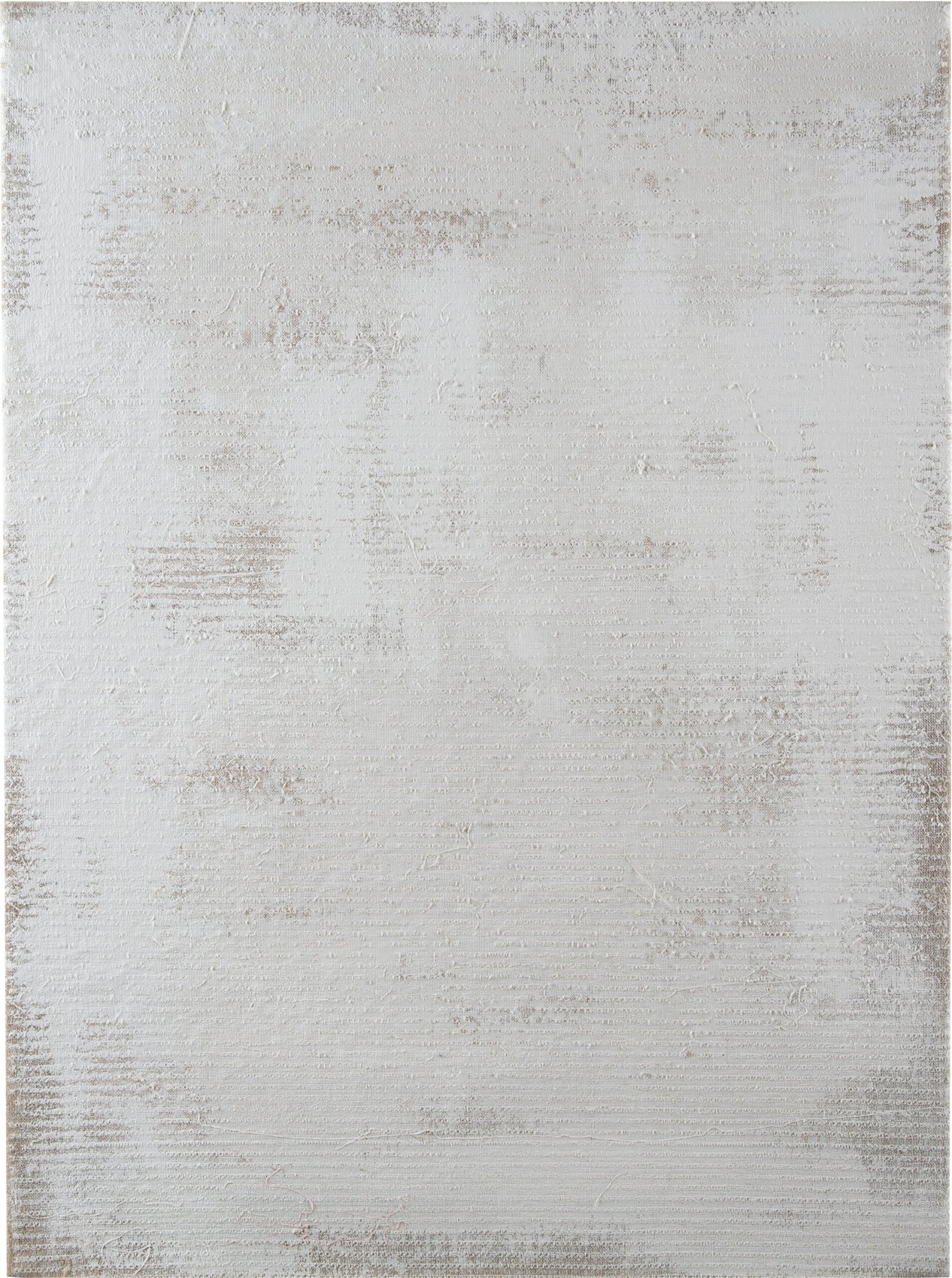
Absolute Faith Made exhibition views, courtesy the artist and the gallery
Odyssea: Le sel de la terre
Artists: Nina Boughanim, Elvire Ménétrier, Marilou Poncin, Valentin Vert, Petja Ivanova, Todor Rabadzhiyski
Spiaggia Libera and PUNTA Gallery, Sofia Center, Sofia, Bulgaria
On view until May 9, 2026
There is something insistently non-neutral about Odyssea – The Salt of the Earth. The space appears as an already altered field: salt operates as a material condition of thought, a surface that preserves and erodes in the same gesture, without stabilising any hierarchy between the two.
The exhibition rejects the idea of a stable interpretative centre. Each element slightly displaces the ground, as though meaning were never a fixed endpoint but a continuous drift of matter itself. In this slippage, what disappears is not coherence, but the demand for a final form.
The images of organic and hybrid works insist on this instability: growth and decay become variations of the same process. The body, particularly the female body, evoked across several works, never appears as a unity. Instead, it remains a zone of passage, exposed to forces that both constitute and exceed it.
Mythic reference does not construct a narrative; it only creates a subterranean tension. Sirens, Prometheus, and combustion remain residues of a mode of thought in which time does not proceed linearly, but accumulates, corrodes, and begins again.
In the end, what remains is a distinct impression: the experience of moving through an environment in which matter thinks more slowly, yet with greater persistence, than language ever could.
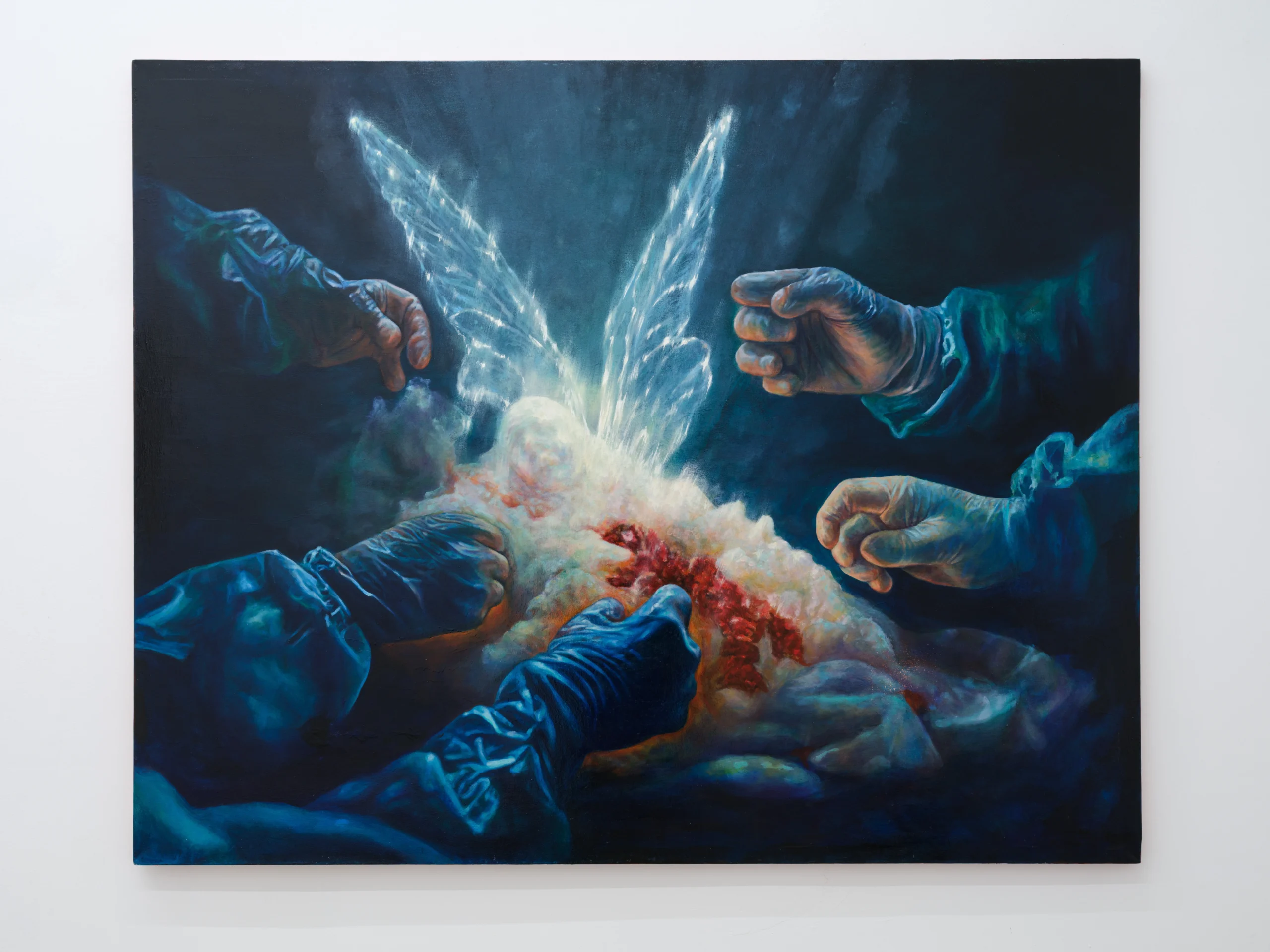
Precious, Elvire Ménétrier, 2025; Odyssea: Le sel de la terre exhibition views, ph Mihail Novakov, courtesy the artist and the gallery
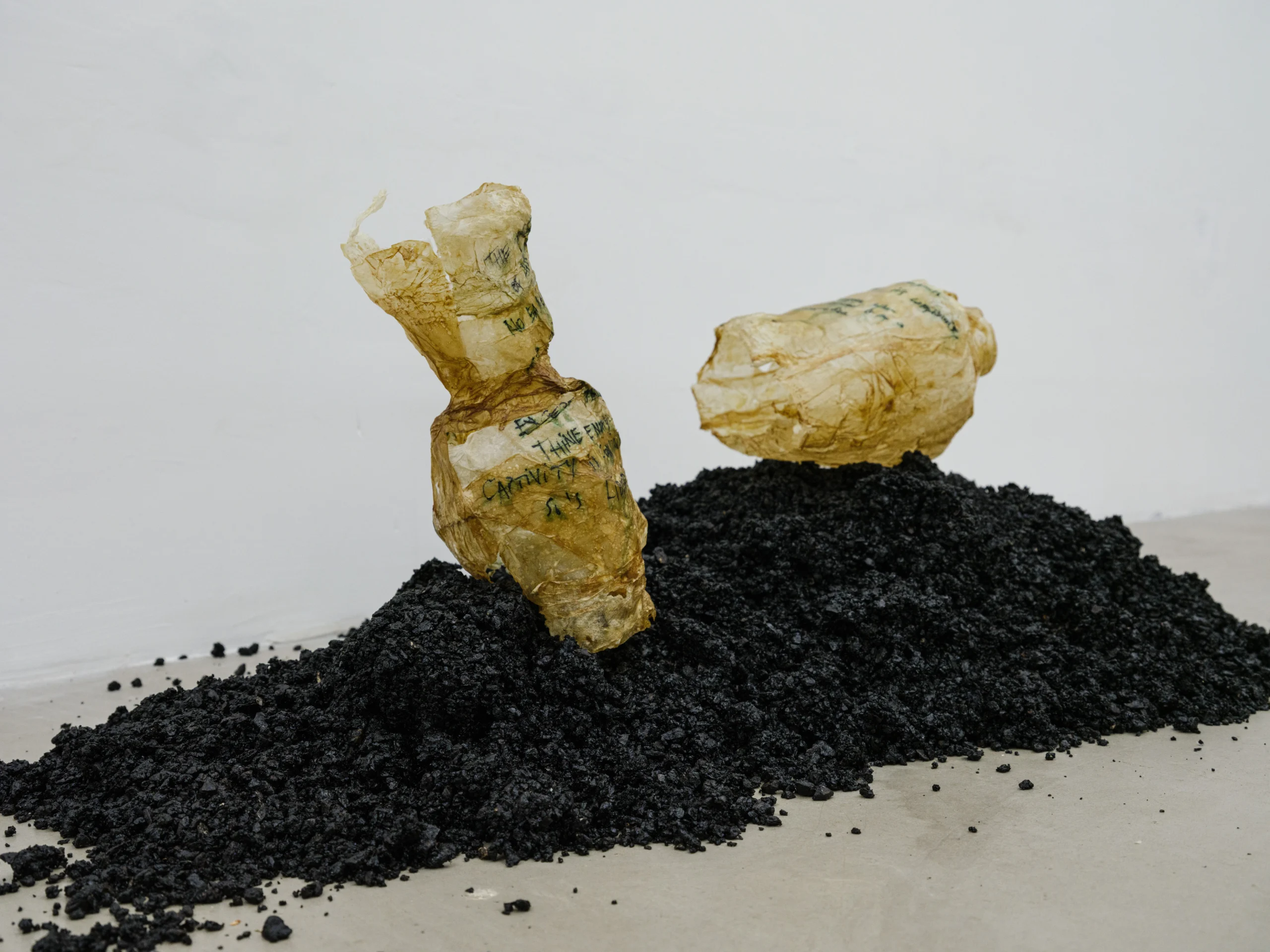
Reliquaries of a raging body, Petja Ivanova, 2026; Odyssea: Le sel de la terre exhibition views, ph Mihail Novakov, courtesy the artist and the gallery
Margins
Artist: Uladzimir Hramovich
TBA, Warsaw, Poland
On view until April 30, 2026
Margins starts from a quiet but unsettling idea: history isn’t simply what’s left behind, it’s what’s been allowed to stay.
Hramovich’s works seem to be meant to explain something. A banner, artefacts, fragments, things we’re used to trusting. But here, they don’t quite hold. The banner has no inscription. The objects feel historical but can’t be historically placed. The fragments are enlarged until they lose their footing. They seem to point somewhere, but never fully arrive.
What remains is a strange feeling: the shape of meaning.
The fresco sits at the center of this. The banner is still there, still recognizable, but empty. It feels like it should say something important, yet it doesn’t. It leaves you with the sense that history can keep its form even when its content slips away or was never really there to begin with.
Across the exhibition, nothing is fully recovered. Instead, you start to notice how things are put together, how objects, images, and fragments are arranged so that they look like history. And how easily that can fall apart.
What’s missing isn’t just absence. It’s doing something. The gaps, the silence, the lack of context, they shape what you see as much as anything that’s actually there.
By the end, the feeling is hard to shake: the past isn’t stable. It’s pieced together, held in place, and constantly shifting. And what falls outside of it doesn’t disappear; it lingers, quietly affecting everything that stays in view.
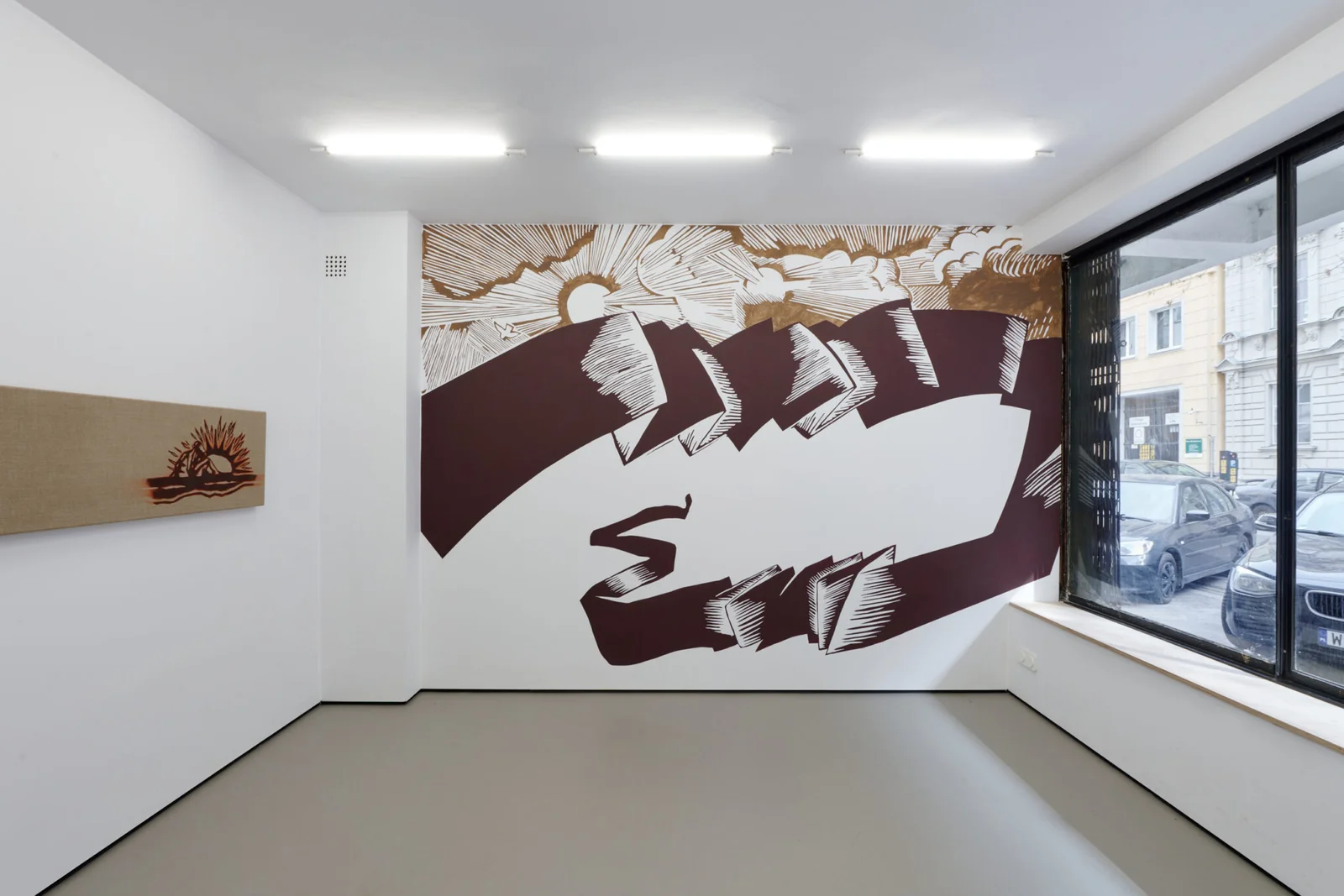
Margins exhibiton views, ph Kuba Rodziewicz, courtesy the artist and the gallery
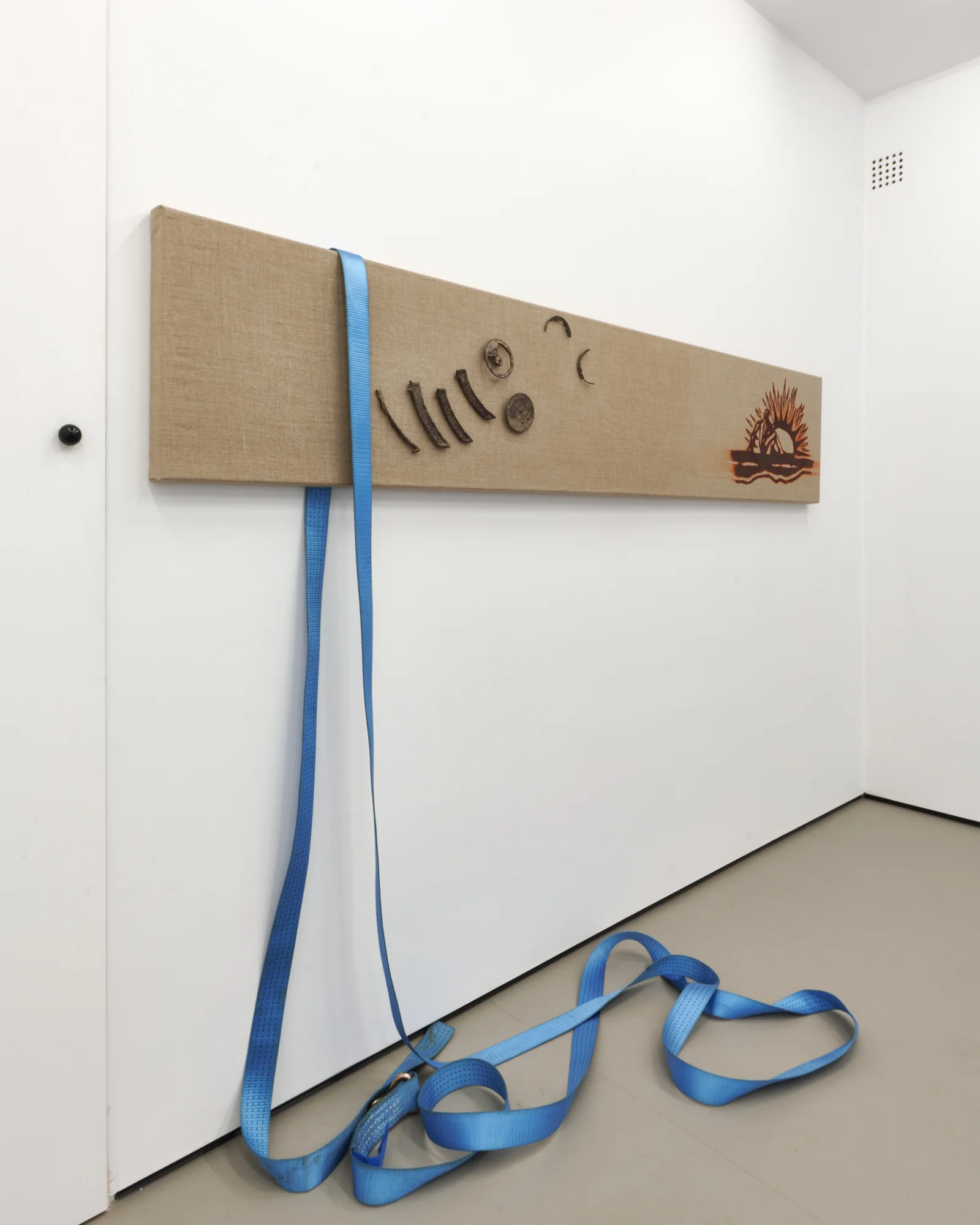
Margins exhibiton views, ph Kuba Rodziewicz, courtesy the artist and the gallery
Becoming Islanders
Artist: Johanna Binder
Galerie 35M2,Prague, Czech Republic
On view until April 25, 2026
On Ascension Island, ecology was once approached as something that could be designed. Species were transported, placed, made to live together under a single vision. With the authority of figures like Charles Darwin and Joseph Dalton Hooker, the island became less a landscape than a constructed idea, life arranged according to a plan.
Binder returns to this history and lingers on its assumption: nature can be known in advance, and shaped accordingly.
In the video Ascension: Blossoms of Power, the island never fully settles. It appears through maps, archival traces, and speculation, but none of these holds it in place. Then something shifts. The perspective turns toward the plant, and the ground quietly gives way. What seemed coherent begins to loosen. The island can no longer be grasped as a whole.
This feeling carries into Talking Land. The work spreads across space, ceramic, drawing, and sound, without a centre to hold it together. Things connect, respond, drift. There’s no stable point from which to take it in.
As the exhibition unfolds, the idea of control starts to thin out. The belief that intervention leads somewhere predictable becomes harder to hold onto. What was meant to be directed begins to move on its own terms.
What stays is a kind of unease: the sense that shaping the living world always brings something into being that doesn’t quite belong to us. Not later, but from the start; something that slips, expands, and continues beyond intention.
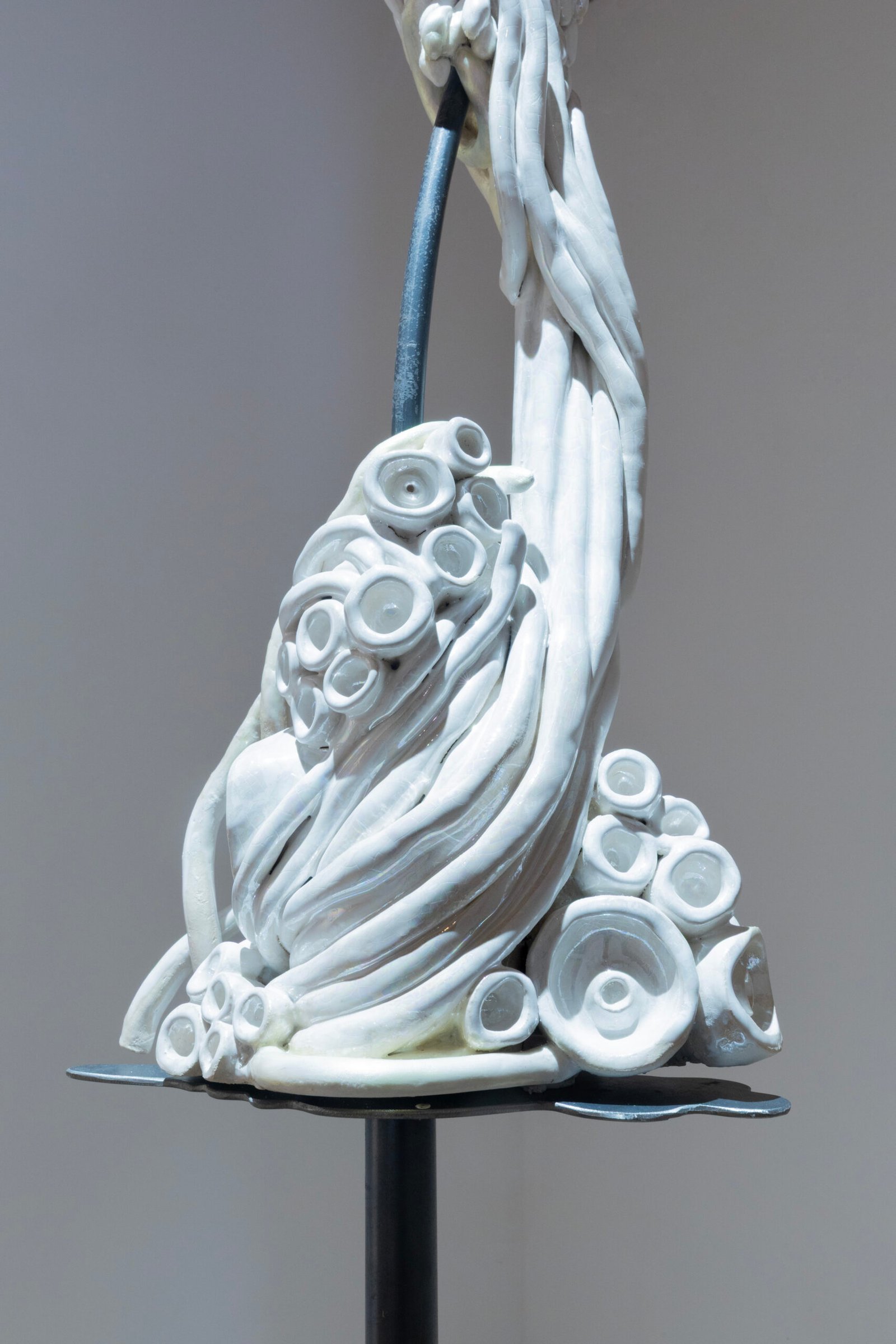
Becoming Islanders exhibition views, ph Mikuláš Mahr, courtesy the artist and the gallery
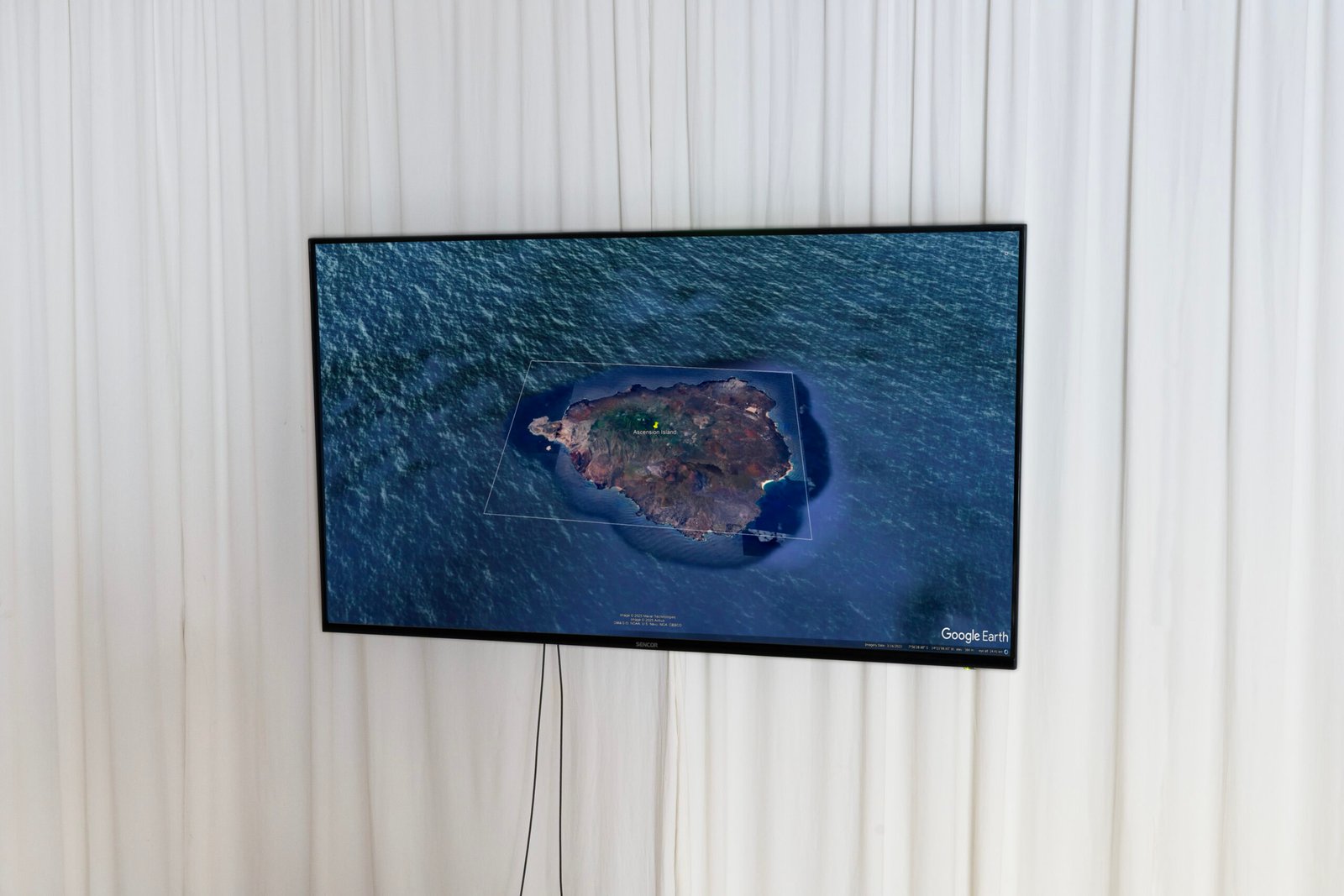
Becoming Islanders exhibition views, ph Mikuláš Mahr, courtesy the artist and the gallery
Edited by Dobroslawa Nowak
Copyrights: the authors, offseen and partnering platforms;