





5 offseen Exhibitions You Need to Visit in February
by Lorenzo Ilari
There are months when exhibitions do not announce themselves loudly, but ask to be approached sideways. This selection comes from that kind of moment—one in which looking feels less like consumption and more like a form of listening. What follows is not a map or a statement, but a series of encounters that made me slow down, hesitate, and adjust my gaze. The connections between them are not fixed; they emerge gradually, through proximity, attention, and time.
Porgere Il Fazzoletto
BOX Art Space
Macerata (MC), Italy–on view until February 23, 2026
Artist: Chiara Valentini
The Box at Circolo Casba is not a neutral container. It is an underground space with a temperament, sustained by a close-knit group of artists and friends who have chosen to challenge where they were born. The Box exists like a pocket within the city, a space inside a space, gathering forms of life that sit slightly outside the social system, almost at its edges. It is a place where things can still happen quietly, without permission.
Within this setting, Porgere Il Fazzoletto unfolds both vertically and horizontally. A long hand-woven cloth stretches across the room, suspended, bending under its own weight, moving from wall to air, from air to body. It never fully settles. The gesture recalls the passage from chàos to kósmos—not as resolution, but as a tentative, ongoing attempt at order.
Along the fabric, small handkerchiefs are laid out, each embroidered with a Greek word naming a form of love: érōs, philía, storgḗ, agápē. Their scale resists emphasis. They require proximity, slowness. Rather than clarifying love, they expose its plurality, its tensions, its instability, its refusal to be contained by a single meaning.
To read the text woven into the cloth, one must bend down, adjust posture, linger. The loom becomes an image of thought itself: meaning formed through repetition, patience, and care. Kneeling, stripped of devotion, becomes an act of attention.
In a time shaped by speed and emotional compression, the gesture of offering a handkerchief feels unexpectedly precise. Care here is material, time-bound, shared. In the Box—a space shaped by persistence and proximity—this modest act insists that love can still function as practice, rather than declaration.
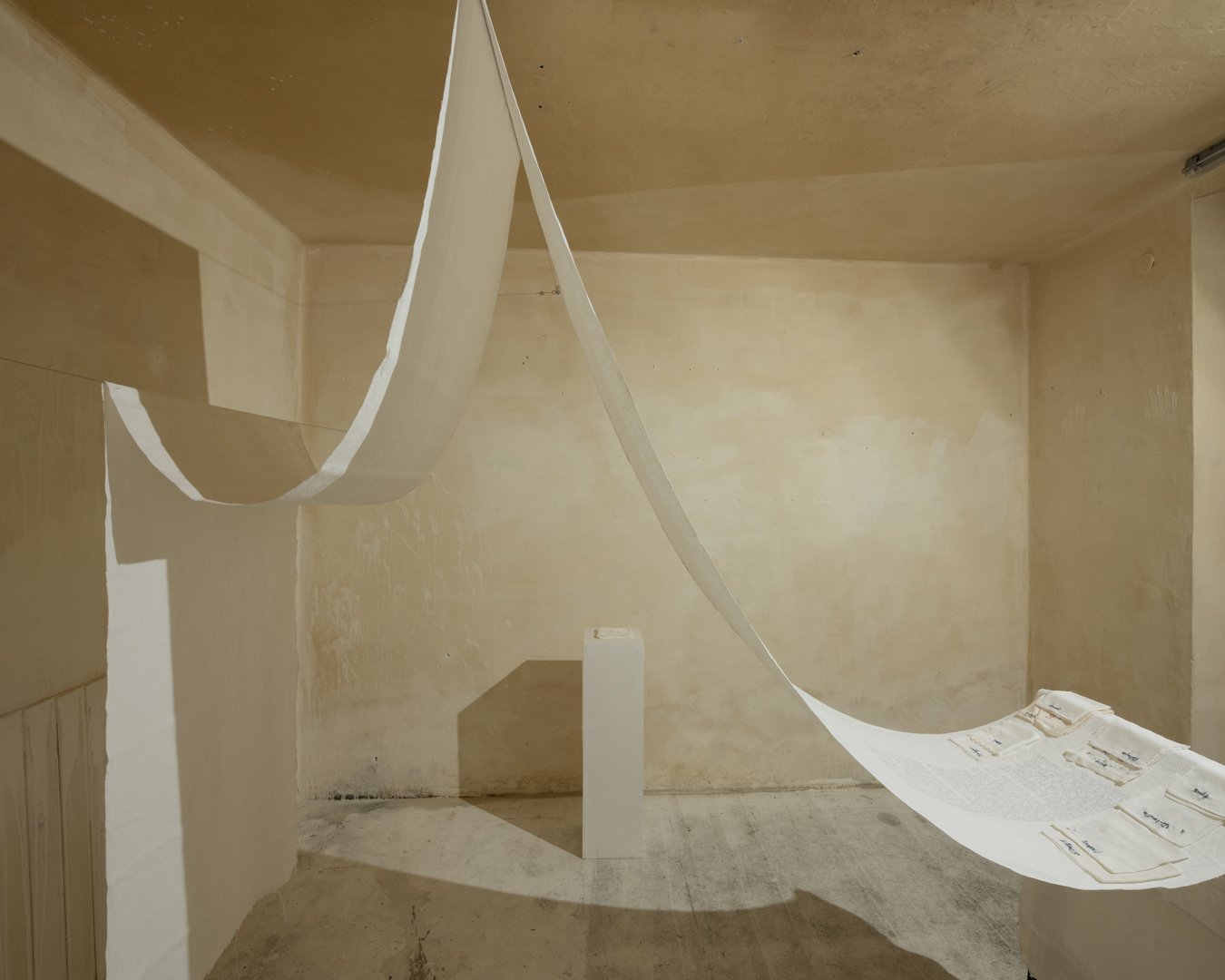
“Porgere il Fazzoletto” exhibition views, ph Marco Gatta, courtesy the artist and the gallery;
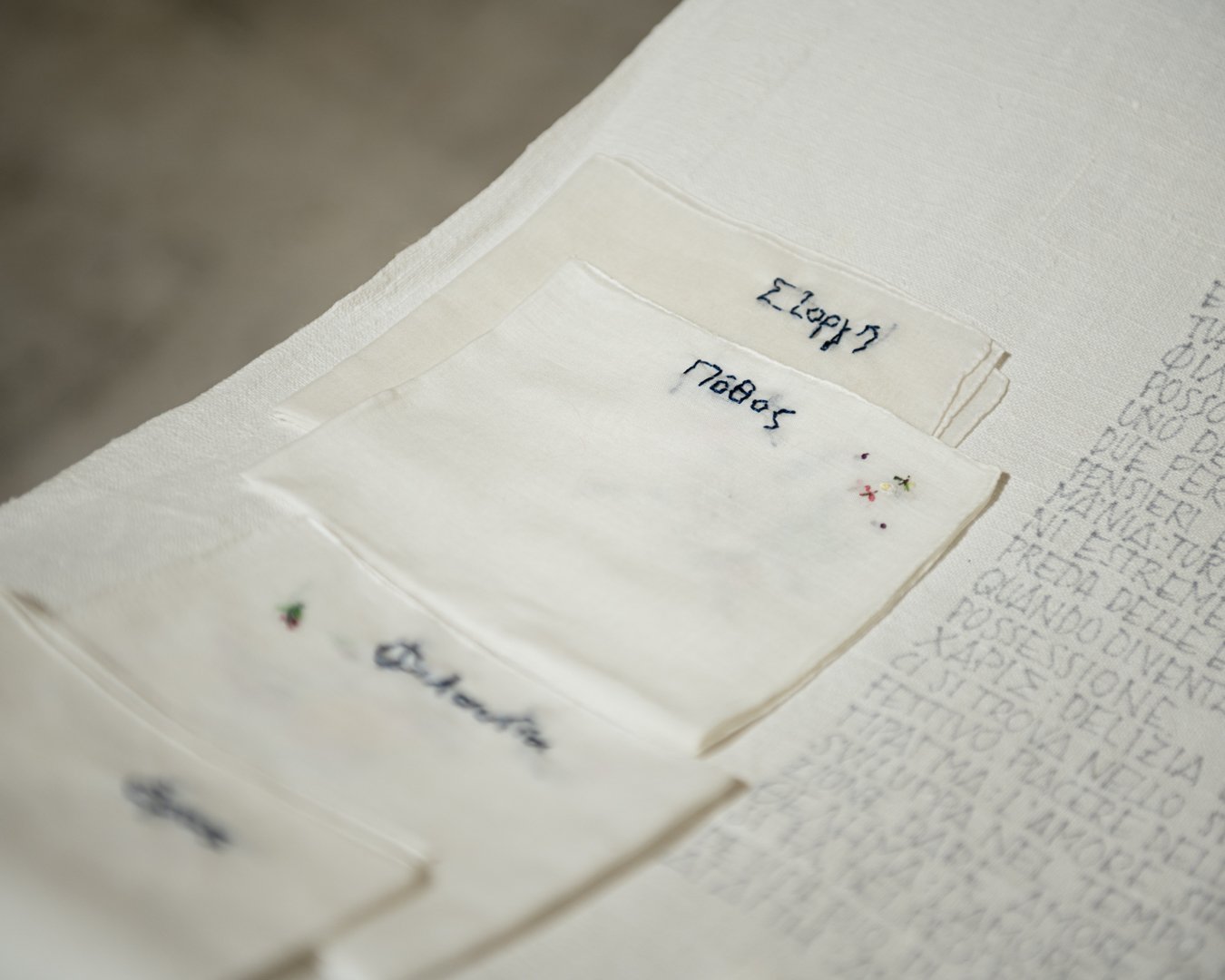
“Porgere il Fazzoletto” exhibition views, ph Marco Gatta, courtesy the artist and the gallery;
Unseen Users
Super Dakota
Brussels, Belgium–on view until March 14, 2026
Artists: !Mediengruppe Bitnik, Neïl Beloufa, Chris Dorland, Arnaud Eubelen, Sayre Gomez, Wade Guyton, Peter Halley, Angélique Heidler, Julia Wachtel;
In a world perpetually oriented toward visibility, towards what can be displayed, documented, circulated, and consumed—the unseen is not simply absent: it operates in the shadows of systems that privilege surface over process, exposure over contact. Unseen Users begins from this double movement: what is rendered invisible by habit and what is rendered invisible by design.
The phrase “unseen users” suggests more than omission; it gestures toward those who live and work at the margins of interfaces, bodies whose presence is registered only when structures fail, whose agency is recognised only when absence becomes rupture. At a moment when social technologies claim transparency, and when networks promise connection, it is worth pausing to ask: whose use is acknowledged, and whose remains below the threshold of notice?
In this context, the unseen is not the invisible as negation, but the invisible as condition of possibility. Systems depend on users they never welcome: those who move without being counted, whose labour is necessary yet immeasurable, whose forms of interaction exceed the protocols that would map them. To be unseen is to work in the seams—the porosity between coded interfaces and lived experience, between formal inclusion and practical recognition.
Against the aesthetics of spectacle and legibility, Unseen Users proposes a different engagement: an attention to thresholds, to the friction that allows absence and presence to cohabit. It is an invitation to reconsider how visibility is granted, how agency is recognised, and how inclusion might emerge not from classification, but from careful attunement to those who operate just beyond the glare of the spotlight.
Here, the unseen is not lacking. It is a different mode of relationality, a quiet insistence that what we do not immediately see may still shape the conditions of our collective life.
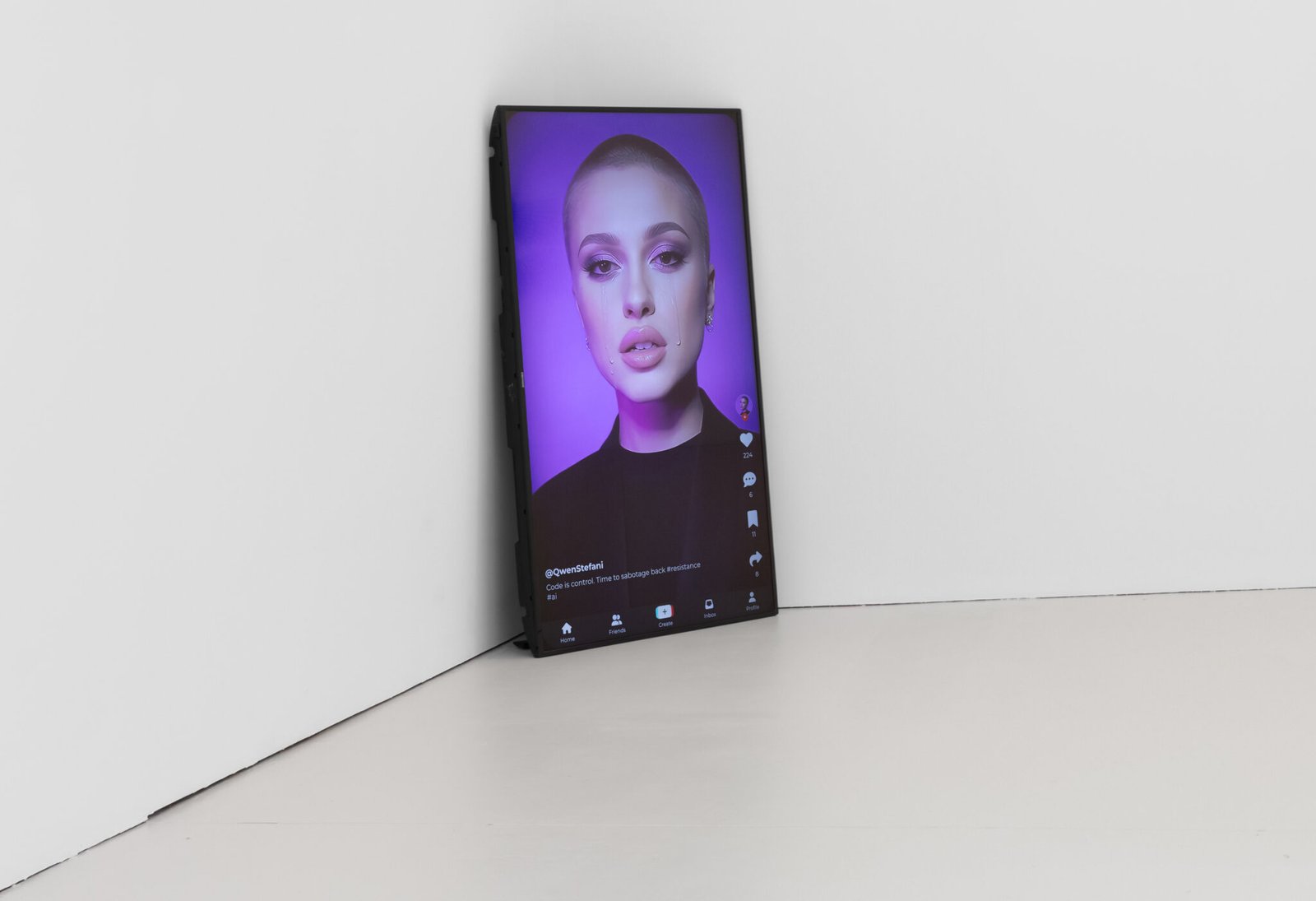
“Unseen Users” exhibition views, ph Silvia Cappelari, courtesy the artist and the gallery;
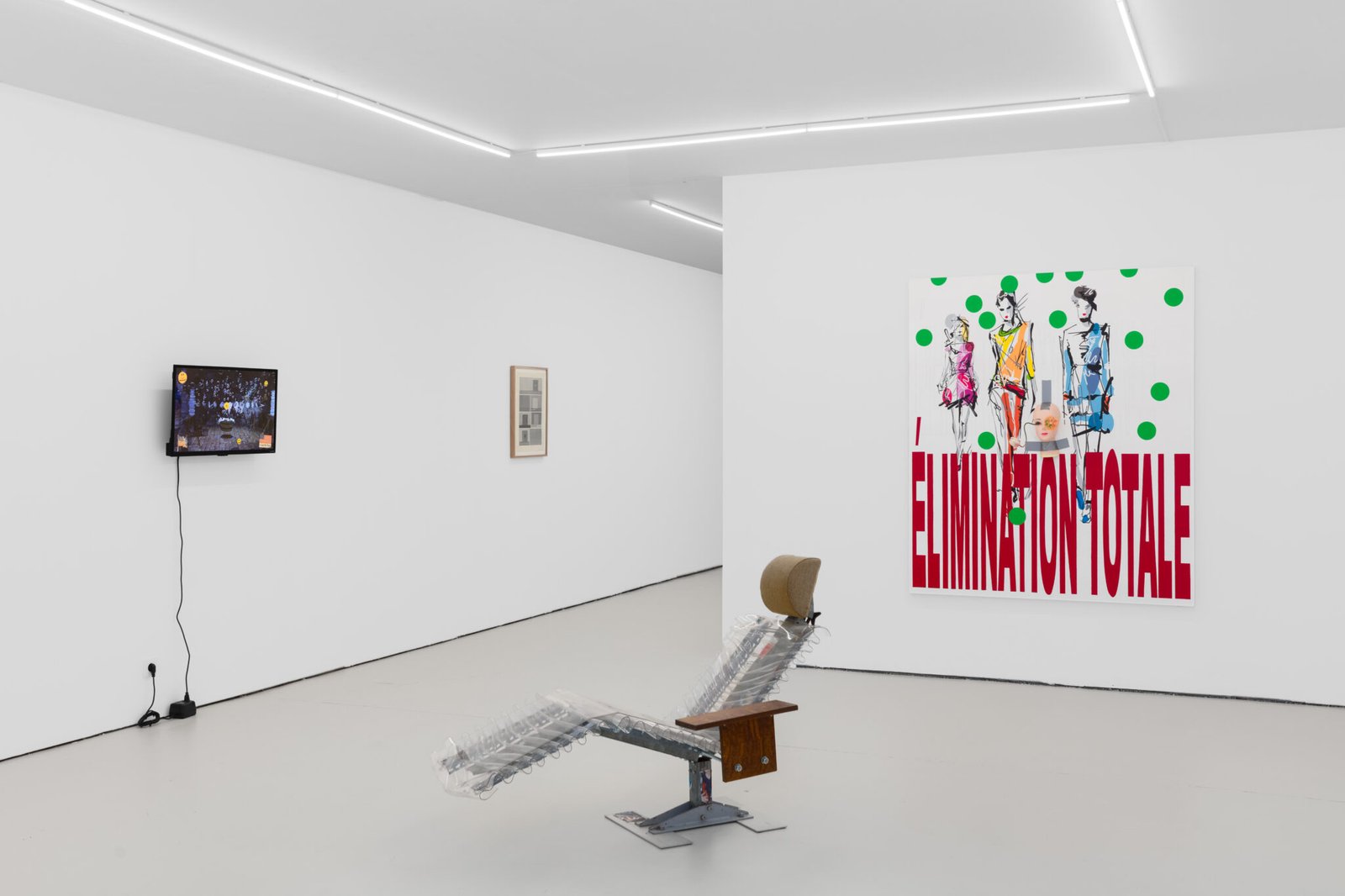
“Unseen Users” exhibition views, ph Silvia Cappelari, courtesy the artist and the gallery;
AAA — Anarchy At Least in Art
Litostudio Milano
Milan, Italy–on view until February 27, 2026
Artists: Simone Stuto, Davide Serpetti, Marco Bongiorni, Gino Bosa, Noemi Durighello, Iva Drekalovic, Lorenzo Di Lucido, Luca Zarattini, Nicolò Bruno, Mario Silva, Dario Pecoraro, Lorenzo Tamai;
Here, anarchy is approached as refusal: a refusal of conventions that hollow out experience, of systems that reduce imagination, labour, and relationships to transaction. Anarchy is not chaos; it is a form of attention.
Curated by Tazzina Libero, the exhibition positions itself as a collective stance. What connects the artists is a shared resistance to ethical and aesthetic monotony, to the quiet violence of norms that demand legibility, productivity, and compliance.
The accompanying manifesto frames the world as contradictory and alive: sacred and theatrical, bestial and luminous. Within this vision, the human is no longer central. Light, animals, matter, and cosmic forces take precedence, reminding us that existence exceeds moral economies and social systems.
Money and exchange appear only in negative, as corrupting shadows rather than sustaining forces. Against them, art is proposed as a non-mercenary act: something that cannot be exchanged without loss.
Anarchy, here, becomes an ethical position.
The exhibition allows divergence to remain visible, holding multiple trajectories at once. Freedom is located not in consensus, but in difference.
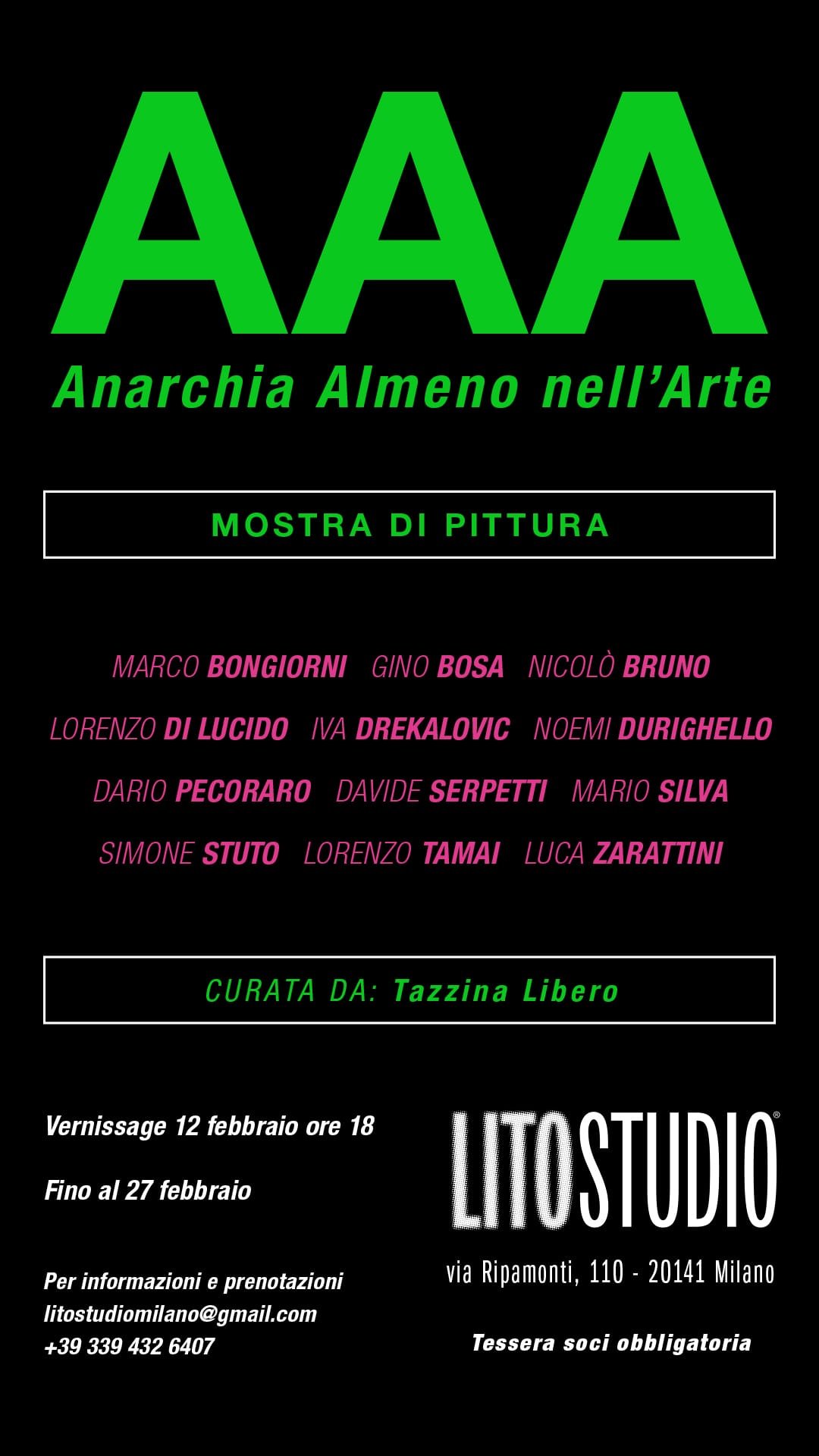
“AAA – Anarchy At Least in Art” exhibition poster, courtesy the artists and the gallery;
Tidal, Porous, and Fragmentary
Ex Chiesetta – Fondazione Pino Pascali
Polignano a Mare (BA), Italy–on view until May 3, 2026
Artist: Arianna Ladogana
This exhibition begins from water. In Polignano a Mare, where the Mediterranean is never background but presence, the work feels less like a statement to a place long shaped by erosion, crossings, and instability. Bodies here, human and otherwise, are understood as porous systems rather than closed forms. The Mediterranean remains an unspoken reference: a sea of sedimentation and fracture, where histories accumulate without resolving. Water connects as much as it wears away.
What feels intimate is the insistence on vulnerability as a form of knowledge. Against contemporary fantasies of containment—political, technological, ecological—porosity is proposed as an ethical position.
To exist is to be affected, reshaped by what passes through.
The former chapel holds this sensibility without monumentalising it. Fragmentation remains visible. Nothing seeks completion. Forms register touch, time, and loss without nostalgia. Fragmentation appears not as damage, but as evidence of relation.
The exhibition suggests that understanding the present may require moving away from solidity and towards flow. In a Mediterranean landscape marked by movement and rupture, remaining open and incomplete emerges not as weakness, but as a way of staying with the world.
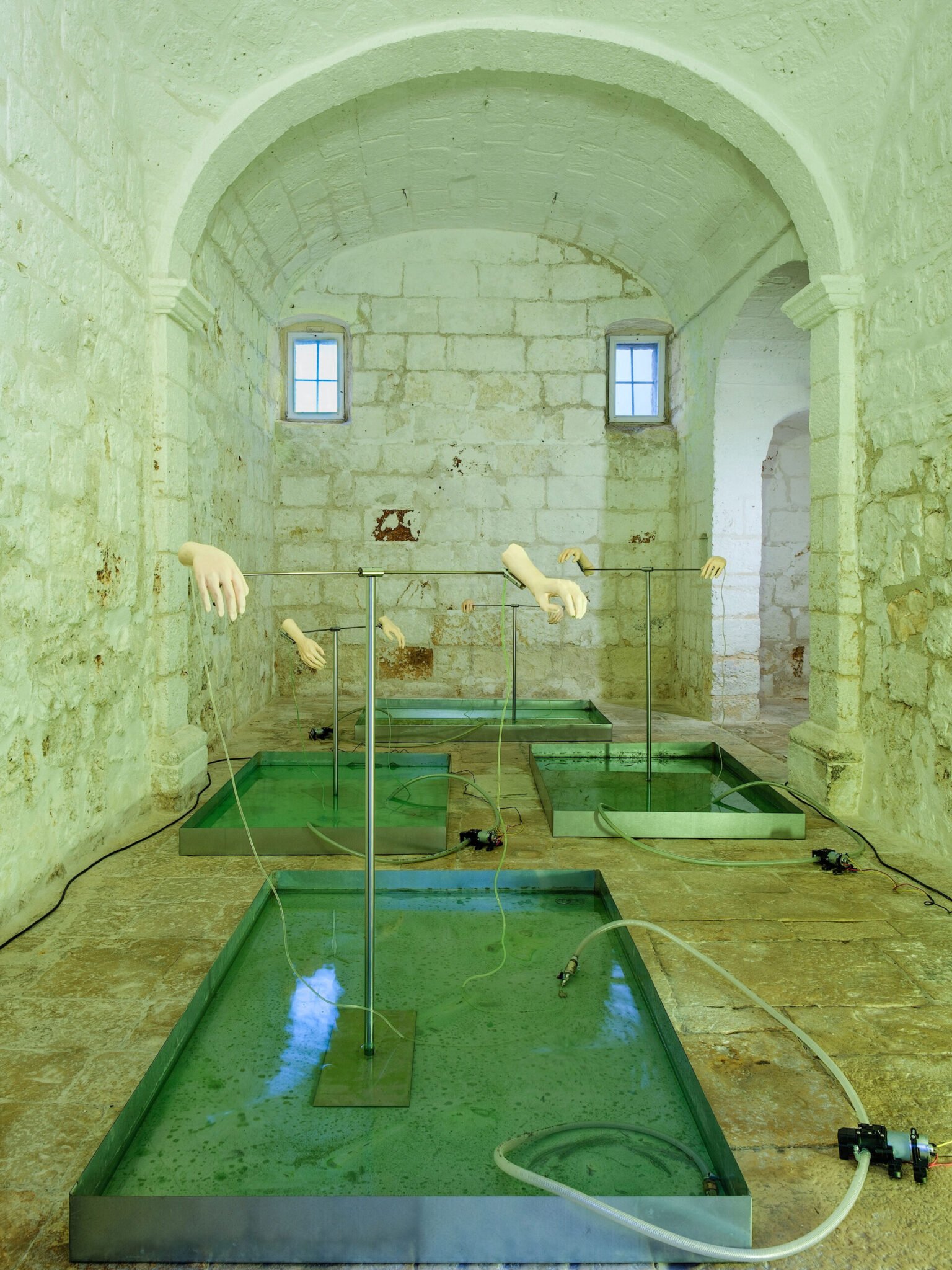
“Tidal, Porous, and Fragmentary” exhibition views, ph Marino Colucci, Paolo Modugno, courtesy the artist and the gallery;
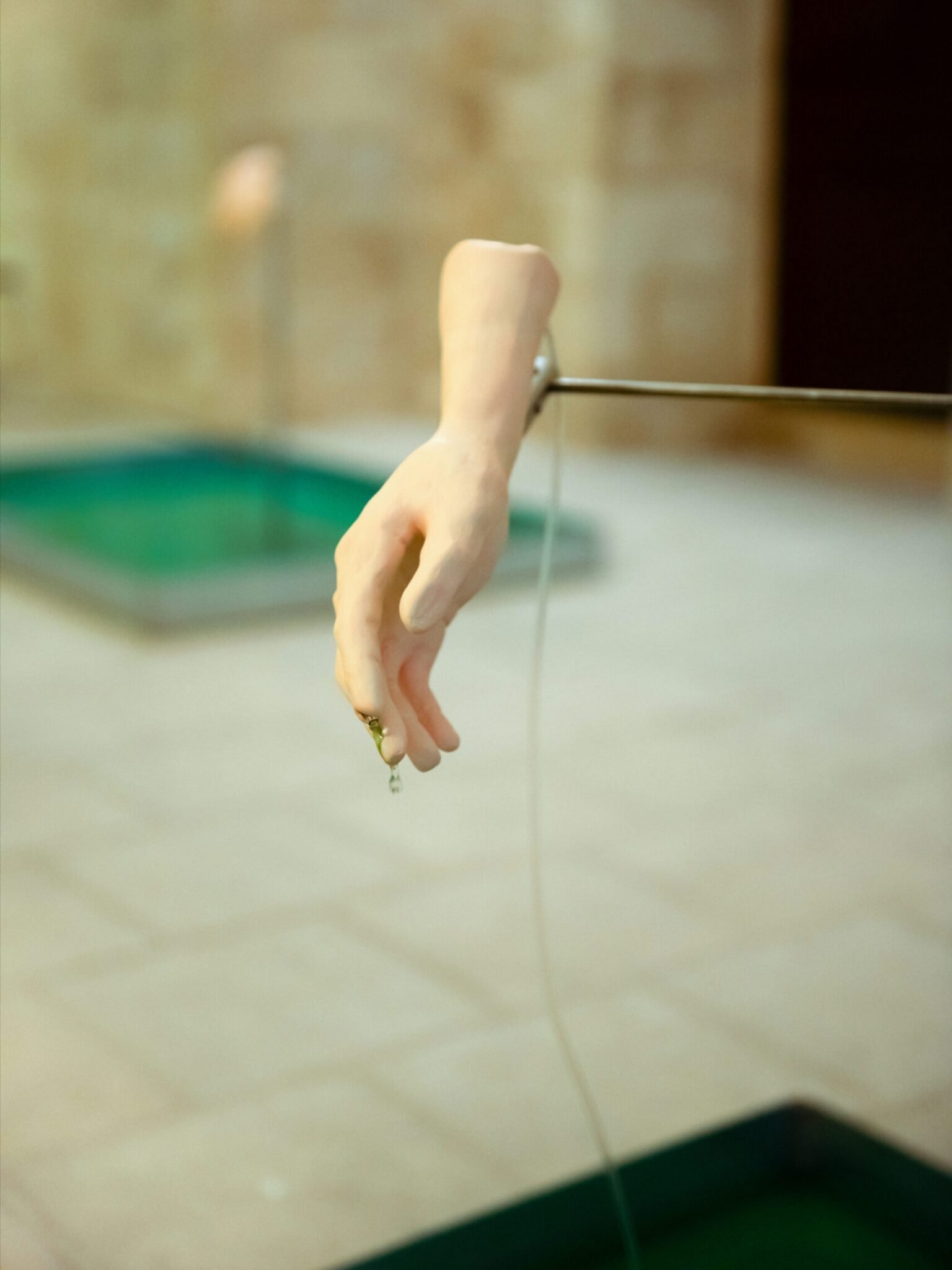
“Tidal, Porous, and Fragmentary” exhibition views, ph Marino Colucci, Paolo Modugno, courtesy the artist and the gallery;
Go
Friends & Family
Le Bouscat, France–on view until February 28, 2026
Artist: Perce Jerrom
Go opens with a restrained question: what does it mean to be ready? Ready to move, to leave, to endure. Drawing on the logic of the emergency kit—conceived for moments when systems falter—the work remains modest, almost anonymous. Yet it carries a quiet tension: the recognition that departure may be sudden, and that what is carried may matter more than what is owned. Within this framework, certain necessities emerge not as symbols, but as conditions of survival—practical, finite, and never entirely secure.
What persists is a sense of suspension. Go does not dramatise crisis, nor offer reassurance. It stays in the interval between staying and leaving, where preparedness shifts from control to attentiveness. It asks how much of daily certainty rests on infrastructures noticed only in their failure.
Here, value quietly rearranges itself. Objects lose their market logic and acquire another kind of weight—measured against the body’s capacity to persist. Accumulation gives way to sufficiency.
Go neither instructs nor consoles. It sharpens awareness. It suggests that security is not something stored, but something practised—through restraint, readiness, and an acceptance of exposure. Movement is presented as a condition already unfolding.
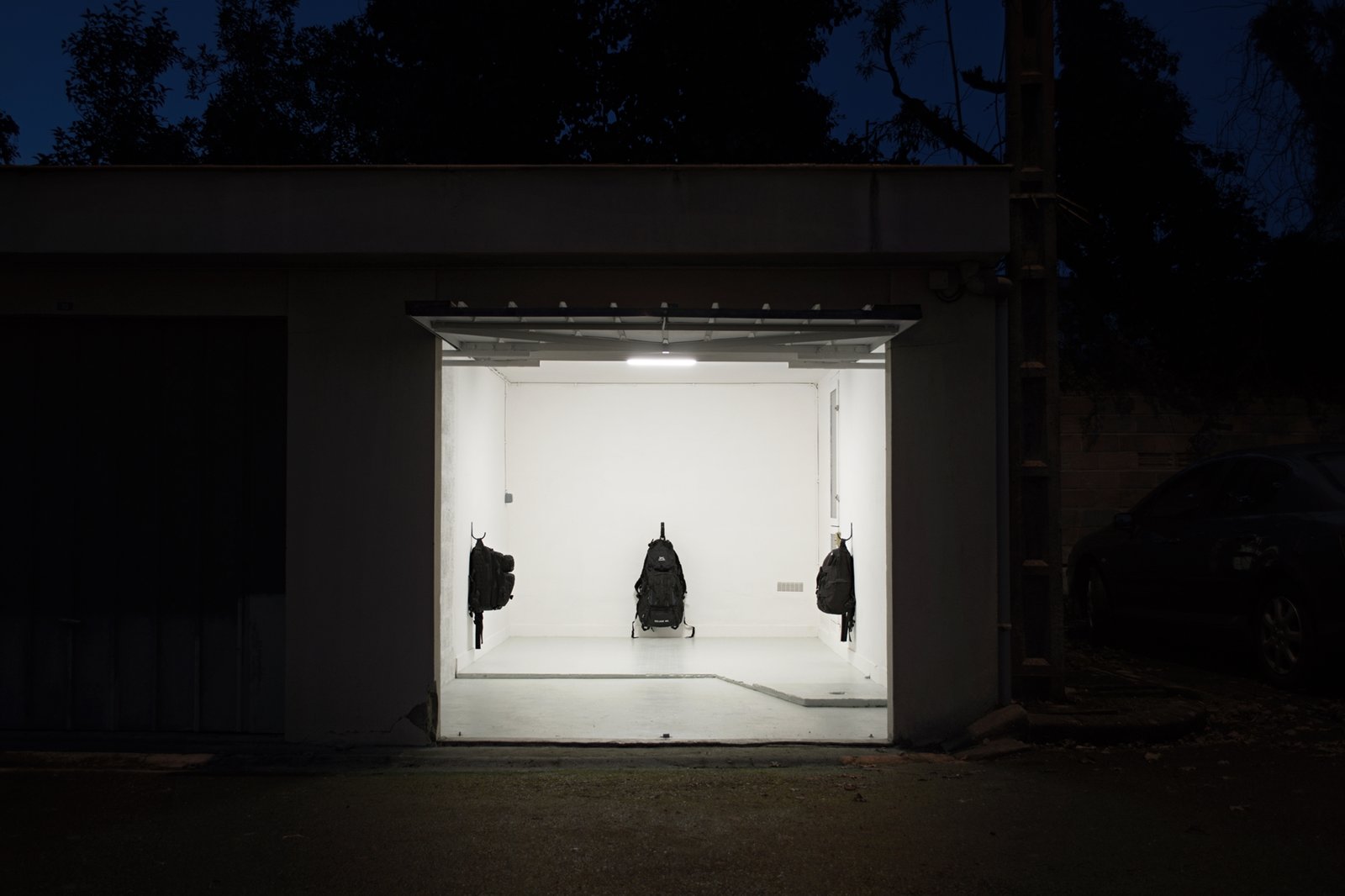
“Go” exhibition views, courtesy the artist and the gallery;
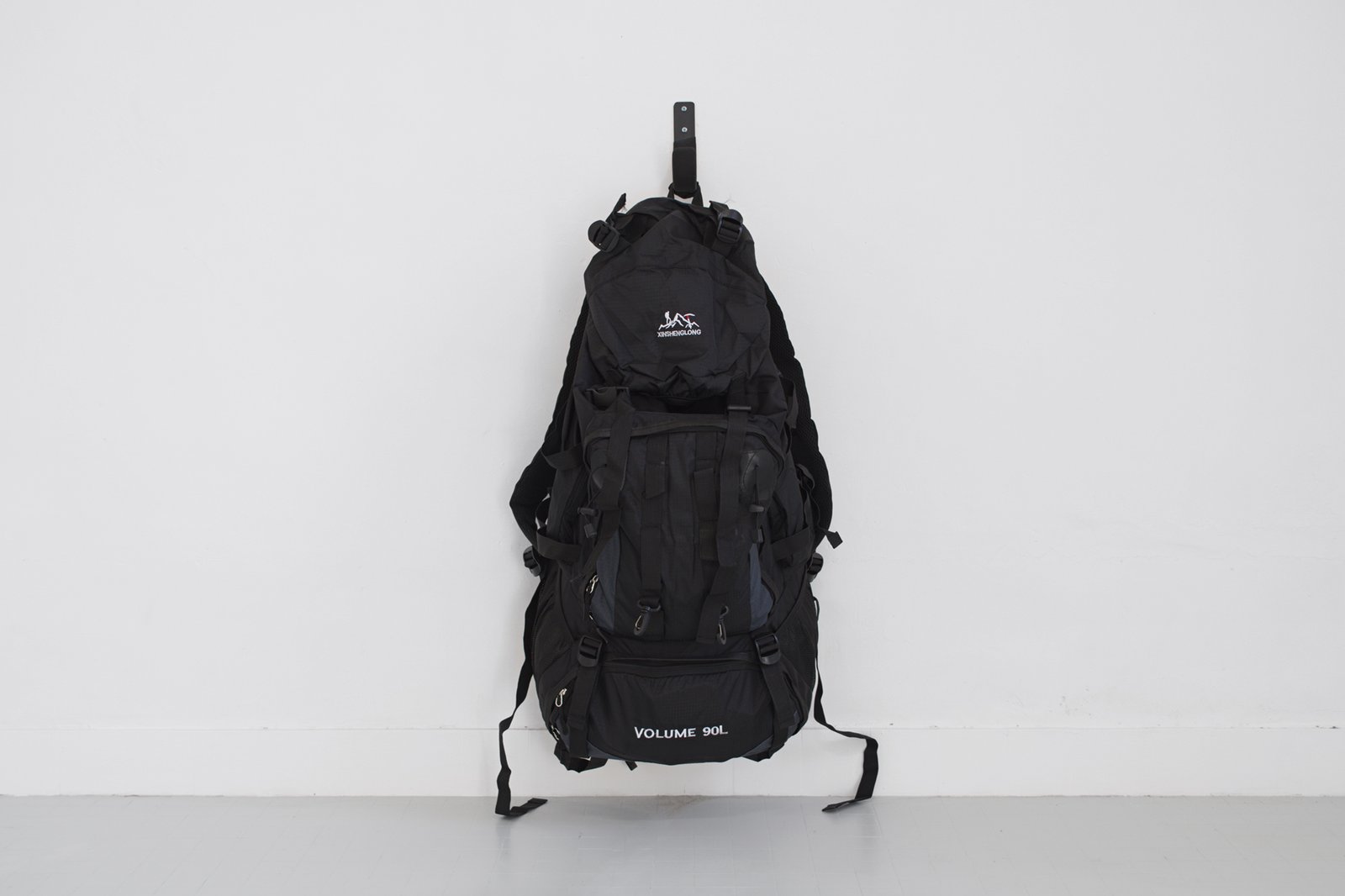
“Go” exhibition views, courtesy the artist and the gallery;
Copyrights: the authors, offseen and partnering platforms;