



5 offseen Exhibitions You Need to SEE in March
by Lorenzo Ilari
Contemporary life is a landscape of traces, pressures, and overlapping signals. Art reminds us that perception is never neutral, that desire is guided, effort is measured, intimacy negotiated, and presence always fragile.
The selected exhibitions illuminate the invisible: the residues of memory, the persistence of gesture, the tensions between freedom and structure. In witnessing them, even remotely, we confront the spaces between answers, and in those spaces, the possibility of reflection, awareness, and subtle liberation.
Spectres in Rehearsal
Artist: Ding Shilun;
Galerie Bernheim, Zürich, Switzerland
On view until April 11, 2026
Images from Spectres in Rehearsal unfold as unstable fields of perception, where fragments from different temporalities coexist without hierarchy. Advertising mascots, mythological figures, art-historical quotations, and gestures borrowed from animation or cinema share the same surface, accumulating until the possibility of a single narrative begins to dissolve.
The paintings seem to follow the logic of simultaneity. References appear, overlap, and remain visible at once, producing the sensation of a perception that no longer isolates but absorbs continuously. The “spectres” feel closer to afterimages than to memories, traces of a present that refuses to settle into a fixed form.
Nothing fully resolves. Figures collide, gestures remain suspended, meanings circulate without stabilising. The works suggest a condition in which images accompany experience rather than explain it, multiplying alongside it. What emerges is a dense visual field where recognition and disorientation coexist, and where the search for coherence becomes part of the image itself.
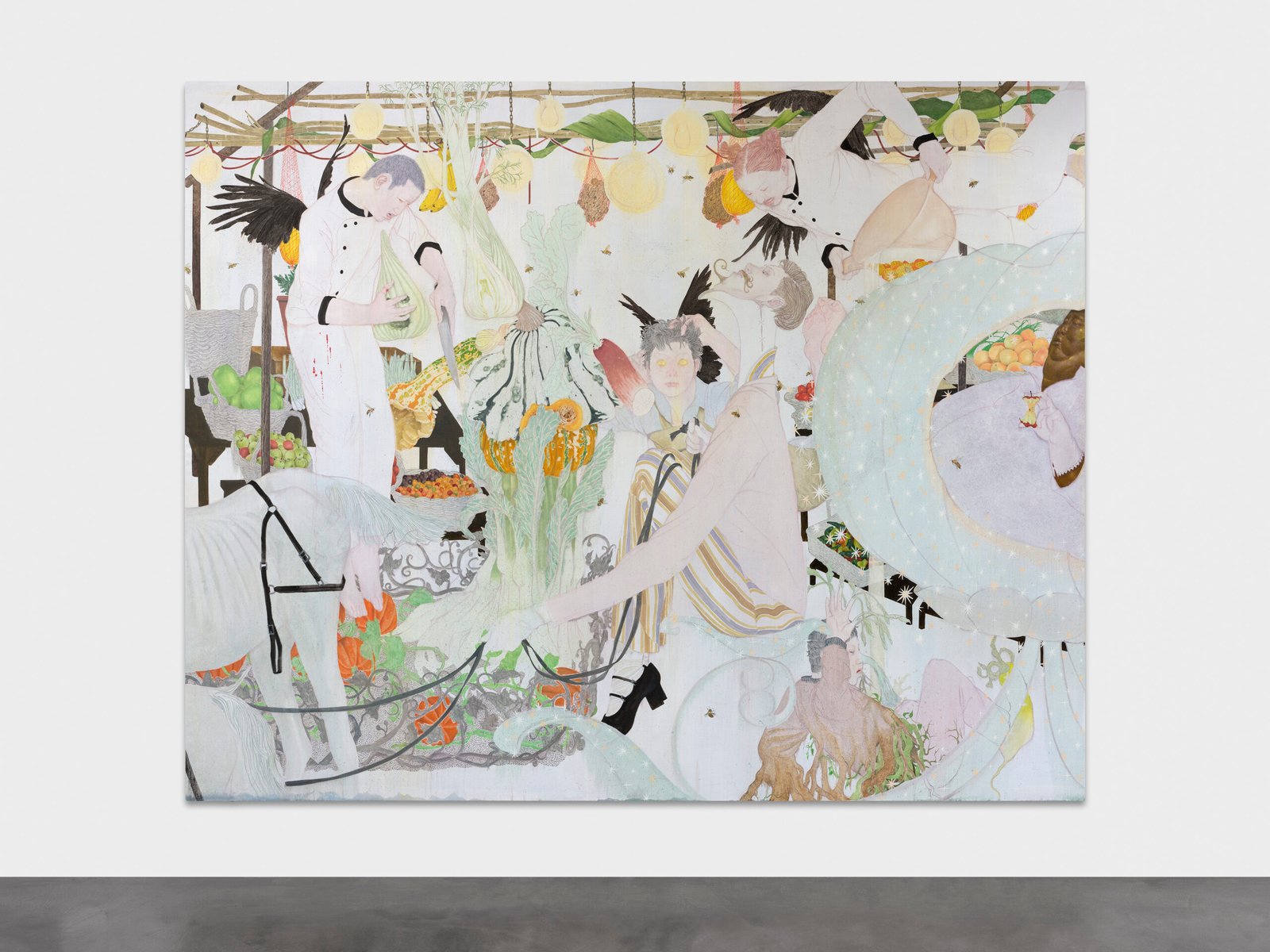
Spectres in Rehearsal exhibition views, ph Annik Wetter, courtesy the artist and the gallery;
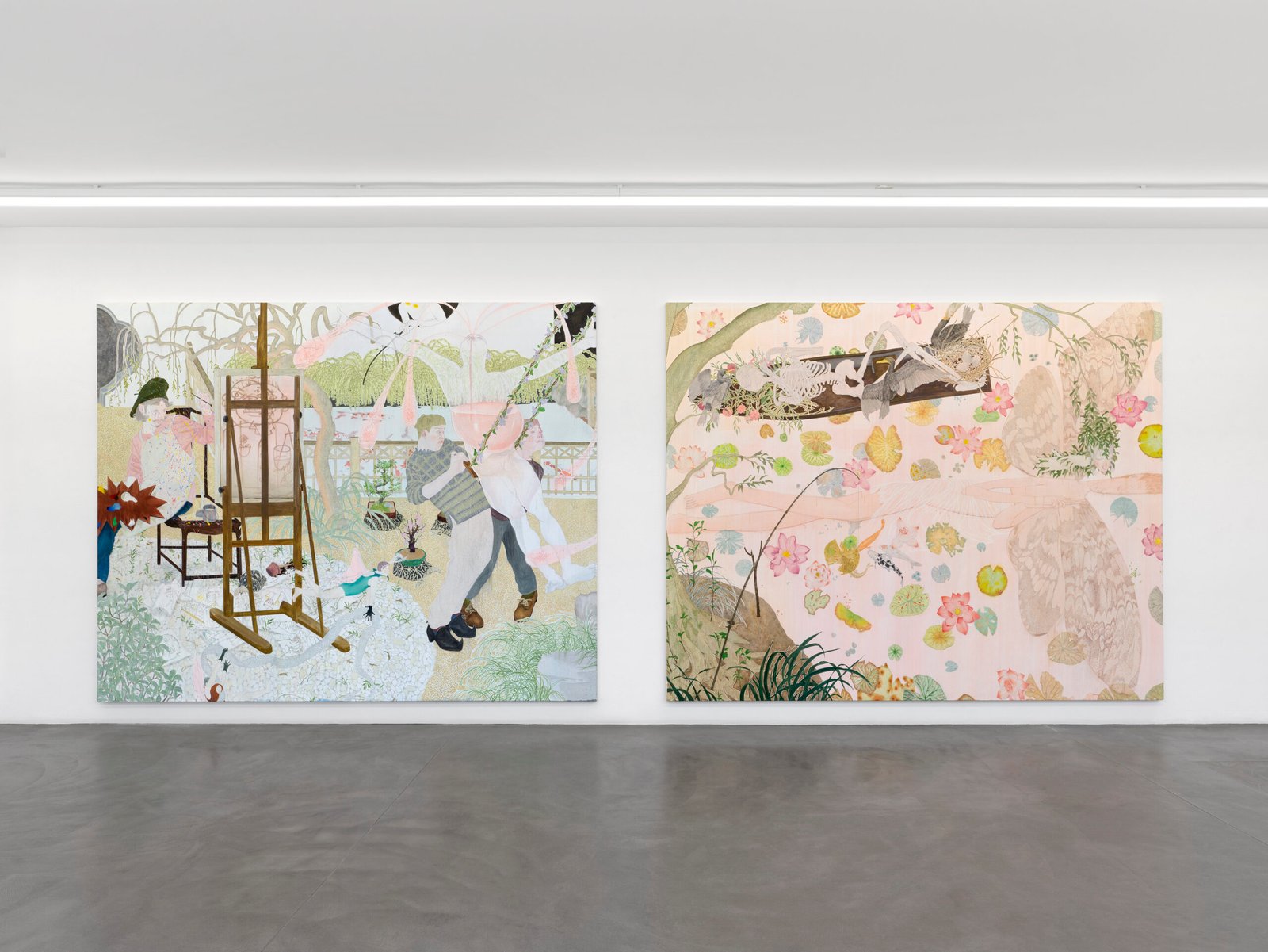
Spectres in Rehearsal exhibition views, ph Annik Wetter, courtesy the artist and the gallery;
Lignes de désir
Artists: Aaron Roth, Veronika Desova, Yana Abrasheva, Tsvetomira Borisova, Rada Boukova, Valko Chobanov, Lazar Lyutakov, Vikenti Komitski, Stéphen Loye;
Punta Gallery and Cable Depot, Sofia, Bulgaria
On view until March 14, 2026
The point of departure of Lignes de désir—a closed shop—introduces a space already shaped by previous use. Hooks remain on the walls, shelves keep their outlines, and the architecture still carries the memory of what once filled it. Even emptied, the place continues to organise the gaze, as if the gestures performed there had not entirely withdrawn.
The title recalls the paths formed by repeated crossings, lines traced over time by habit rather than intention. What begins as a deviation slowly turns into structure. Desire follows similar trajectories, guided by environments that precede individual choice. Movement through spaces of commerce often feels spontaneous, yet its directions are rarely accidental.
In contemporary economies of abundance, objects circulate faster than the attachments they generate. Supermarkets, storage areas, temporary displays, spaces built for efficiency compress the slower rhythms through which familiarity usually develops. The exhibition remains close to this condition, observing how desire persists even when its objects disappear.
Installed within an active market, the works coexist with everyday transactions. Fresh vegetables, plastic goods, faded signs, improvised arrangements: different moments of economic life appear layered rather than separated. Context does not simply contain the exhibition; it alters its tone, shifting the meaning of what is seen.
A closed shop still stages expectation. Emptiness retains the outline of what once occupied it, and the promise attached to display never entirely vanishes. What remains is a quiet awareness of how deeply systems of exchange enter the imagination. When the setting changes, the gestures continue elsewhere, adapting without fully disappearing.
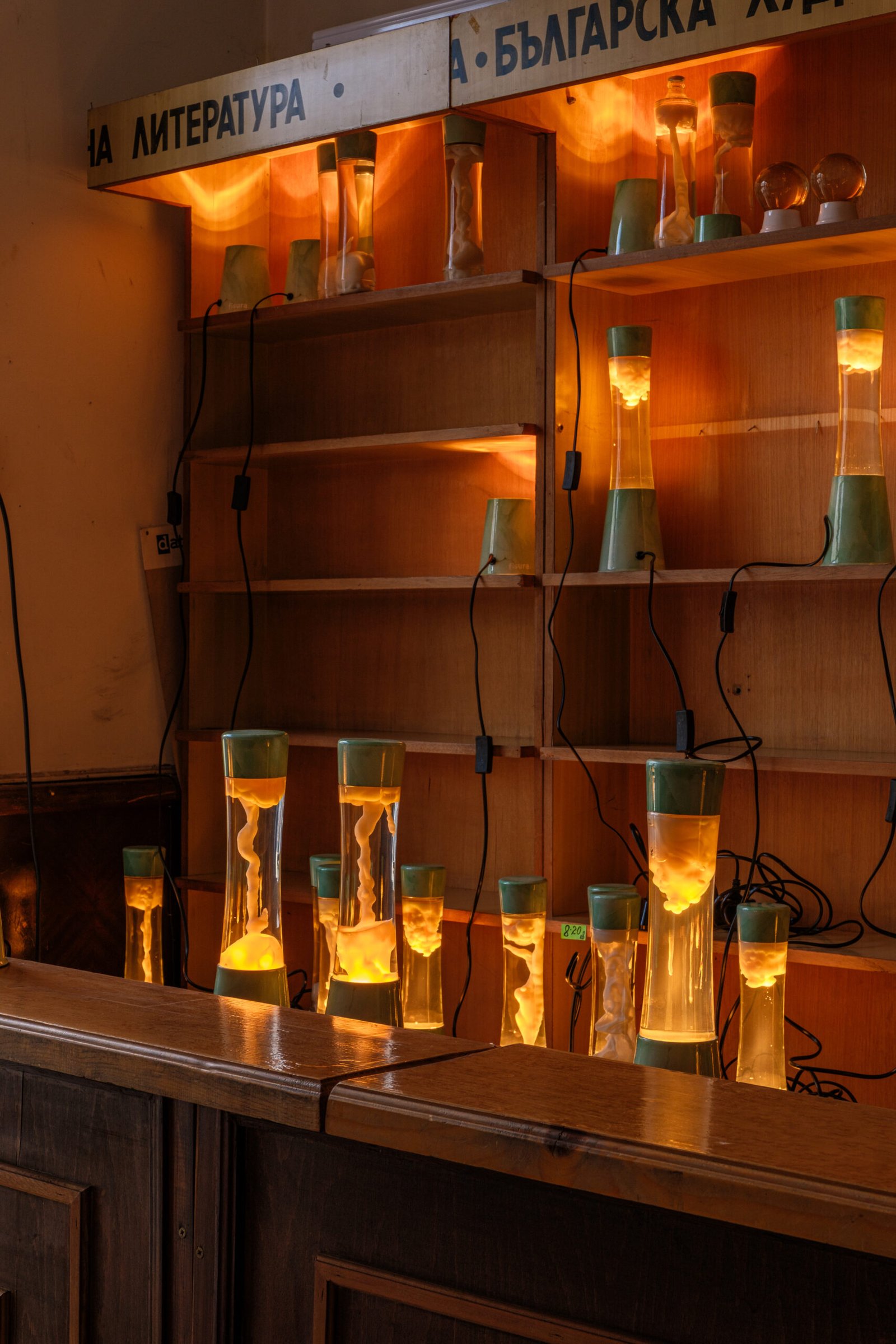
Lignes de désir exhibition views, ph Mihail Novakov, courtesy the artist and the gallery;
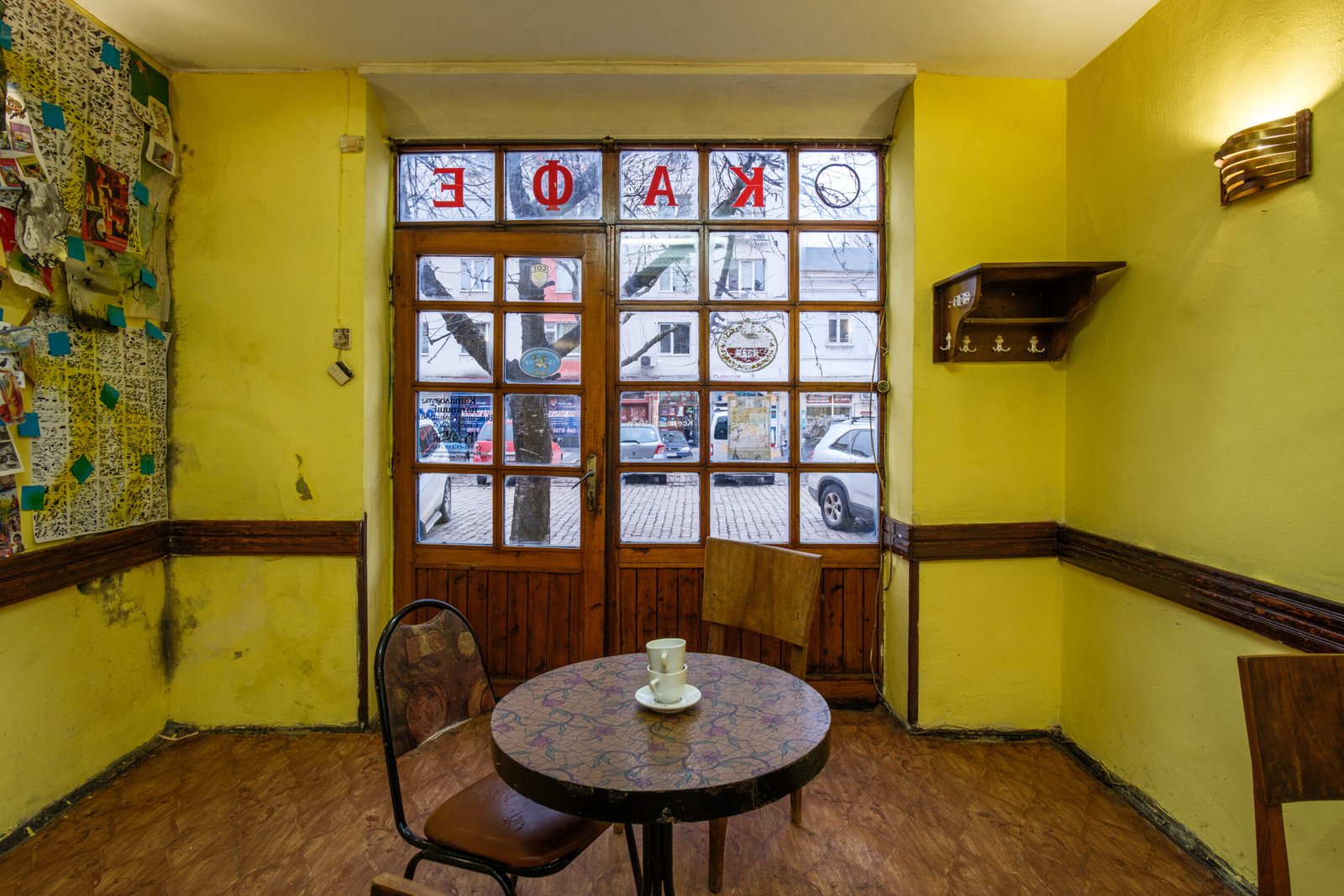
Lignes de désir exhibition views, ph Mihail Novakov, courtesy the artist and the gallery;
Solid Performance
Artist: Lisa Großkopf;
Landesgalerie Burgenland, Eisenstadt, Austria
On view until May 10, 2026
In the documentation of Lisa Großkopf’s work, the body appears under constant tension, held within positions that seem to extend beyond comfort. Postures are maintained, repeated, adjusted, as if endurance itself had become a measure. Expectations remain unspoken, yet they organise the space in which the work unfolds.
Effort carries a familiar weight. Cultural narratives continue to associate value with persistence, from older images of artistic sacrifice to contemporary languages of productivity and optimisation. What emerges is a condition in which pressure is rarely imposed from outside; it settles gradually, turning into rhythm, habit, routine.
The works remain inside this state without dramatizing it. Duration replaces action, repetition replaces climax. What becomes visible is the thin threshold where discipline begins to resemble exhaustion, where the demand to continue feels indistinguishable from the desire to do so.
Within this suspended atmosphere, awareness appears as a slight interruption. A gesture slows, a movement hesitates, the expected flow loses its certainty. Nothing breaks completely, yet the possibility of distance enters the work, opening a space in which the performance can be seen while it is still taking place.
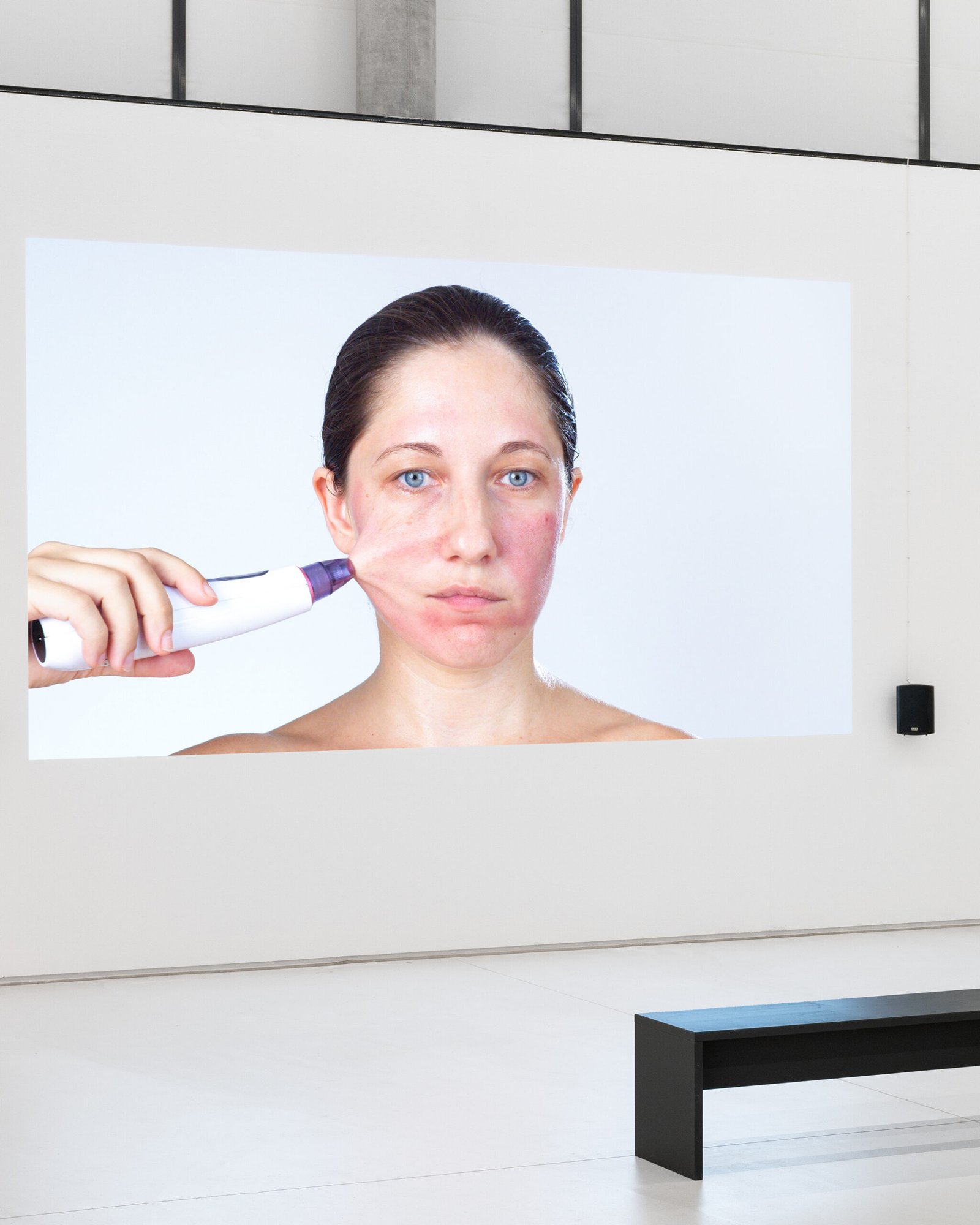
Solid Performance exhibition views, ph Simon Veres, courtesy the artist and the gallery;
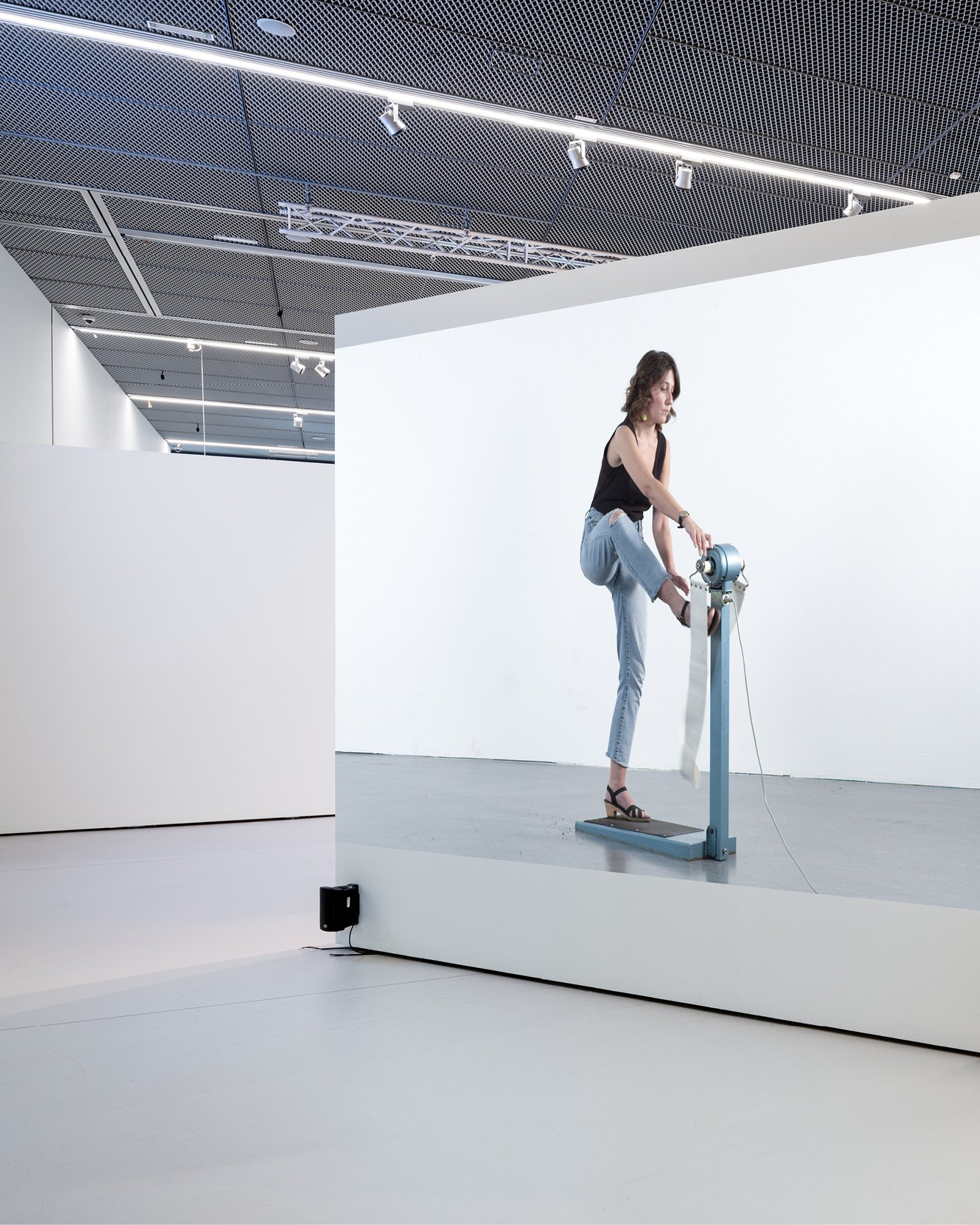
Solid Performance exhibition views, ph Simon Veres, courtesy the artist and the gallery;
Tomas in the Box
Artist: Tomas;
Box Gallery, Macerata, Italy
On view until March 21, 2026
In Tomas in the Box, the works carry a strong sense of physical presence, as if every surface had passed through the body before reaching the wall. Materials appear layered, worn, reinforced, holding the marks of repeated use. Painting unfolds as a process of accumulation, where time, memory, and gesture remain visible at once.
The artist, wearing his stained, old coat, standing in the space, functions as a condensed trace of this process. He keeps the signs of effort without turning them into symbols, allowing the body to remain present through what he leaves behind.
The technique Tomas calls Paintollage follows the same layering principle. Fragments adhere, overlap, resist erasure. Faces emerge from dense constellations of symbols that move across different historical registers, from archaic to contemporary, without settling into a single time. The images hold together through rhythm and repetition rather than narrative continuity.
Time inside the exhibition feels uneven, folded into the surfaces themselves. What seems distant suddenly appears immediate, while recent forms carry the weight of something older. The works insist on material reality, yet constantly point toward the persistence of gesture, as if making were a way of remaining present.
Nothing separates life from practice. Stains, additions, corrections, and reinforcements stay visible, allowing the work to retain the effort that produced it. The image does not hide its construction; it keeps it on the surface.
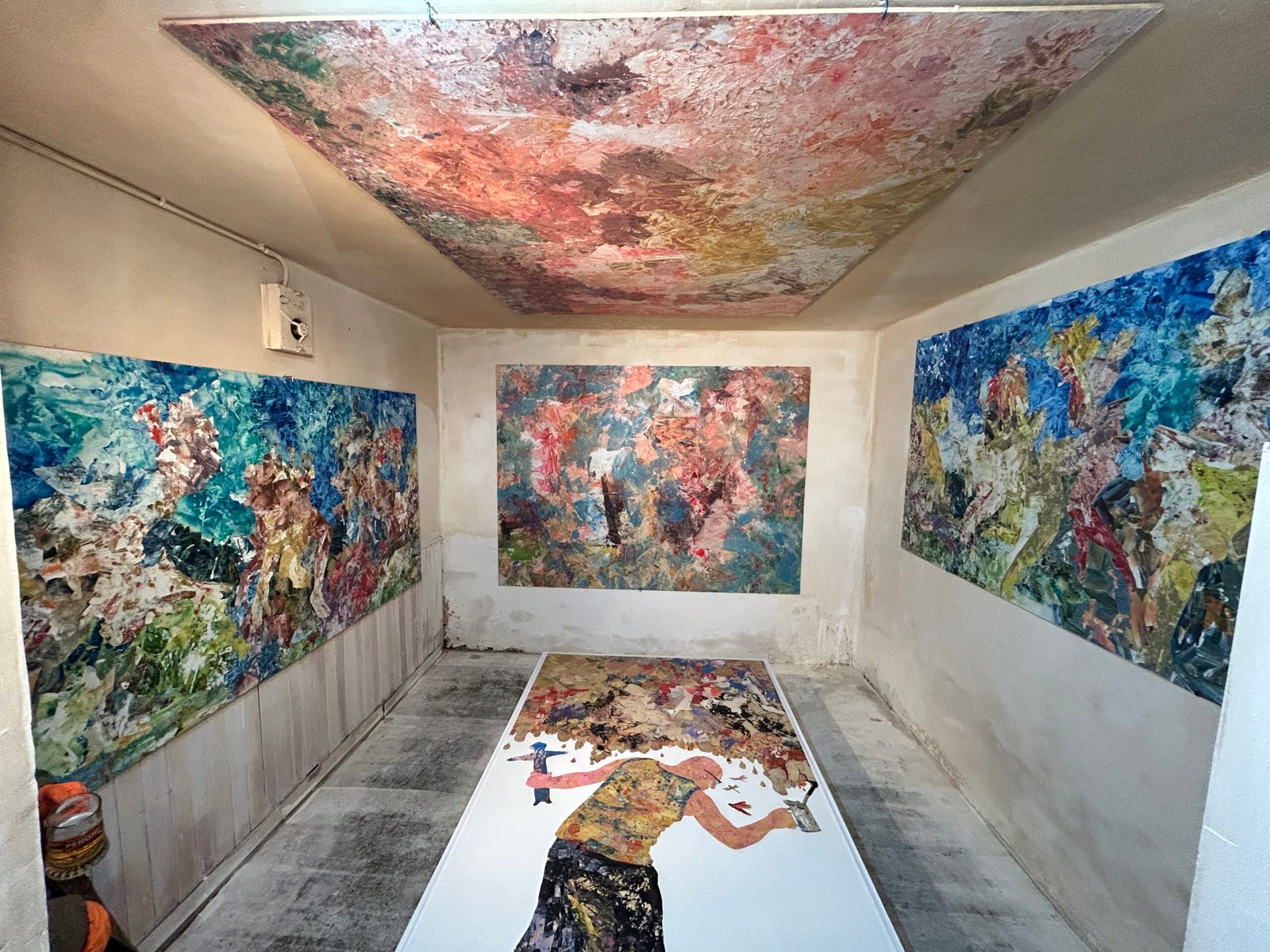
Tomas in the Box exhibiton views, ph Giuliana Guazzaroni, courtesy the artist and the gallery;
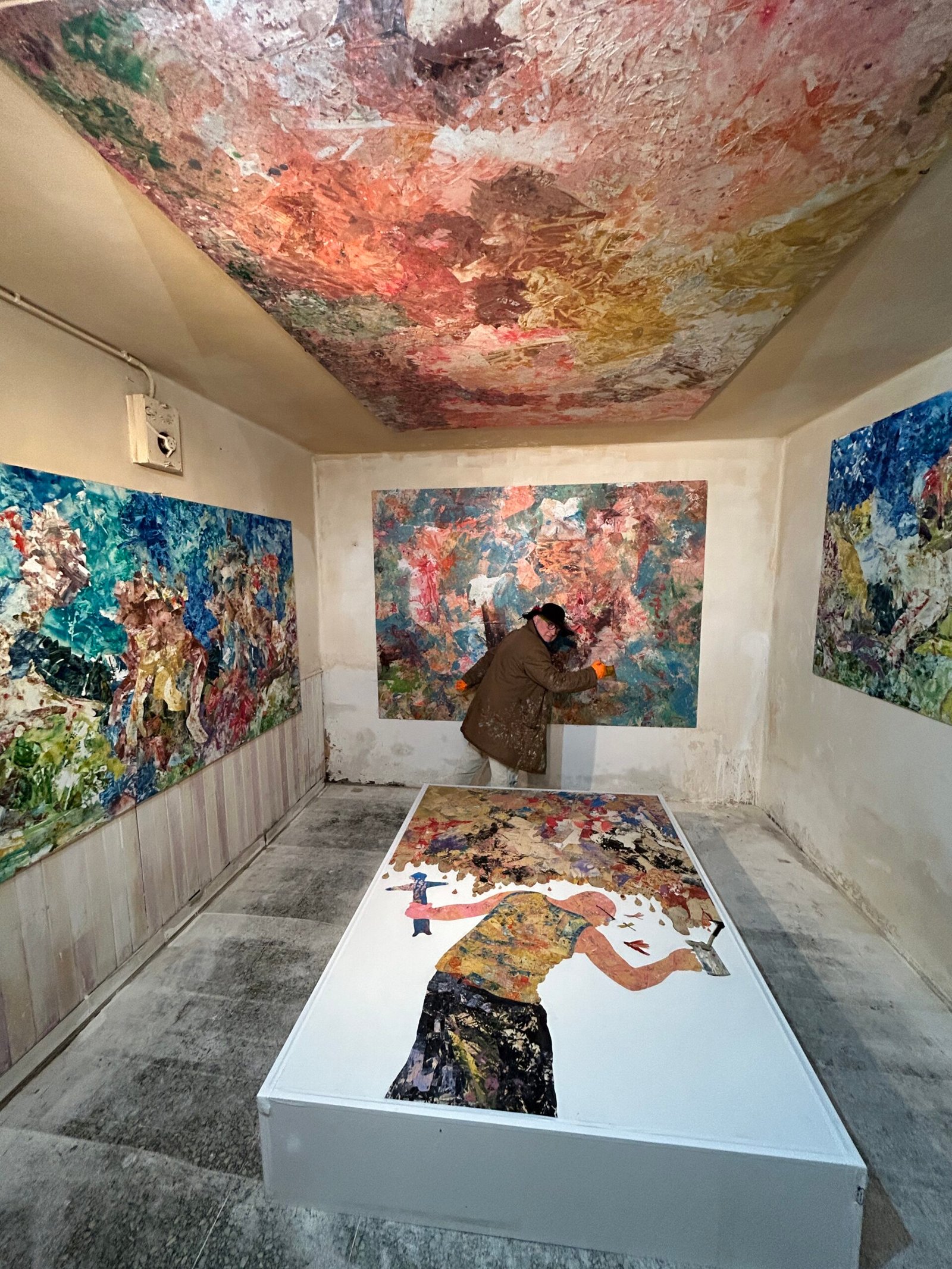
Tomas in the Box exhibiton views, ph Giuliana Guazzaroni, courtesy the artist and the gallery;
Vertex
Artist: Jason Martin;
Galleria Christian Stein, Milan, Italy
On view until May 23, 2026
In Jason Martin’s paintings, the surface records the passage of movement without forcing into the image. Wide fields of pigment carry the traces of tools dragged across them, leaving ridges, folds, and accumulations that hold the memory of an action already completed.
The marks recall processes that unfold slowly in the natural world: sand shaped by wind, stone marked by water, paths formed through repeated steps. Form seems to emerge from duration, from pressure applied over time, from gestures that continue until they become structure.
Layers gather, colour thickens, the surface acquires weight. What was once fluid settles into relief, preserving the direction of the movement that produced it. Time appears embedded in the material, not measured but sedimented.
Once the gesture had settled, it begins to belong to other rhythms. Light shifts across the surface, distance changes perception, each encounter alters what the work becomes. The painting remains open, exposed to slow transformations that continue long after the action has ended.
Looking at these works requires a different pace. Without figures to guide interpretation, attention drifts across texture and repetition, following the surface until meaning emerges gradually. The image never closes completely, remaining suspended in the duration of the gaze.
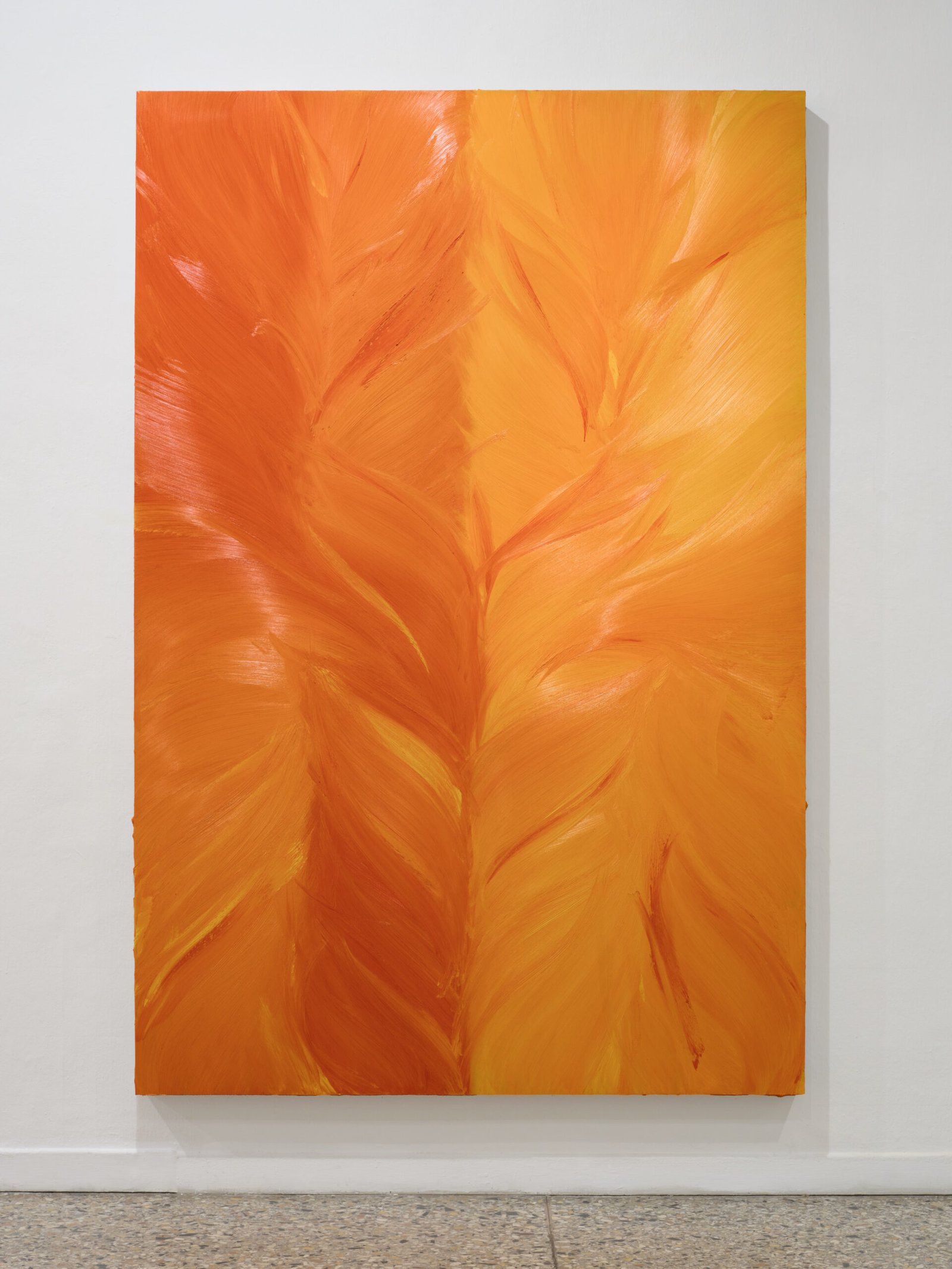
Vertex exhibition views, courtesy the artist and the gallery;
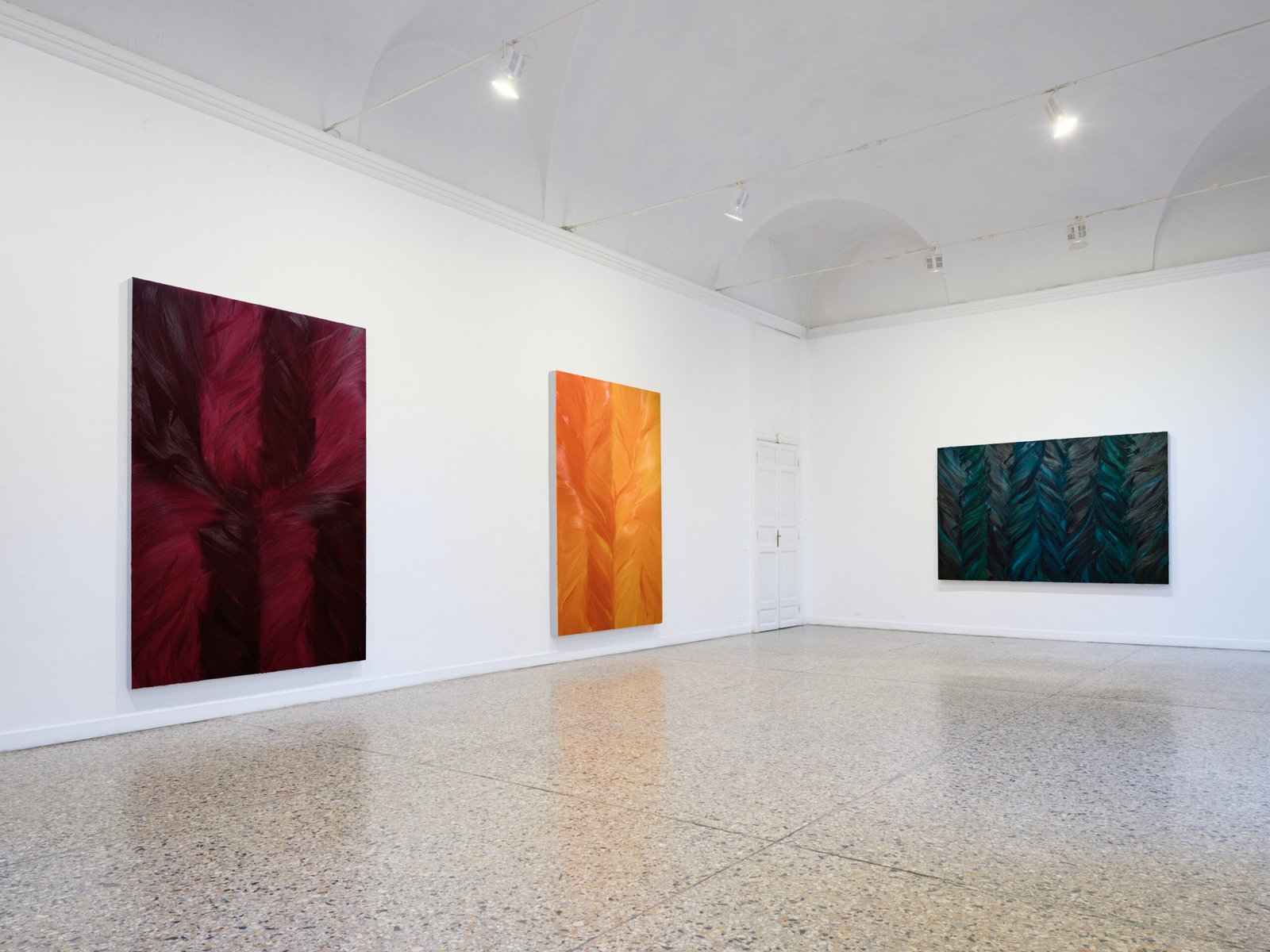
Vertex exhibition views, courtesy the artist and the gallery;
Edited by Dobroslawa Nowak
Copyrights: the authors, offseen and partnering platforms;