



5 offseen Exhibitions You Need to Visit in December
by Marianna Reggiani
Incommunicability is itself a source of pleasures
The Address
Brescia, Italy–on view until January 24, 2026
How fragmented is our reality? How difficult is it to feel whole in a society that seems determined to tear us apart? The Basel-based artist duo Dorota Gawęda and Eglė Kulbokaitė translate this generation’s sense of dismay into a perceptible atmosphere, in which the image is never fixed but constantly shifting, just like us. Our ambitions, desires, and sense of identity change as rapidly as the light entering through a window, breaking and reflecting across transparent materials.
We are taught to seek clarity and definition to function: a plan, a clear idea, a linear career path. But what if “Incommunicability is itself a source of pleasure”? What if we struggle to articulate our dreams and ambitions not because we lack them, but because we haven’t discovered yet what they are, in a world that is at once too vast and too constraining?
This uncertainty reveals that pleasure may lie not in knowing, but in accepting difference. Simply observe the shifting images and let yourself change alongside them, accepting fluidity as a key to reality.
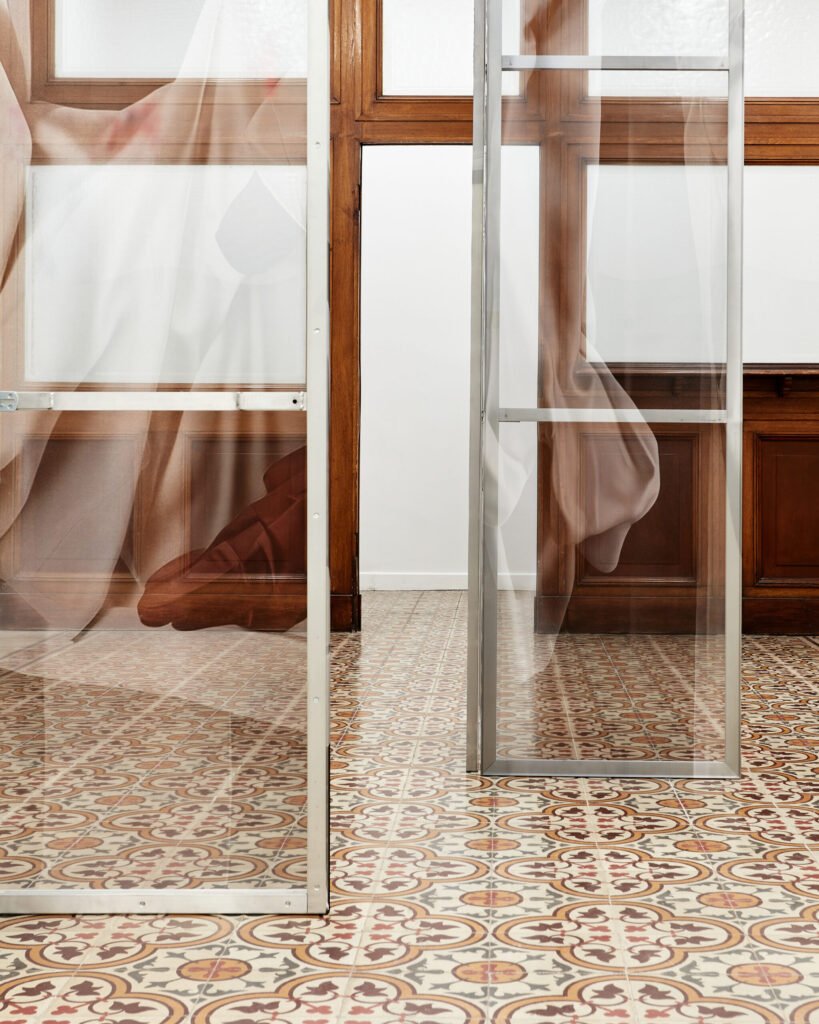
“Incommunicability is itself a source of pleasures” exhibition views, ph Alberto Favara, courtesy the artist and the gallery;
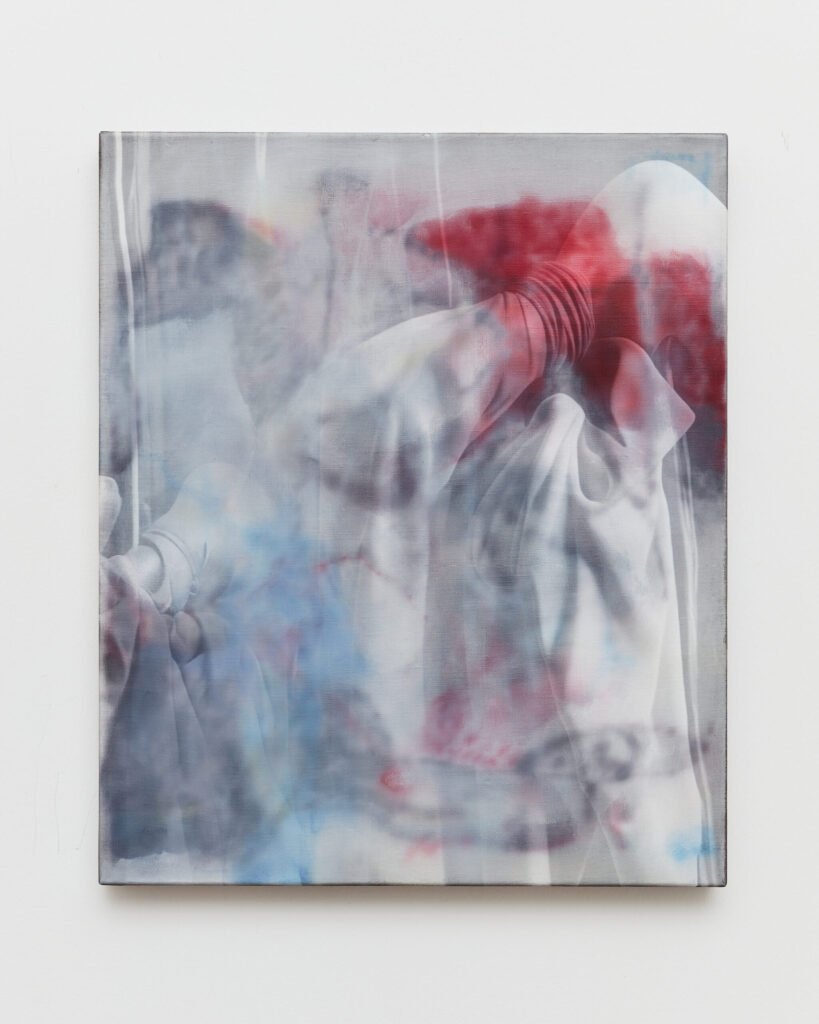
“Incommunicability is itself a source of pleasures” exhibition views, ph Alberto Favara, courtesy the artist and the gallery;
Tra cani paralleli
tiresia
Carrara, Italy–on view until December 20, 2026
Michelangelo carved marble in order to release the figure contained within it, freeing it from the weight of the stone and granting it the possibility of life. Sculpting, for him, was not simply an act of creation, but one of animation: giving life to something that already existed and merely needed to be set free. He did not seek to dominate matter, but to understand it, to engage in a dialogue with it.
Emanuele Resce’s relationship with matter is grounded in a similar sense of respect. He “works with what’s already been through something,”1 reusing scraps of iron, stones, and rural debris without severing them from their past, instead bringing that past into the studio. This is not marble, but raw material drawn from everyday life. The contrast between the roughness of grey iron and the pristine exhibition space destabilized our perception, prompting doubt about the true nature of what we are seeing: is it merely iron, or a creature that has been struggling to exist and has finally been set free?
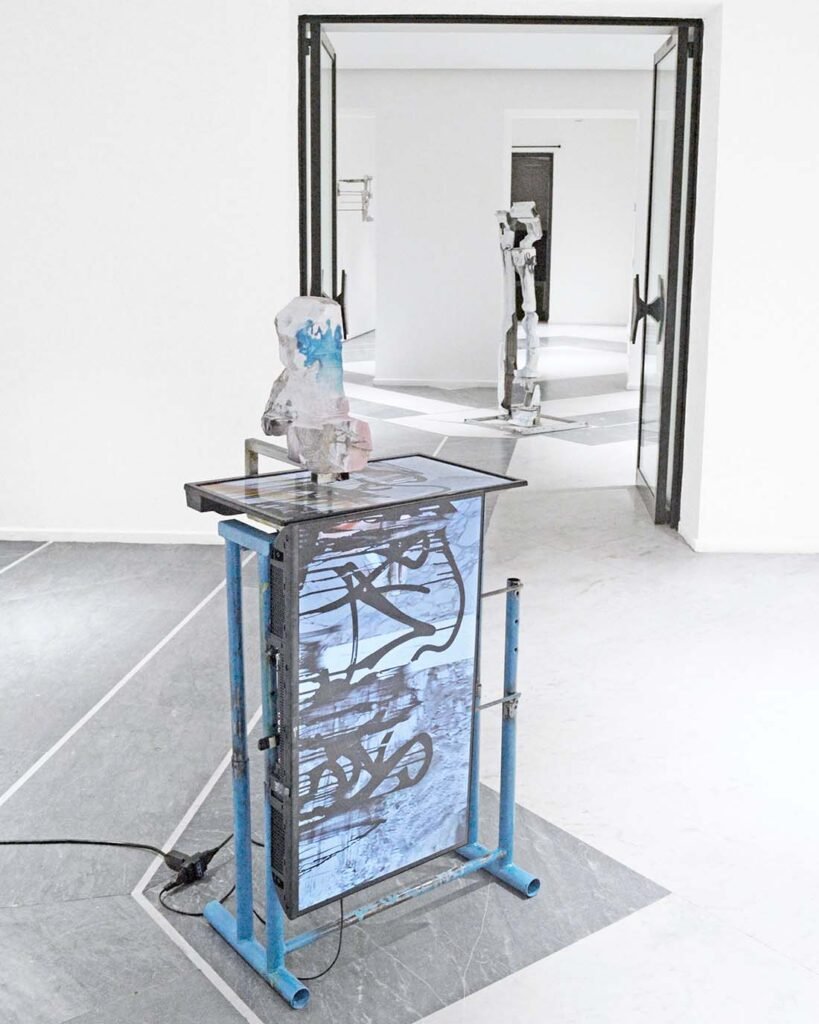
“Tre cani paralleli” exhibition views, courtesy the artist and the gallery;
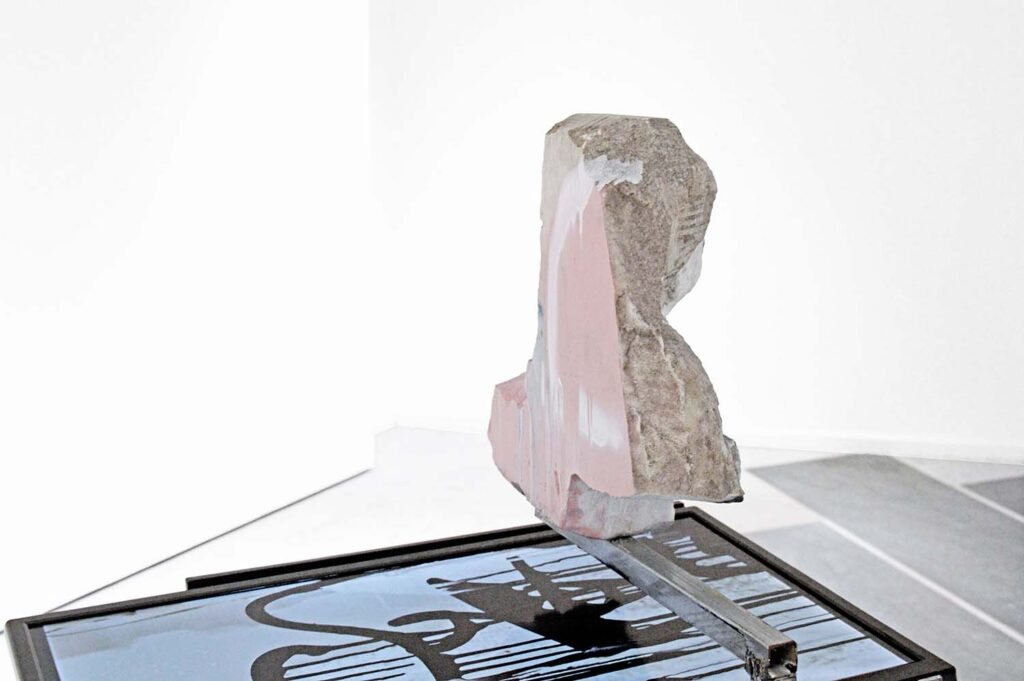
“Tre cani paralleli” exhibition views, courtesy the artist and the gallery;
nineteeneightyseven
DES BAINS
London, UK–on view until February 7, 2026
Francesco Pacelli was born in Perugia in 1988. In this exhibition, the year before his birth becomes a lens through which to explore the possibilities the world offers and the forms matter can assume. It is not a “the world before I was born” perspective, but rather a question: can the past of the world also, perhaps, be present?
Three sculptures and five wall pieces probe the world’s potential, a stage where “form is still negotiating its own arrival.”2 This potential can provoke discomfort or fear, but also wonder, curiosity, and astonishment, revealing the world is composed of countless fragments striving to assemble something new. The two-dimensional works appear to offer the seed of creation, rendered in delicate strokes of muted greys and whites. What are they trying to become?
The sculptures, by contrast, demand the attentive gaze of a biologist. They are never complete, “as if arrested between one state of being and another, as though still testing the rules of their own formation.”3 Within this space, endless possibilities emerge.
Isn’t this impulse—to question what exists between one form of life and another—precisely what distinguishes humans from animals?
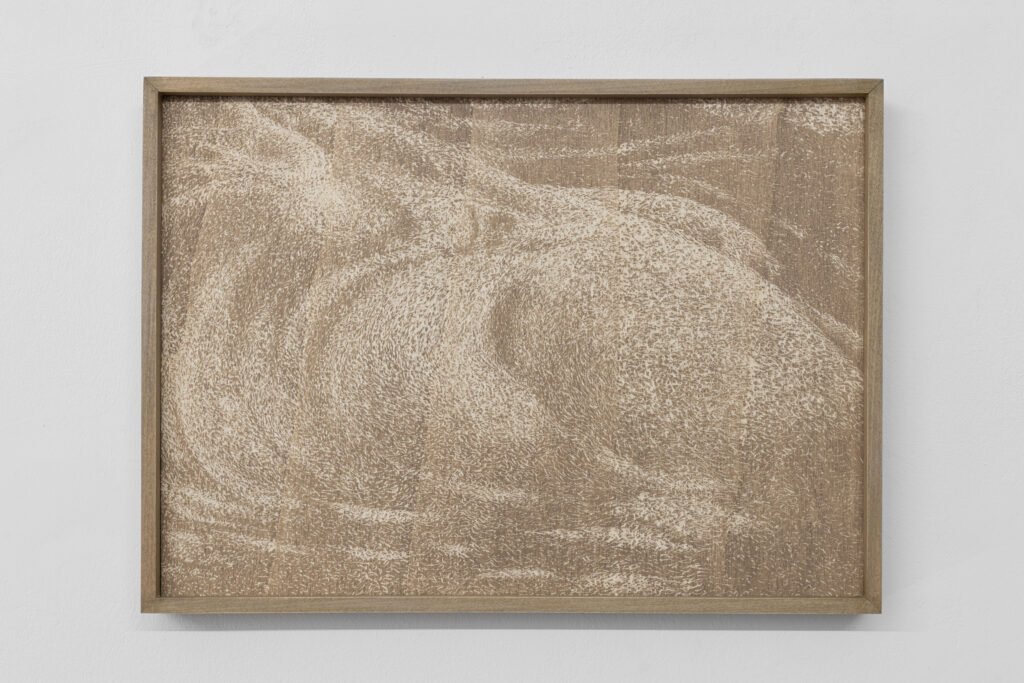
“nineteeneightyseven” exhibition views, ph Studio Adamson, courtesy the artist and the gallery;
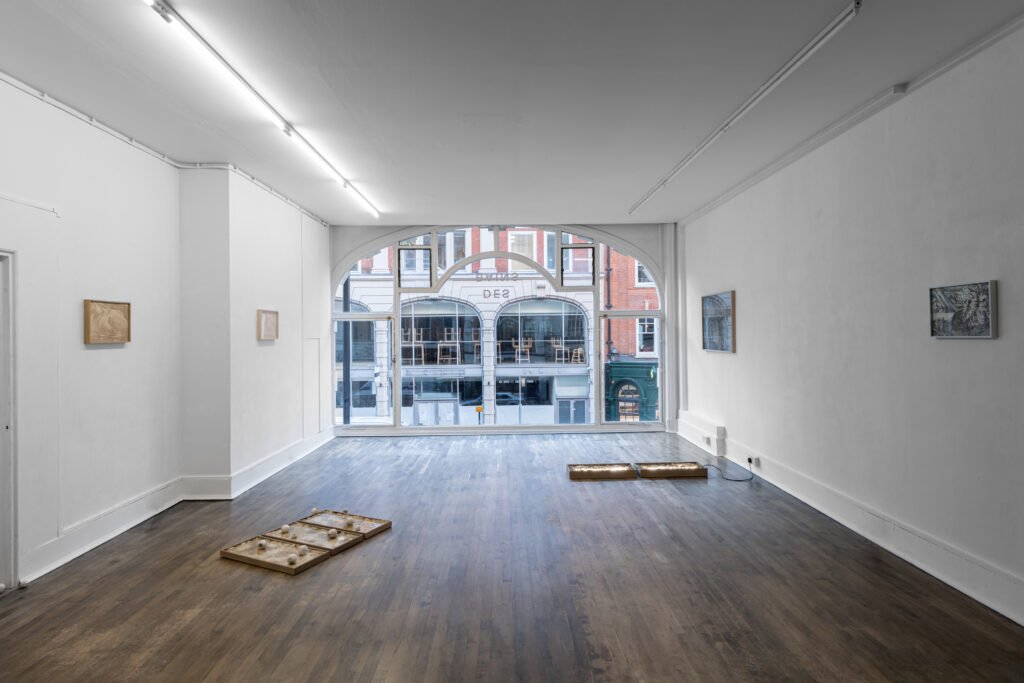
“nineteeneightyseven” exhibition views, ph Studio Adamson, courtesy the artist and the gallery;
Dye Bias
Matteo Cantarella
Copenhagen, Denmark–on view until January 17, 2026
At first glance, the exhibition may appear to unfold as a story with a clear beginning and end. It opens with a large painting, On the edge of war (always), continues with forty small-format canvases from the Tourette series, and concludes with a second large work, Edging. Yet the narrative Stelle Sieber presents at Matteo Cantarella gallery is far from straightforward.
The small canvases derive from earlier drawings—the two large works—which have been digitally copied, printed, transferred onto the support, and then reworked with paint. As Sieber explains, “I am concerned with the process of transmutating spaces, which requires action.”3 The focus, then, is not on beginning and endings, but on the transformations that occur in between.The linear arrangement is deceptive: do not search for a guiding voice, there is none. Instead, the viewer becomes the storyteller.
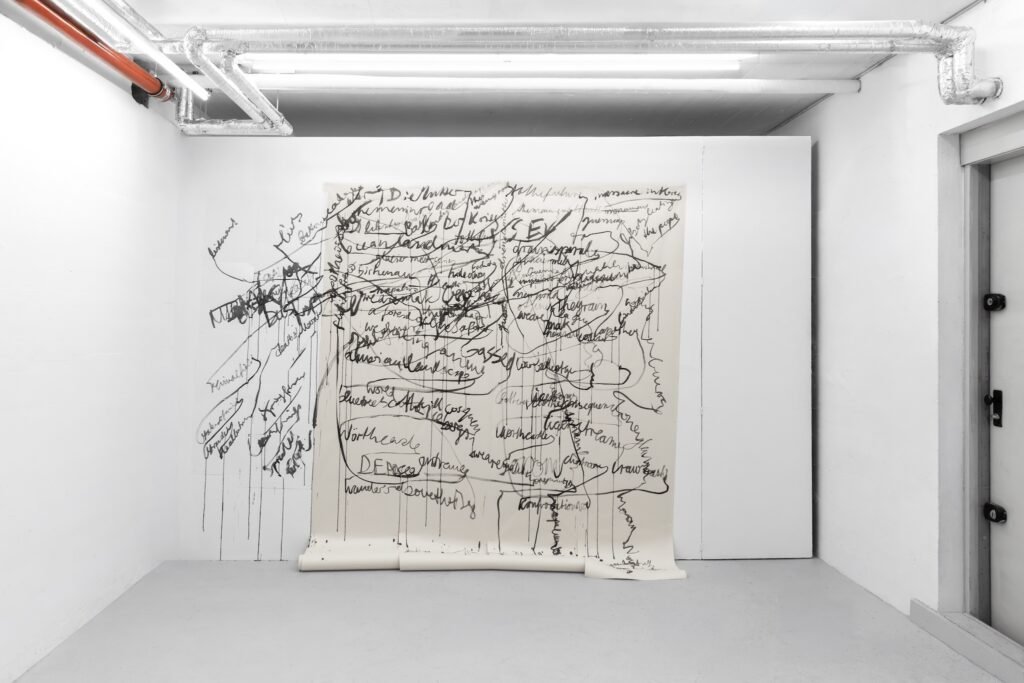
“Dye Bias” exhibition views, courtesy the artist and the gallery;
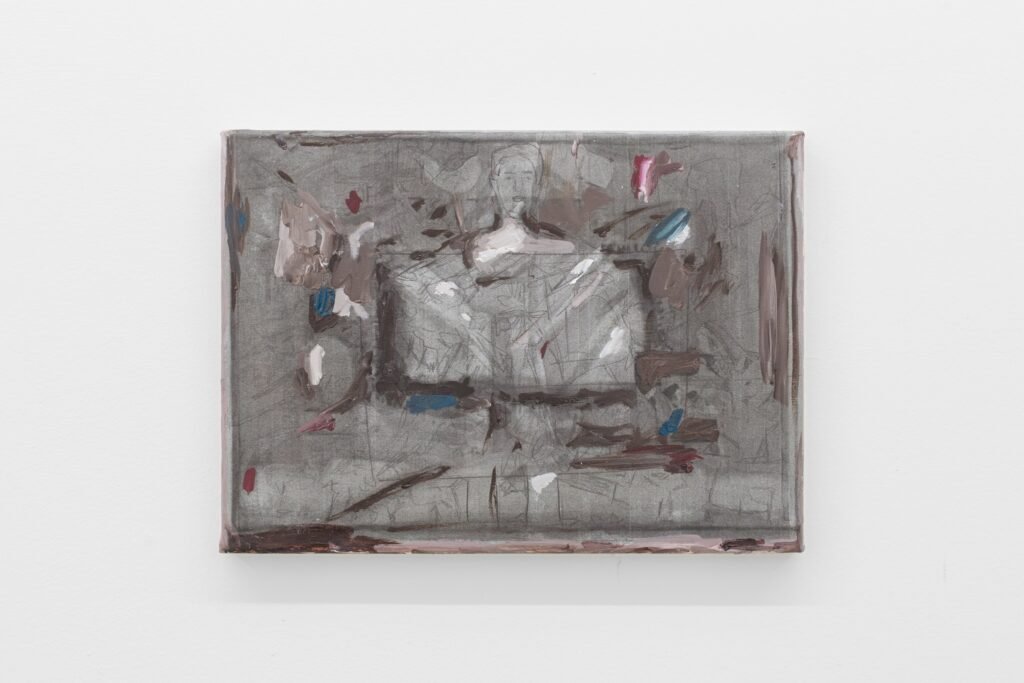
“Dye Bias” exhibition views, courtesy the artist and the gallery;
Palmo panorama
Labs
Bologna, Italy–on view until January 10, 2026
Pareidolia is the phenomenon that occurs when we look at clouds and see a horse, a flower, a man killing another man. It is the act of finding meaning where none inherently exists. It happens because we seek completeness, definition, familiarity. But what if we learned to exist without finishing the drawing? Isn’t it liberating to accept the transience and impermanence of all things?
Marco Emmanuele creates a world in which proximity is always suspended, never fully realized. Touch becomes a dream, a possibility rather than a concrete reality. In this space, we are left to imagine all the meanings touch might generate. Two hands meeting can signify love as easily as hatred; a stone touching the ground can suggest stability, the foundations of a house, the beginning of a new life.
Emmanuele works with surfaces, transparencies, light, scale, and detail, allowing these elements to interact with one another. He guides us toward a world in which suspension and waiting are not absences, but the very conditions through which life is generated.
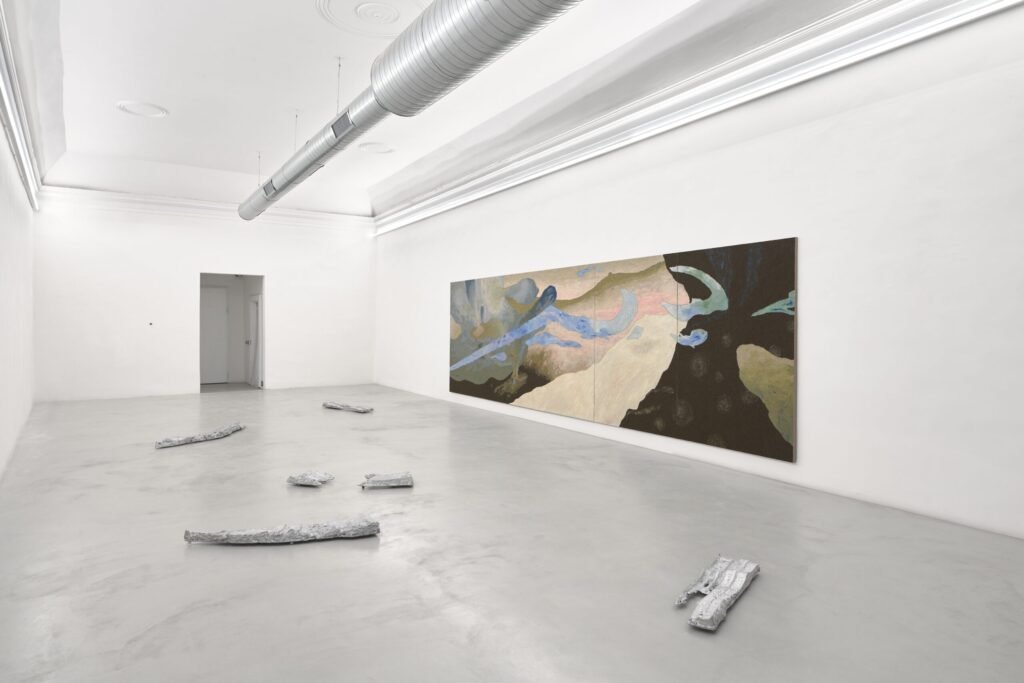
“Palmo panorama” exhibition views, ph Manuel Montesano, Eleonora Cerri Pecorella, courtesy the artist and the gallery;
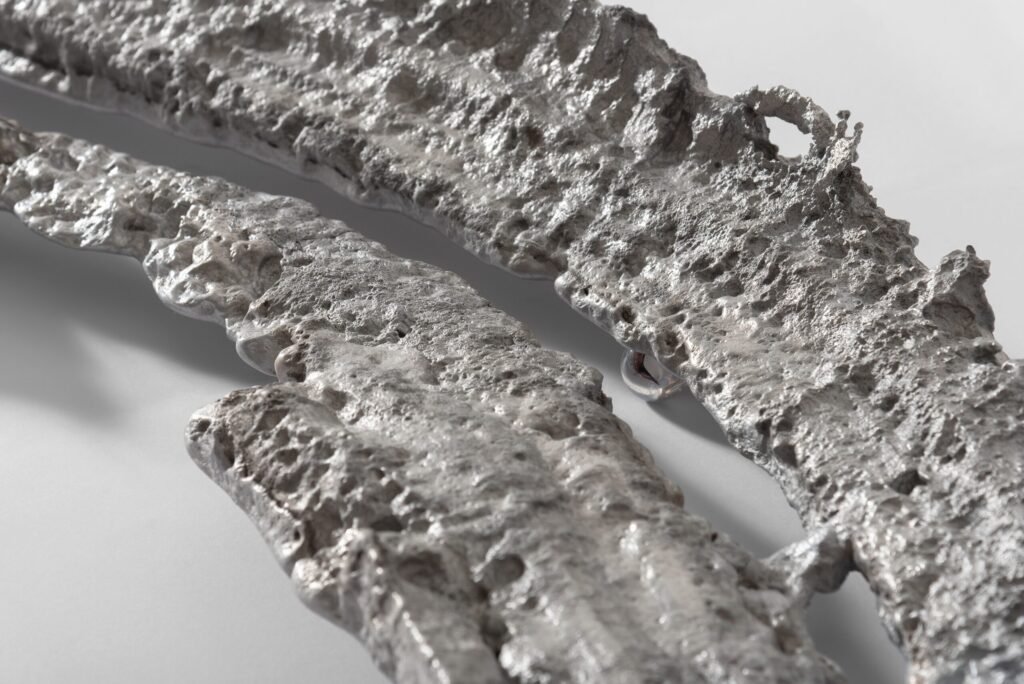
“Palmo panorama” exhibition views, ph Manuel Montesano, Eleonora Cerri Pecorella, courtesy the artist and the gallery;
1 from the text by 0-1.gallery
2 from the text by Maria Valeria Biondo
3 ibidem
Copyrights: the authors, offseen and partnering platforms;