





5 offseen Exhibitions to See in October
A contemporary landscape of debris, obsolete technologies and archaeological adventures
by Giorgia Basili | 09.09.2026
Robotic arms, strange metal carcasses, flying-saucer lights. The dystopian aesthetic à la Black Mirror, spanning cinema — most recently The Assessment — and literature, has invaded our collective imagination, revolutionising visual art, its motifs and its language.
Some see AI as a threat poised to turn against its own creator, others are already using it to create malware and carry out large-scale cyber-attacks, and those who fear it may manipulate minds and influence human desires. Admittedly, there are already some warning signs, and proposals such as the Pentagon’s plan to use artificial intelligence for mass surveillance and to coordinate the armed forces are cause for concern.
Among those embracing the theories of P(doom) – that is, the ‘probability of doom’ – and apocalyptic scenarios are some former employees of OpenAI and Anthropic, such as Jacob Coxon (a former researcher at Anthropic), who has claimed that AI could destroy humanity by 2030, Evan Hubinger (Head of Alignment at Anthropic) and Neel Nanda (researcher at Google DeepMind), as well as experts such as Geoffrey Hinton (Professor of Cognitive Science in Toronto) and Yoshua Bengio (Professor in Montreal and pioneer of artificial neural networks).
However, some artists have chosen to focus first and foremost on issues already relevant today, such as the accumulation of waste from obsolete technology. Where do records, video cassettes and MP3 players end up when we throw them away from our homes? In which landfill site will broken spare parts, Nokias from the 2000s, iPhone batteries, televisions, large-screen TVs, computers and routers be piled up?
And what will become of human relationships if, as early as 2013 in Her — and in all the narratives that preceded or followed it — Samantha, a perceptive and sensual artificial entity, entered into a romantic relationship with a human being that was more fulfilling than those between flesh-and-blood individuals, or rather, members of the same species?
Here is a selection of five exhibitions, featured in offseen, which highlight this theme – at times subtle, at times strident.
Imaginary Alphabet
Artist: Bernardo Tirabosco
Curator: Elisa Perissinotti
Spazio Marameo, Borgo Santi Apostoli, 8, 50123 Florence, Italy
On view until November 29, 2026
Tirabosco’s new exhibition stems from a core of eight works, whose allure has a nostalgic feel: the artistic gesture is interpreted as an archaeological endeavour that reveals, on the surface, the re-emergence of an uncertain heritage, of craftsmanship and artisanal skill close to the concept of téchne, far removed from the new developments in machines trained to create.
“An installation that blends painting and sculpture in a single room with three usable walls and a window facing the outside. For the painterly element, I hung waxed fabrics on the walls; for the sculptural element, I used both sides of wooden planks. On one side is the lead matrix I used to print the waxed fabric — the imprint of which is visible on the fabric itself. On the other side, I incorporated a sculptural element: micro-castings in brass, set into the surface, featuring faces and gazes drawn from sixteenth-century grotesques and bestiaries. The planks are mounted on freestanding bases to create a sculpture in the round,” the artist tells me when reached by telephone.
The medieval bestiary was a way for humankind to respond to what it could not fully explain: a dangerous and treacherous natural world, full of creatures that were both fascinating and terrifying. On the other hand, the fascination with science fiction from the nineteenth century onwards and with new dystopias involving cybernetics, digital reality and extraterrestrial hybridisations, stems from a question that human beings constantly ask themselves in the face of spatial and temporal distance, and the possibility of overlapping worlds and parallel dimensions. What will the near future be like, and what was the distant past like? Where does the here and now begin and end?
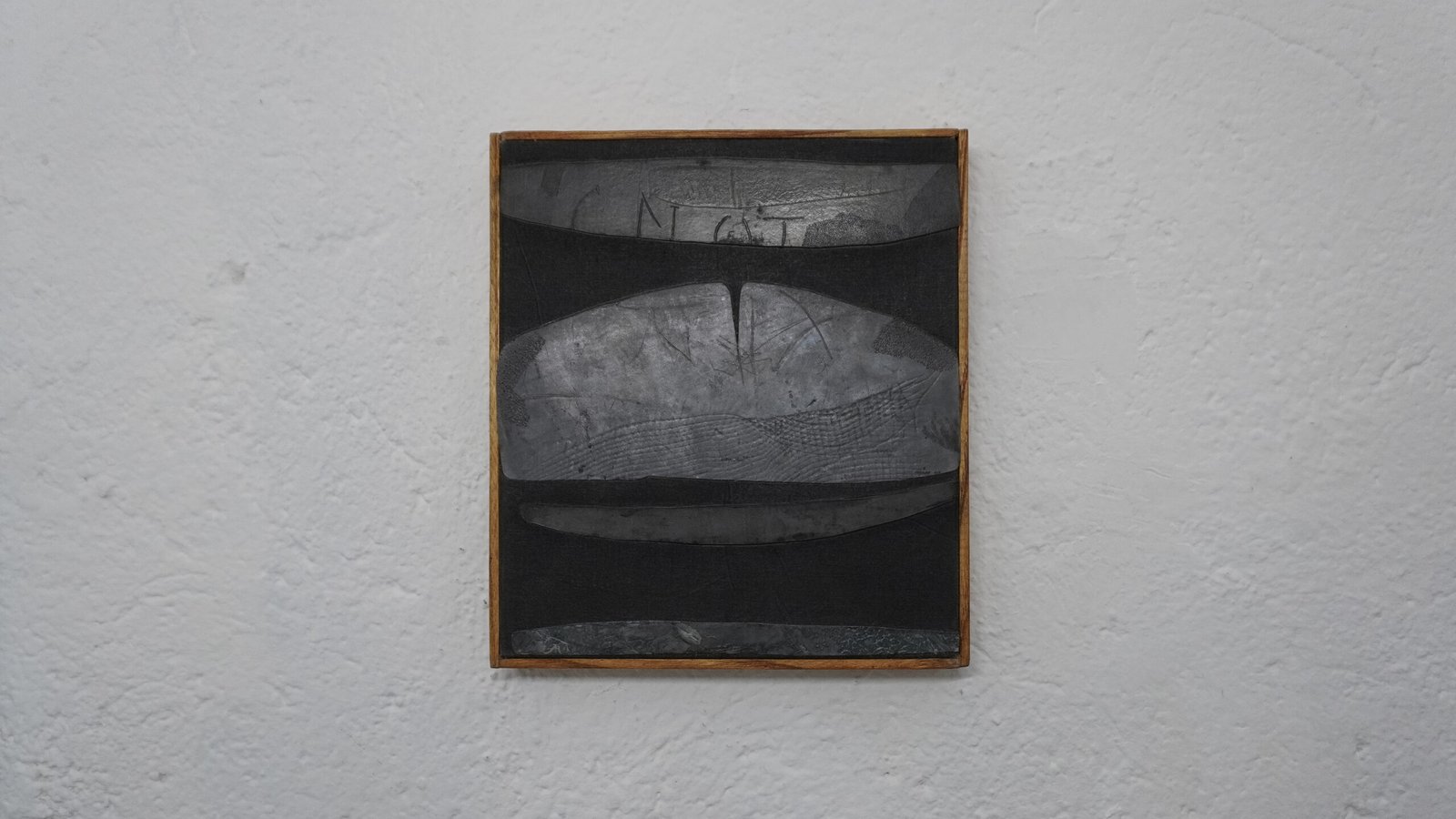
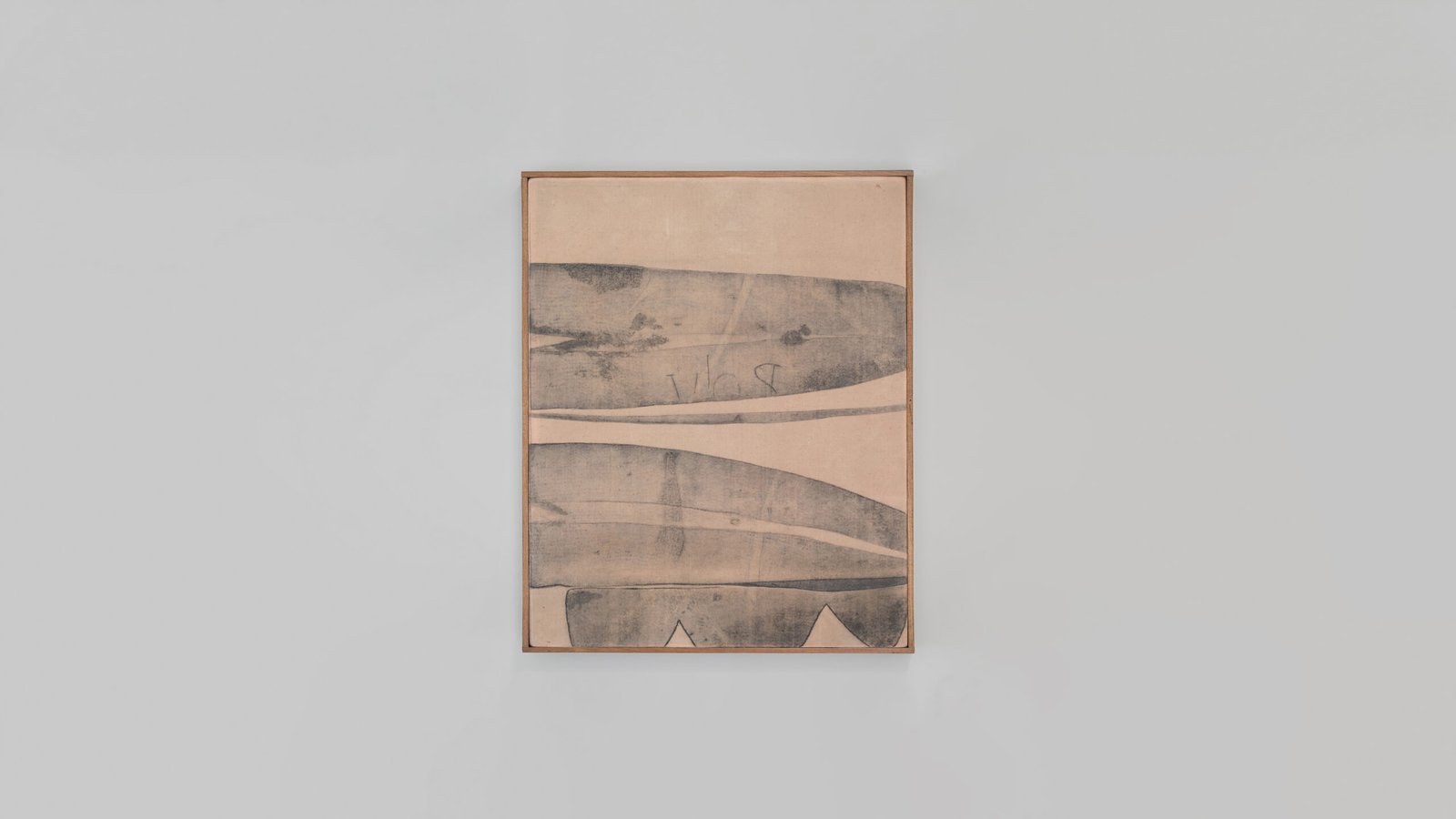
Alfabeto Immaginario exhibition views, courtesy the artist and the gallery;
Ruby Chen: EVENT-0 Manual Override
Artist: Ruby Chen
Curated by: Cortney Connolly
LUmkA, 96 Robert Street, floor -1, NW1 03QP, London
On view until October 30, 2026
Humanity’s drive towards the automation of production, communication, and the living environment has undermined an ecosystem built on fragile balances, causing the ruins of the most advanced technological infrastructure to spread like wildfire.
Ruby Chen’s first solo exhibition in London uses sculptures, sound and installations to explore how new high-tech innovations ‘gradually shape human perception and optimise behaviour through logics of speed, efficiency or order’.
In the LUmkA space, metal wires and rubber tubes rain down from the ceiling like octopuses. One artifact evokes the Large Hadron Collider, CERN’s particle accelerator, whilst empty seats and harnesses hold the memory of passing human silhouettes… ghostly figures sucked into other galaxies.
Ultimately, the victims of this insatiable drive for optimisation and the race for progress are the machines themselves, which become worn-out and obsolete ‘rovine’, with no hope of being saved by romanticism. The sword of Damocles is the human body which, in seeking every means to achieve immortality, generates waste and refuse that the system cannot process, bringing the well-oiled mechanism of a virtuous circular economy to a standstill. Hair, like extremely resilient weeds, coats surfaces like lichen or lashes out like vines in a jungle that resembles Chernobyl.
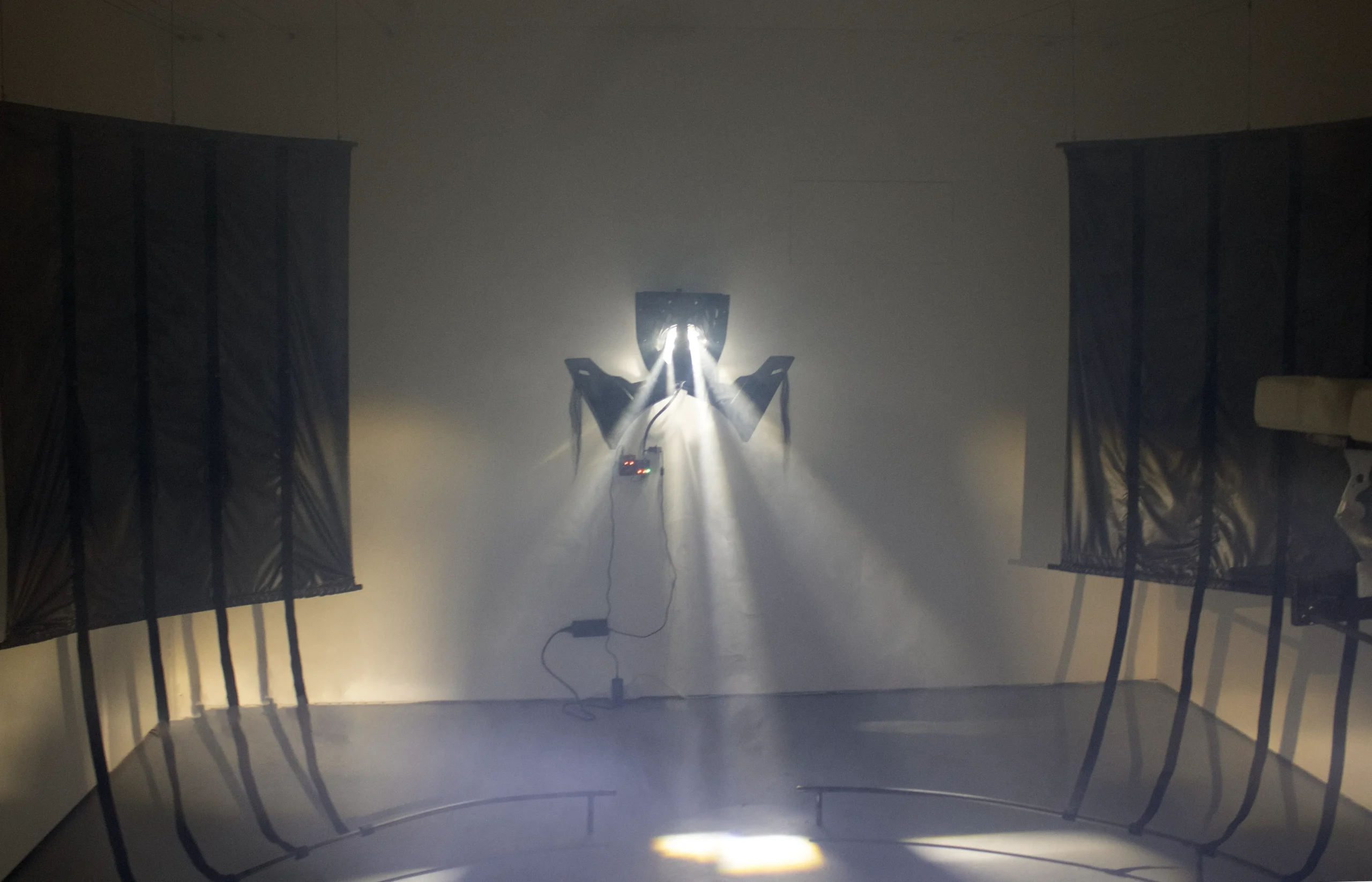
Ruby Chen: EVENT-0 Manual Override exhibition views, courtesy the artist and the gallery;
Object Clock
Artist: Jonathan Rajewski
Curated by: Keith J. Varadi & Joshua Abelow
Gene & Fred, 4328 B Airport Rd, Santa Fe, NM 87507, USA
On view until October 20, 2026
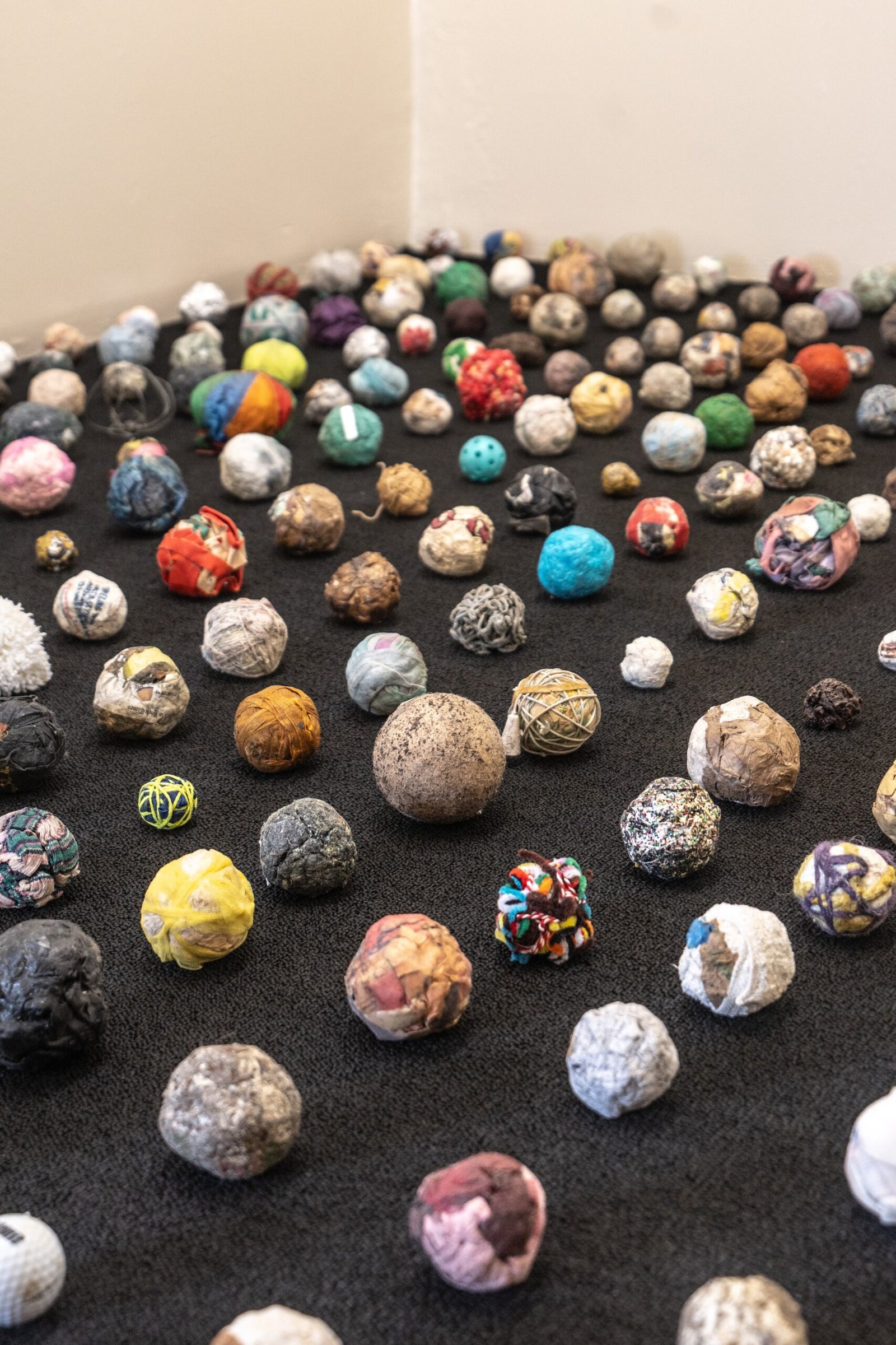
A procession of spheres, resembling the smooth, colourful marbles we used to collect as children, covers the gallery floor.
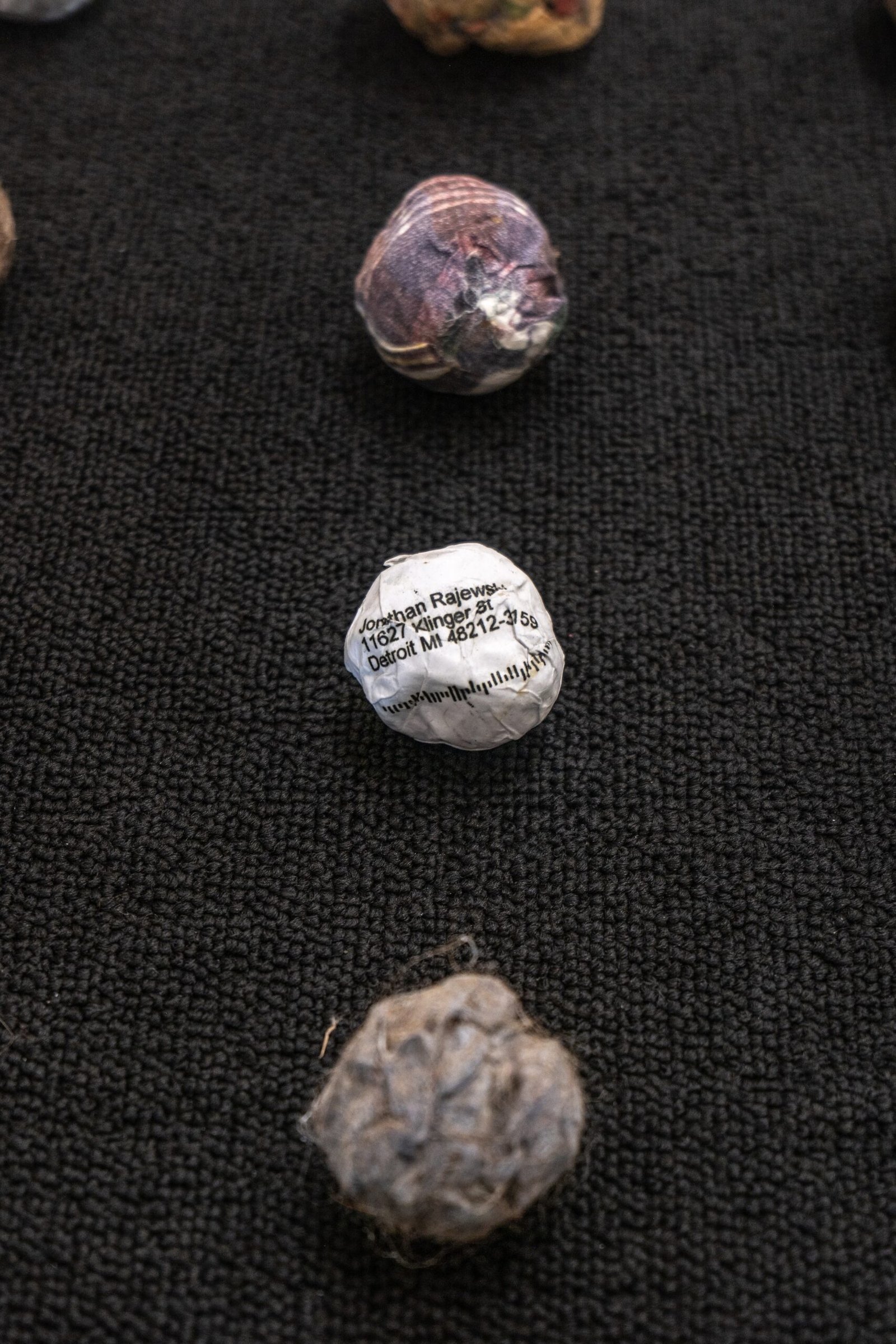
Jonathan Rajewski creates them from urban and domestic waste, both organic and inorganic: underwear, dog and cat hair, cigarette ends, receipts, USB cables, parking tickets, socks, bank statements, contact lenses, sunflowers, orange peel, ibuprofen, junk mail and dozens of other fragments that the artist has collected since 2019.
The installation is constantly evolving… these microcosms are clocks tied to a specific patch of earth, a reminder of the passing of time, of fading habits and of a society that carries on by inertia, sometimes revelling in mechanisms of self-destruction, at other times struggling to resist.
In this instance, the artist chooses to walk, and as he passes, he ‘captures’ many tiny fragments of life; he then manipulates them to create souvenirs, like snow globes that do not, however, need to be shaken. They are the result of a negotiation between waste, transience and memorabilia, in an unexpected process of regeneration.
Object Clock, ph Amaury Bargioni, courtesy the artist and the gallery;
Metamagico
Artists: Claudio Costa
Curated by: Marco Scotini
PAV Parco Arte Vivente, Via Giordano Bruno, 39/A, 10134 Turin, Italy
On view until October 11, 2026
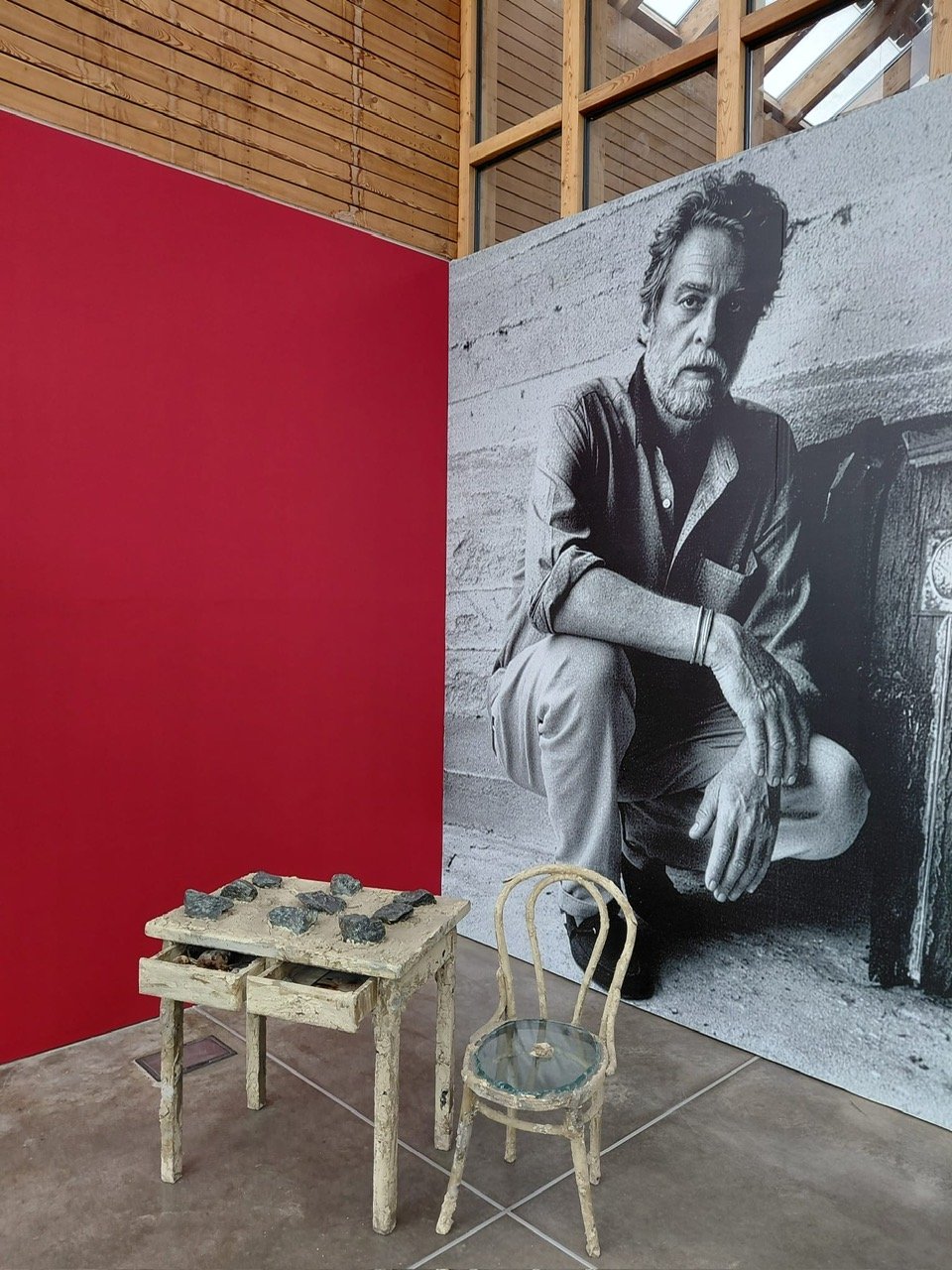
For Claudio Costa (Tirana, 1942 – Genoa, 1995), nature is an active archive of diverse elements ranging from ritual relics to tribal artifacts and archaeological finds. His visual anthropology draws on materials such as clay, wax, bones and plant matter, whilst his artistic method — unearthing, classifying — seems borrowed from a palaeontologist’s approach. The artist undertakes a ‘work in regress’, a counter-trend operation, tracing the roots and history of humankind.
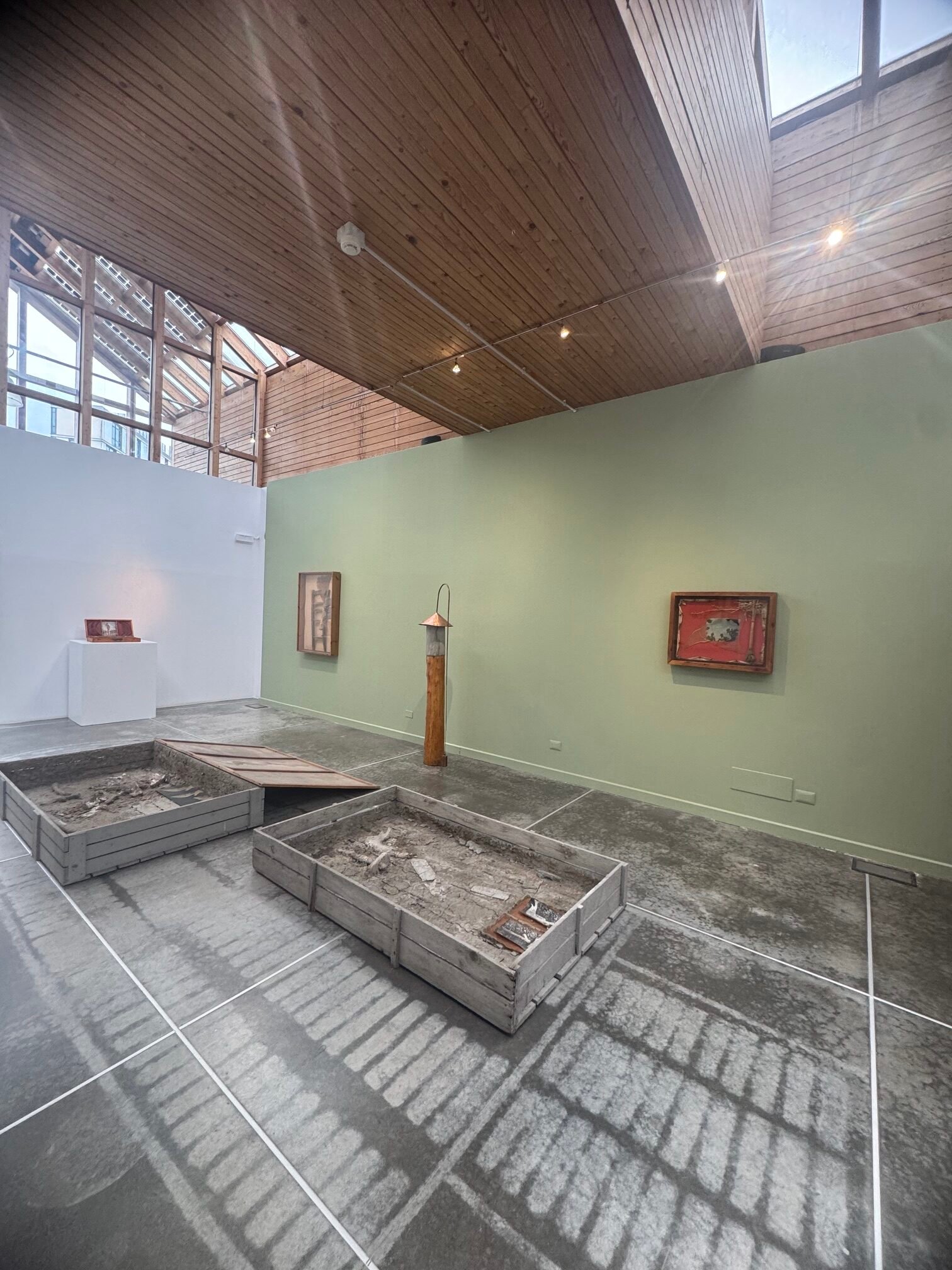
Metamagico exhibition views, courtesy the artist and the gallery;
Amare non mi sazia
Artist: Reverie
Text by: Milovan Farronato
C+N Gallery CANEPANERI, Foro Buonaparte, 48, 20121 Milan, Italy
On view until October 18, 2026
What happens in a ‘liquid’ society – a world in which human relationships no longer rely on physical contact, proximity, or sharing communal spaces? What might a title mean that speaks directly to the pit of our stomach, referring not to an abstract concept but to an active verb such as ‘to love’ in place of ‘to eat’?
We often associate this organ with the flutter of love… ‘butterflies in the stomach’, yet in this case it is not a void, a fullness, nor a lack of appetite that is lamented, but rather a sense of deficiency.
The feeling of satiety never comes because one mouthful leads to another in a ‘compulsive metabolism’, restless and delirious… perhaps to feel fulfilled, one would need reciprocity and to relinquish absolute control, but in doing so one risks becoming an edible object, of being devoured and devouring others, much like in Luca Guadagnino’s Bones and All.
The exhibition Amare non mi sazia (Love never satisfies me), a solo show by Reverie, was conceived in parallel with the poetry collection Poesia malata (Sick Poetry), which recounts a personal experience of depression, toxic relationships and emotional dependency, trauma and psychiatric hospitalisations.
Milovan Farronato writes the following in the text accompanying the exhibition: “I confess to having desired love as one desires an addiction, a relapse, a body to be consumed or by which to be consumed.”
For this reason, the artist’s works often take their cue from fragments of the body — tongue, neck, chest, stomach — which nevertheless become “emotional subjects even before they are anatomical ones”, as Farronato emphasises.
In the exhibition rooms, on pedestals, we see a bovine tongue with acacia thorns cast in green bronze, resembling piercings or sharp spines; ceramic spiders bearing the imprint of a bovine stomach; car seats dotted with moth cocoons; a headless bronze bust wearing a metal collar; the skull of a foal caged by a bit and held open by a 10 kg kettlebell.
The work Luna consists of a 1970s street lamp that contains six hours of voice messages Reverie sent, over the course of several months, to men she met via dating apps.
The silent video Sentimental Education, on the other hand, stems from an encounter between the artist and a transgender sex worker in a pay-by-the-hour hotel; the conversation we witness is defined by gestures, the sound has been removed and the words have lost their power.
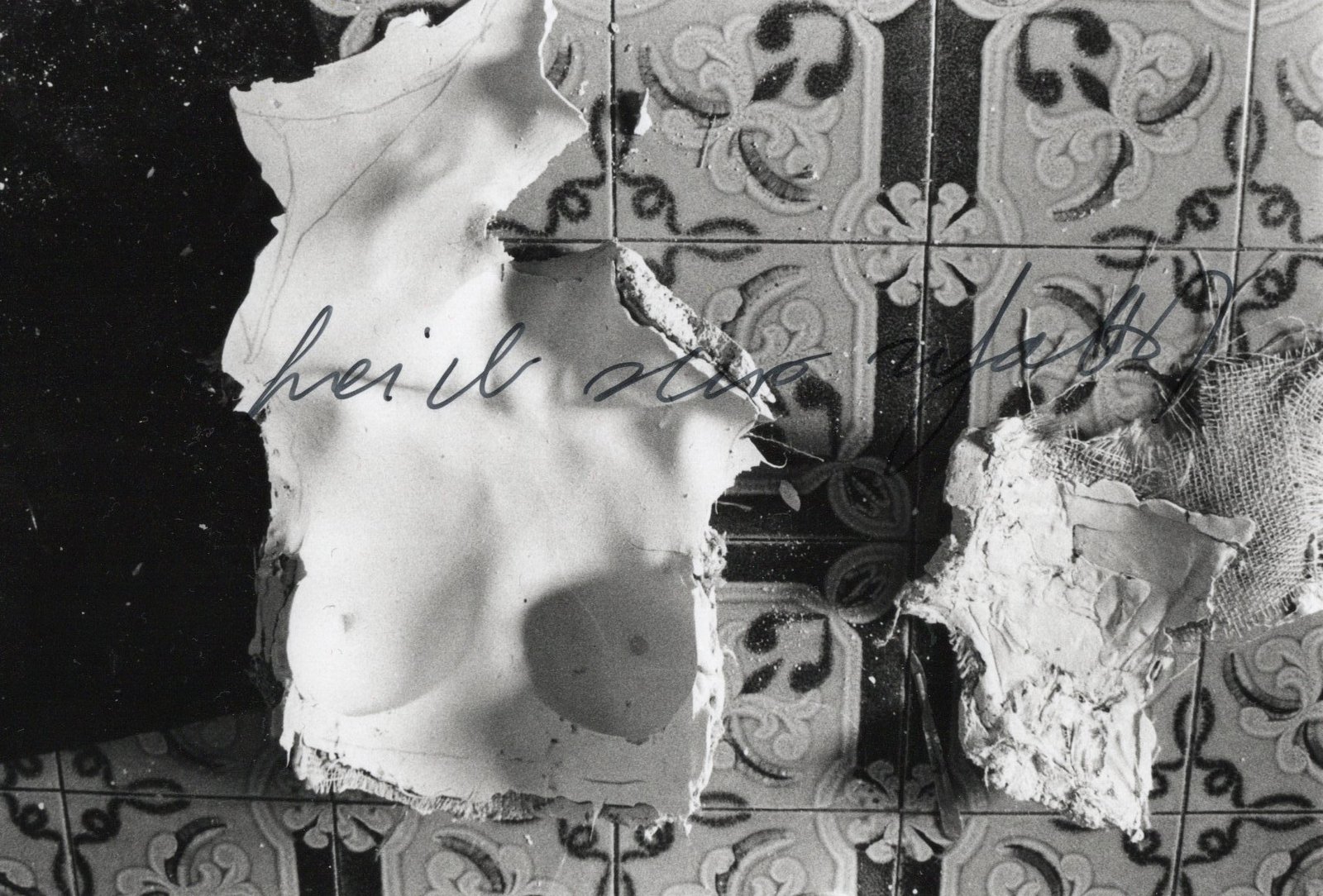
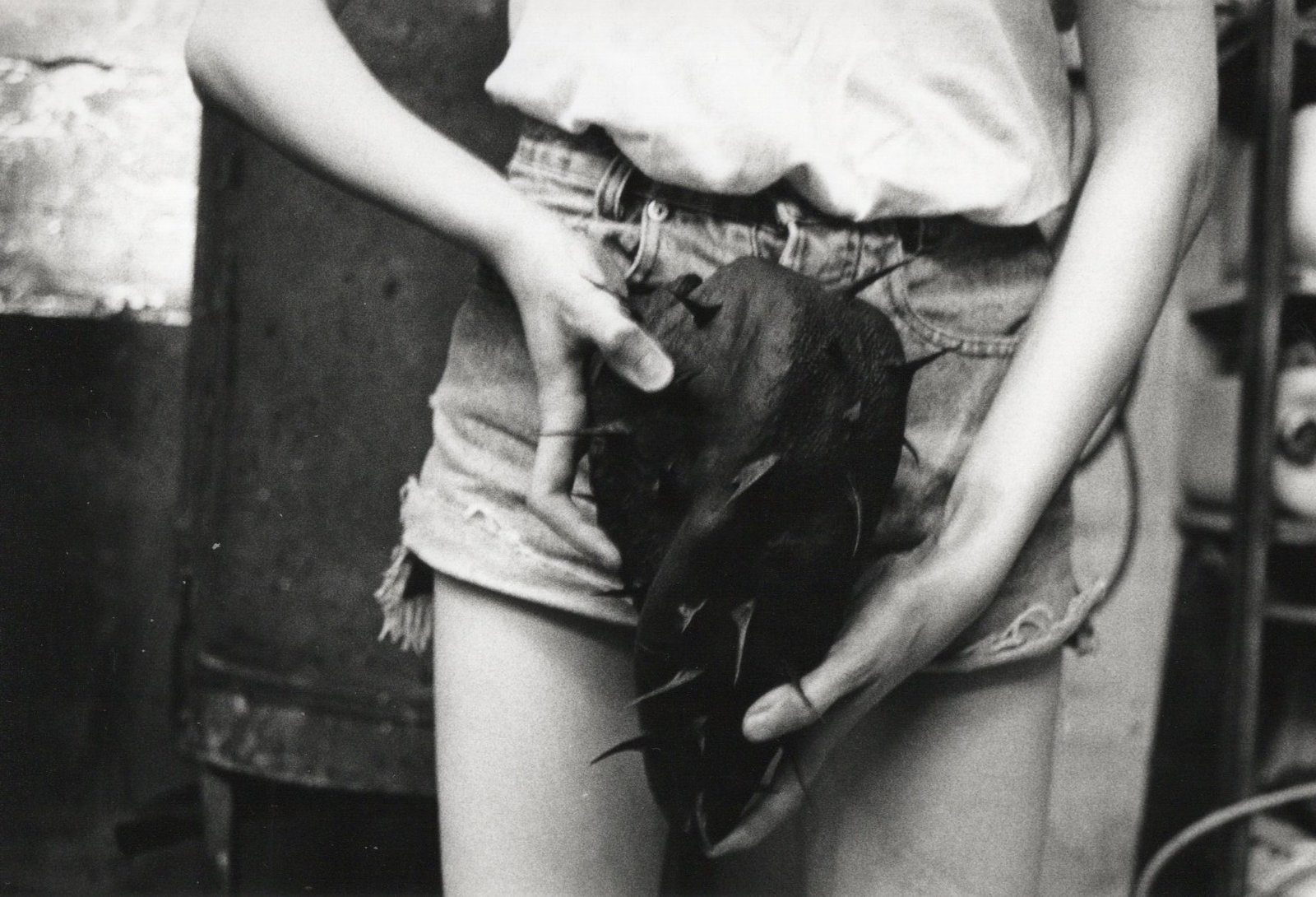
Amare non mi sazia, Reverie, courtesy the artist and the gallery;
Edited by Dobroslawa Nowak
Copyrights: the authors, offseen and partnering platforms;